A brand story with room for a fresh chapter
UniqueYou dates its beginnings to 2014, when it started with scarves and clothing. Its story also includes a pause and a return after the domain was recovered, so it is better understood as a brand with a renewed chapter than as one that traded without interruption. Today, its accessory focus gives you a straightforward starting point: think about the scarf or wrap you would actually use, then consider the colour, shape and material category that suit that purpose.
The visual identity carries some of that history. The original brown wordmark has a horse motif and a “Since 2014” detail, while a neutral taupe palette keeps the overall presentation restrained. Those cues may appeal to someone who likes quiet accessories, but they need not dictate the way a scarf is worn. A printed square can feel lively beside a plain shirt; a simple wrap can sit comfortably alongside a bright coat. The useful question is whether the piece feels at home in your life.
Start with the scarf’s job, not a perfect outfit
Before choosing a colour or fabric, picture the moments when you would put the accessory on. Is it meant to fill the open neckline of a coat, add a layer during a cool morning, cover your shoulders at an evening gathering, or bring interest to a familiar top? A narrow scarf, a generous shawl and a square scarf solve different styling problems. Naming the job first makes it easier to look past an attractive image and judge whether the shape will earn its place.
For a changing-season wardrobe, versatility is often about a few ordinary transitions: stepping outside for a walk, travelling between indoors and outdoors, or making an everyday outfit feel ready for dinner with friends. A scarf cannot replace weather-appropriate outerwear, but it can adjust how covered or dressed-up you feel. If you rarely wear bulky layers, a lighter-feeling shape may be easier to incorporate; if you like to wrap up, look for enough dimensions to drape it your way.
Understand the material before imagining the feel
UniqueYou has silk, cashmere and wool categories, but a category name is not a guarantee that every item has the same composition. Check the individual product description and care information before deciding what to buy. Fibre content, construction and dimensions all affect how an accessory handles: two scarves placed in the same broad category may drape, fold or sit at the neck differently. If texture matters strongly to you, make the stated details part of your decision rather than relying on the material name alone.
As a styling guide, silk is often considered for a fluid finish and compact square-scarf looks; wool and cashmere categories invite a closer look when you want a more substantial layer. These are reasons to explore, not promises about any particular piece. Think about how much warmth you want, whether you prefer a crisp knot or a loose drape, and what care routine you can realistically follow. An accessory is easier to enjoy when its upkeep fits the rest of your clothing habits.
Build from the colours already in your wardrobe
Take stock of the outerwear and tops you wear most, not the clothes you hope to wear one day. Lay a favourite coat beside two or three everyday pieces and notice what connects them: perhaps dark denim, soft grey, warm brown, cream or a recurring accent colour. A scarf can repeat one of those shades for a calm look, or introduce contrast without making the outfit feel unfamiliar. You do not need a prescribed neutral wardrobe to use this approach; the point is to start from what you own.
Patterns deserve the same practical test. A checked or striped scarf can enliven a plain jacket, while a solid colour may give patterned clothes somewhere to rest. If a print attracts you, imagine it beside your most-used neckline and bag rather than against an idealised outfit. Colour can also change with light: what feels muted indoors may stand out on an overcast day. Choose the relationship you like, whether that means gentle continuity or an unmistakable splash of red.
Let shape change how you style it
A square scarf can be folded into a band at the neck, tied to keep hair clear of the face, or worn more loosely when you want its pattern to show. A longer scarf offers room for a single loop or an unfussy drape over a coat. A shawl or wrap can cover the shoulders without requiring a complicated knot. None of these uses is a rule tied to a particular culture or setting; they are options to test against your comfort, your clothing and the practical demands of the day.
Try styling at home with the coat or top you actually plan to wear. If a knot sits awkwardly under a collar, fold the scarf more narrowly or leave the ends free. If a broad wrap slips from your shoulders, consider whether you would rather wear it over outerwear than indoors. A small adjustment in fold or placement often changes an accessory more than a whole new outfit would. The most successful styling is usually the one you can put on again without a tutorial.
An accessory for ordinary rituals and time outdoors
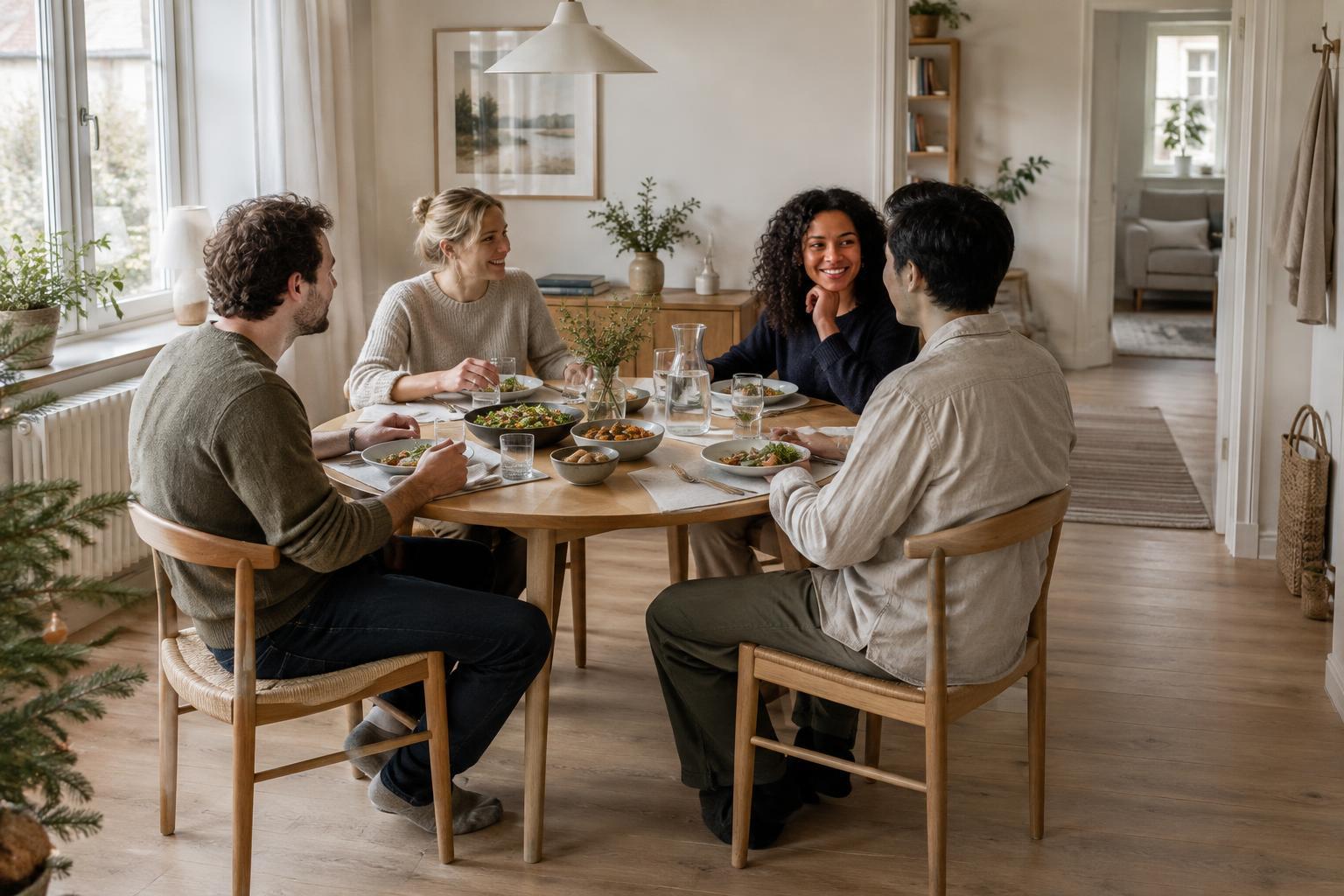
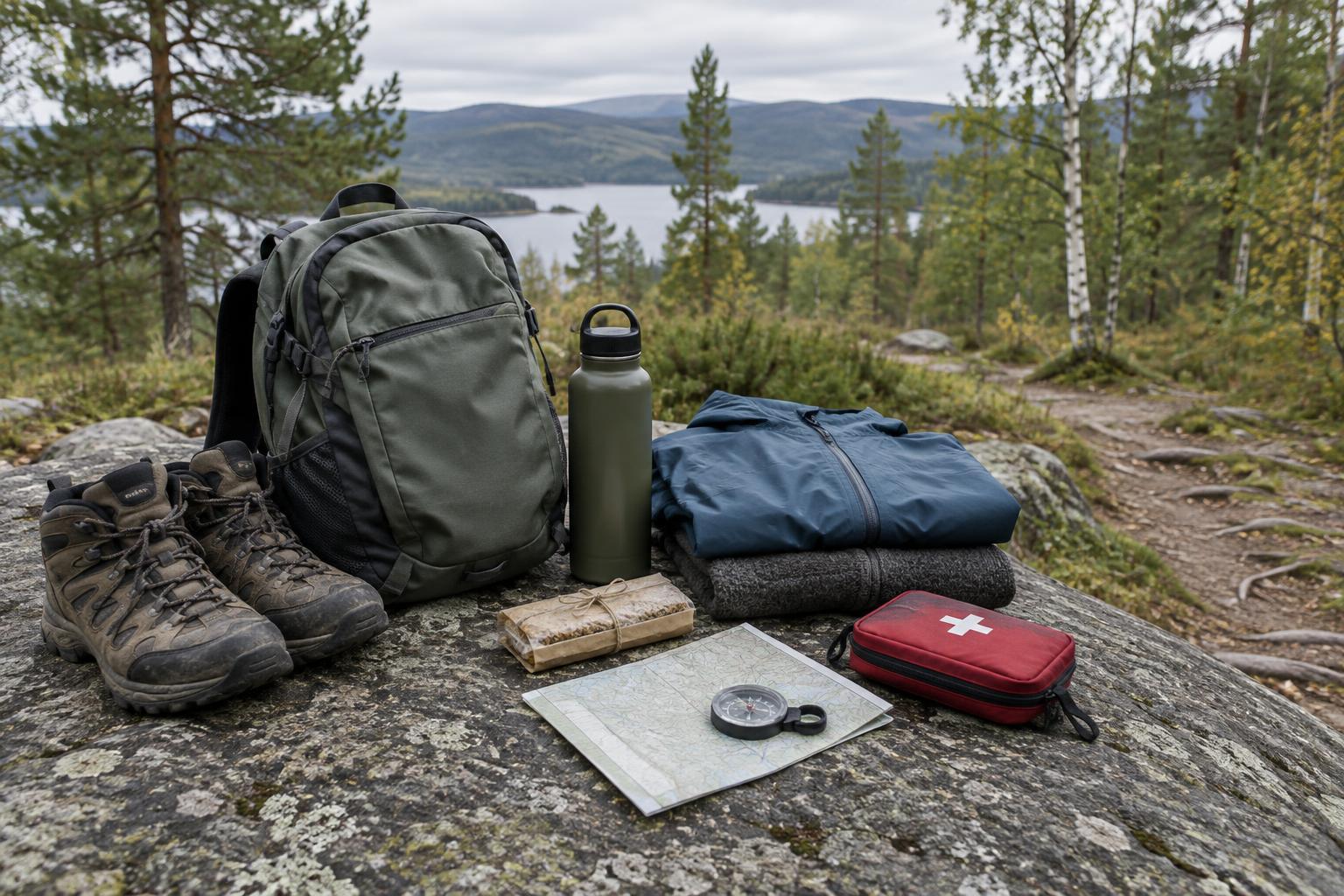
Northward Living is interested in comfortable living through functional interiors, seasonal clothing and uncomplicated daily rituals. A scarf belongs in that conversation when it helps with a real transition: leaving a warm room for a breezy walk, arriving at a simple meal with friends, or taking a layer along on an afternoon outside. Scandinavian design principles can offer an appreciation for usefulness and clarity, but they are an inspiration here, not a universal cultural rule or a dress code.
Consider where an accessory will live between wears. A clear hook near the door may help you remember the scarf you use for walks; a folded square in a drawer may be easier to find when you want a finishing detail. Giving scarves a sensible place makes it easier to use what you have rather than accumulating pieces you forget. This is less about arranging a picture-perfect home than making a small part of getting dressed more pleasant and less hurried.
Choose gifts around the recipient, not a stereotype
A scarf can make a thoughtful gift because it does not require the same fit decisions as many garments, but that does not make every scarf right for every person. Notice what the recipient already reaches for: a colour they repeat, a coat they wear constantly, or a preference for small neckwear over broad wraps. If you are unsure, a shade that connects to an existing garment is a firmer starting point than a guess about what a woman of a certain age or style ought to like.
Think, too, about the recipient’s routines and preferences. Someone who spends time outdoors may appreciate a different shape from someone who mainly wants a light accent with indoor clothes. A person who avoids delicate care may value ease of maintenance more than a particular fibre category. Checking the item’s stated composition, dimensions and care details is a considerate step, especially for a gift. If doubt remains, choose for a recognisable habit rather than an imagined special occasion.
Buy with a short, useful checklist
When a piece catches your eye, pause long enough to answer four questions: What will I wear it with? How will I tie or drape it? Is the stated material and care suitable for me? Do its dimensions support the look I want? This small check can keep a beautiful image from becoming an impractical purchase. It also gives you permission to choose a lively print or bold colour when you can already see how it will work with two or three outfits.
The same checklist helps when comparing a scarf with a shawl or wrap. Look at where the fabric will sit on the body, whether it needs to fit beneath a coat collar, and how much coverage you enjoy. Product-level information matters more than a general claim about a whole collection. UniqueYou’s accessible, elegant accessory focus is most useful when treated as an invitation to select thoughtfully, not as a reason to overlook the details that make an item wearable for you.
Find the version that speaks to your destination
UniqueYou has 20 regional domains, 21 regional-language versions and 16 distinct languages. Those figures are not identical because countries may share a language, and one country may offer more than one language version. Germany and Austria, for example, both have German destinations, while Belgium and the Netherlands both have Dutch ones. The United Arab Emirates has an Arabic root destination and an English /en version on the same regional domain.
The guide below names each country and its destination language before pointing to the relevant home or collection. Where a local collection term appears, it is a label in that destination language rather than a phrase you need to adopt in English. Use the country and language that make sense for the person browsing, then assess the actual item on its own merits. An easy route to the right language is helpful; it does not replace checking the scarf’s shape, composition and care.
Regional guide: choose your country and destination language
Each entry identifies the destination language explicitly. Collection references are starting points for comparing shapes, colours or material categories; they are not a claim that every item in a collection has identical properties. If you are choosing for someone else, use the destination they are comfortable reading and keep their existing wardrobe in mind.
Poland — Polish
The destination language is Polish. Begin at the regional UniqueYou home — UniqueYou. If the recipient wears a coat through cooler months, the local term for a UniqueYou wool scarf leads to a category worth comparing by size and stated composition — szalik z wełny UniqueYou. Check how each option would sit at the neckline they use most.
Germany — German
The destination language is German. The regional UniqueYou home is here — UniqueYou. For someone interested in the cashmere-scarf category, the German local term provides a more focused route — cashmere schal UniqueYou. Read the individual item details before deciding whether its dimensions and care fit an everyday coat or a gift.
Czechia — Czech
The destination language is Czech. Start with the regional UniqueYou home — UniqueYou. The Czech local term for wool scarves points to that category — vlněné šály UniqueYou. If black is already a dependable part of the wearer’s wardrobe, there is also a black-scarf collection linked under the brand name — UniqueYou. Compare shape as well as colour.
Spain — Spanish
The destination language is Spanish. Visit the regional UniqueYou home — UniqueYou. For a layer that can be draped over the shoulders, the Spanish local term for a women’s shawl points to a relevant category — chal para mujer UniqueYou. A black-scarf collection is another route under the brand name — UniqueYou; consider which shape the wearer would actually use.
France — French
The destination language is French. The regional UniqueYou home is here — UniqueYou. If a broader shoulder layer sounds more useful than a small neck scarf, the French local term for women’s stoles takes you to that category — étoles femme UniqueYou. Look at the individual dimensions to judge whether a piece suits an evening layer or everyday wear.
Hungary — Hungarian
The destination language is Hungarian. Begin at the regional UniqueYou home — UniqueYou. The Hungarian local term for elegant stoles leads to a category to consider for someone who likes a draped finish — elegáns stólák UniqueYou. Rather than saving such a piece only for an occasion, imagine how its colour would look beside a coat or dress already in use.
Italy — Italian
The destination language is Italian. Find the regional UniqueYou home — UniqueYou. The Italian local term for brown scarves points toward a colour that may work with cream, denim or other familiar wardrobe shades — sciarpe marroni UniqueYou. A winter-scarf collection is linked under the brand name here — UniqueYou; compare actual fabrics and dimensions before choosing a cooler-weather layer.
Romania — Romanian
The destination language is Romanian. The regional UniqueYou home is here — UniqueYou. For a closer look at the cashmere-scarf category for women, use the Romanian local term — fulare dama casmir UniqueYou. If it is a gift, check the particular piece’s composition and care guidance rather than assuming every scarf in a broad material category will feel or handle alike.
Slovakia — Slovak
The destination language is Slovak. Start with the regional UniqueYou home — UniqueYou. The Slovak local term for a cashmere scarf provides a route to that category — šál kašmír UniqueYou. Think about whether the intended wearer usually knots a scarf close to the neck or prefers to drape it over outerwear, then check the listed size.
Finland — Finnish
The destination language is Finnish. Begin at the regional UniqueYou home — UniqueYou. For a scarf worn on the head or in the hair, the Finnish local term leads to a focused category — huivit päähän UniqueYou. A white-scarf collection is also linked under the brand name — UniqueYou. Consider how the colour and shape would work with the wearer’s usual layers.
Sweden — Swedish
The destination language is Swedish. The regional UniqueYou home is here — UniqueYou. The Swedish local term for women’s cashmere shawls leads to that category — sjalar i kashmir dam UniqueYou. For a broader look at shawls, use the collection linked under the brand name — UniqueYou. Compare coverage and stated material details rather than choosing by category label alone.
Denmark — Danish
The destination language is Danish. Visit the regional UniqueYou home — UniqueYou. If a hair scarf would be more useful than another neck layer, the Danish local term points to that category — tørklæder til hår UniqueYou. There is also a black-scarf collection linked under the brand name — UniqueYou, a possible starting point for someone who often wears strong colours or patterns.
Belgium — Dutch
The destination language is Dutch. Start at the Belgian regional UniqueYou home — UniqueYou. The Dutch local term for women’s wool scarves takes you to that category — wollen sjaals dames UniqueYou. For a gift, picture the recipient’s most-worn outerwear and check each item’s stated composition and care before settling on a shape or colour.
Austria — German
The destination language is German. The Austrian regional UniqueYou home is here — UniqueYou. The German local term for an elegant neckerchief leads to a category suited to exploring smaller finishing touches — elegantes Halstuch UniqueYou. A broader scarf collection is linked under the brand name — UniqueYou. Decide first whether the wearer prefers a neat knot or a longer drape.
Netherlands — Dutch
The destination language is Dutch. Begin at the regional UniqueYou home — UniqueYou. The Dutch local term for striped scarves offers a route to pattern — sjaals met strepen UniqueYou. If more shoulder coverage sounds useful, the wrap collection is linked under the brand name — UniqueYou. Try to relate either choice to clothes already worn regularly rather than to a hypothetical outfit.
United States — English
The destination language is English. The regional UniqueYou home is here — UniqueYou. If a compact shape that can be folded or tied in different ways appeals, the local term for women’s square scarves leads to that category — square scarves for women UniqueYou. Look at the listed dimensions to judge whether a particular square suits your preferred neck or hair styling.
United Arab Emirates — Arabic
The destination language is Arabic. The regional UniqueYou home at the root destination is here — UniqueYou. This is the Arabic option for the United Arab Emirates; the same country also has a separate English version. Choose the language the reader prefers, then use the individual product information to assess a scarf or shawl.
United Arab Emirates — English
The destination language is English. For the United Arab Emirates, the local English wording for the scarf-and-shawl brand leads to the /en version — scarf and shawl brand UniqueYou. The Arabic version is at the root destination instead. This language choice changes the reading route, not the need to check an individual accessory’s material, size and care.
Ireland — English
The destination language is English. Start at the regional UniqueYou home — UniqueYou. The local term for women’s red scarves points to a colour-focused collection — ladies red scarves UniqueYou. If a smaller neck detail would suit the wearer better, a neckerchief collection is linked under the brand name — UniqueYou. Either can work best when it has a clear partner in an existing wardrobe.
United Kingdom — English
The destination language is English. The regional UniqueYou home is here — UniqueYou. For someone who likes pattern against a plain coat, the local term for a checked scarf leads to the relevant collection — checked scarf UniqueYou. Check the scale of the pattern, dimensions and stated material of the individual piece before deciding how it would fit into daily wear.
Portugal — Portuguese
The destination language is Portuguese. Begin at the regional UniqueYou home — UniqueYou. The Portuguese local term for an elegant shawl leads to a category for exploring shoulder layers — xaile elegante UniqueYou. A red-scarf collection is also linked under the brand name — UniqueYou. Choose between a broad drape and a stronger colour accent according to what the wearer already enjoys.
The most useful scarf is not the one that completes an imagined wardrobe. It is the one you can picture reaching for, wearing comfortably and pairing with clothes you already love.
 Outdoor Leisure