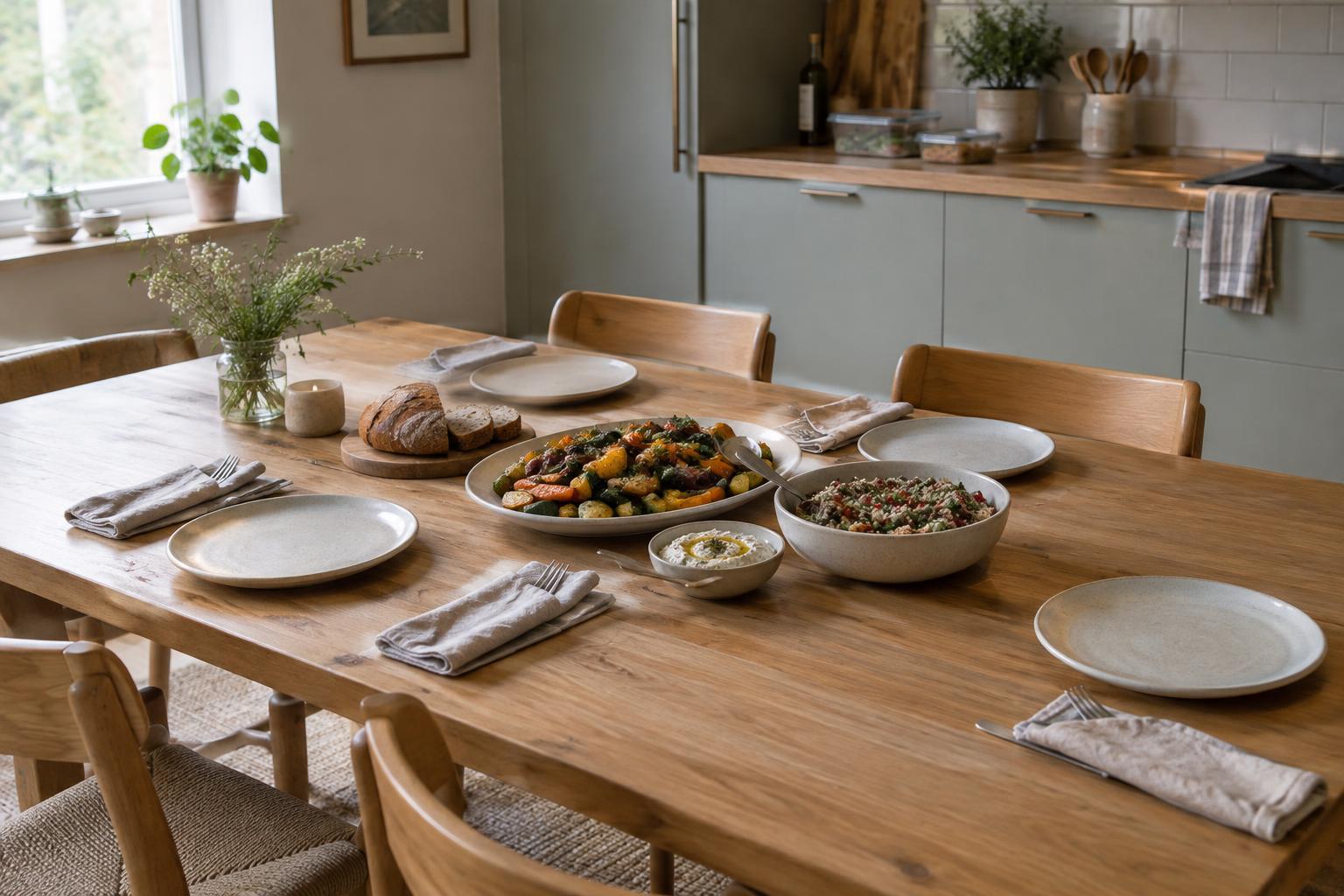
Start with the kind of gathering
Before counting portions, decide what guests will expect to eat. An afternoon visit with tea calls for a different amount of food than dinner at the same table. Let the invitation make that clear: “come for coffee and cake,” “join us for drinks and snacks,” or “stay for supper.” Clear expectations do more to prevent a shortage than an oversized shopping list.
Next, count everyone who will eat, including the host. Think about the length of the visit, whether it falls at a usual mealtime, and whether guests may arrive hungry after travel or an activity. If you are unsure, plan a slightly more substantial menu rather than adding large quantities of every dish. Bread, fruit or a filling side can make a spread feel complete without creating much extra work.
Use portions as a starting point, not a rule
For a seated meal, begin with one main-course portion per person. A reasonable first estimate is roughly one palm-sized serving of a protein or filling main, with vegetables and a starch or bread alongside it. For a dish such as soup, stew or pasta that is easy to serve again, make enough for a small second helping for some guests. You do not need to prepare a second helping of every component.
For a gathering built around snacks instead of dinner, offer a few different things rather than a large amount of one thing. A simple combination might be a filling item such as sandwiches or a savoury bake, something fresh such as cut vegetables or fruit, and a small sweet option. If snacks will replace a meal, increase the filling item. If guests are stopping by between meals, smaller amounts are usually more suitable.
Dessert can be straightforward: one slice, piece or small bowl per person is a useful baseline. Make a little extra if dessert is the main event or if portions are difficult to divide evenly. These estimates are prompts for planning, not measures of how much any particular guest should eat.
Build in flexibility without making everything extra
A small gathering rarely requires a separate dish for every preference. Instead, choose a menu with flexible parts. A baked potato, grain bowl or soup-and-bread supper lets people take more of what they enjoy. Keep toppings or dressings separate when practical, and make sure there is at least one satisfying option for anyone who cannot eat the main dish.
Ask about dietary needs when you invite people, especially if the menu has little room to change. Guests may also appreciate knowing what you plan to serve. Do not assume that a side salad is an adequate meal for someone avoiding the main course. If a substitution is needed, plan its portion as deliberately as everyone else’s food.
For drinks, offer water throughout the visit and choose one or two other options that suit the occasion. People drink at different rates, so keeping a refillable jug or a few spare servings available is often easier than trying to calculate an exact number of glasses.
Make a quick serving plan before shopping
Write down the number of guests, the role of each dish and how many servings your recipe actually makes. Then compare the total with your plan. If six people are coming for dinner and your main dish serves four, increase that dish or add another substantial option; extra crackers will not necessarily fill the gap. If the main serves six and you have generous sides, you may already have enough.
Pay attention to foods that disappear unevenly. A favourite dip may go faster than raw vegetables, while bread can be useful for rounding out a light meal. Put out a sensible first round and keep any extra ready to replenish. This helps the table look inviting at the start without requiring every portion to sit out at once.
Plan for leftovers you would welcome
A little surplus can make hosting feel relaxed, but it helps to decide in advance what you would actually eat afterward. Extra soup, cooked grains or a loaf of bread may fit easily into another meal. A large assortment of partly used toppings may be harder to manage. When choosing between menus, favour dishes that store or repurpose well if your guest count is uncertain.
Have containers and refrigerator space ready before people arrive, and put perishable food away promptly rather than leaving it on the table for the whole visit. Guests can take leftovers if they want them, but there is no need to make that part of the plan. The aim is not a perfectly empty platter or an overflowing one. It is enough food for people to feel welcome, served in a way that leaves the host able to enjoy the gathering too.


