Start with the seating area, not the room dimensions
A rug does not need to fill a living room. Its main job is to give the seating area a clear boundary and help the furniture feel connected. Before shopping, note the positions of your sofa, chairs and coffee table. If the room serves several purposes, such as seating beside a desk or dining nook, measure the seating zone rather than treating every square foot as one area.
Use a tape measure to find the width and depth of that zone, then consider how much of it you want the rug to cover. A simple test is to mark a possible rug outline on the floor with painter’s tape. Walk around the furniture and sit in each seat. The outline may look generous from the doorway but feel cramped when a chair is pulled forward—or the reverse.
Choose how the furniture will meet the rug
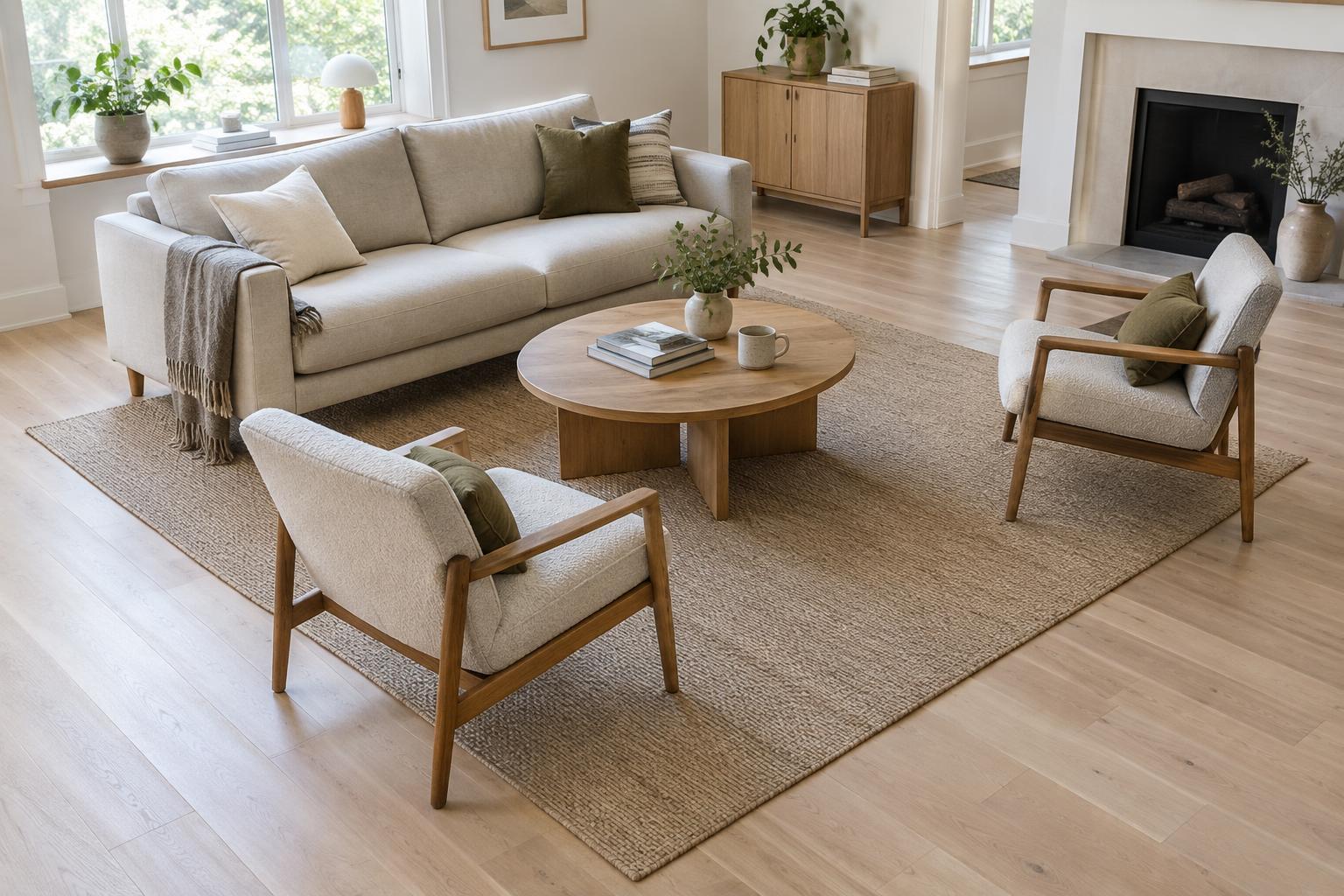
For many living rooms, placing the front legs of the sofa and nearby chairs on the rug creates a unified arrangement without requiring a rug beneath every piece of furniture. Allow enough rug in front of each seat that feet can rest on it comfortably. Try to keep the furniture placement consistent: a chair sitting entirely off the rug can look detached if everything else is partly on it.
An all-legs-on arrangement can work well when the seating group sits away from the walls or includes several chairs. It needs a rug large enough to extend beyond the furniture, so the rug remains visible rather than disappearing beneath it. If that size would block a walkway or crowd the room’s edges, a front-legs-on layout may be more useful.
A small rug placed only beneath the coffee table can leave a gap between the rug and the seats. It can still be a deliberate choice, especially where floor space is limited, but check how it feels in use. If people step onto bare floor when rising from the sofa, a larger rug may do more to define the seating area.
Leave space for movement
Look beyond the furniture to doors, shelves and routes through the room. A rug edge in the middle of a frequently used path can be inconvenient, while a rug pushed too close to every wall may make the floor feel covered rather than framed. Visible floor around the rug often gives the arrangement some breathing room, but there is no single border width that suits every room.
Check whether doors swing freely over the rug and whether a chair can move without catching its edge. If you are deciding between two sizes, mark both outlines on the floor. This is especially helpful in a narrow room, where a modest difference in width may determine whether the rug supports the seating or intrudes into a walkway.
Let the room shape guide the rug shape
A rectangular rug usually follows the lines of a sofa and coffee table, making it a straightforward starting point. In a long room, orienting the rug with the seating group can help distinguish that area from the rest of the space. The rug does not have to be centered in the whole room; it generally looks more purposeful when aligned with the furniture it serves.
A square rug may suit a balanced arrangement of chairs, while a round rug can soften a small seating corner or echo a round table. Shape should not come at the expense of usable coverage, though. If a round rug leaves chair legs slipping off its edge, a rectangular option may better fit the way the room is used.
Make the final choice practical
Rug size affects care as well as appearance. A larger rug may keep more seating feet on a comfortable surface, but it can also be harder to lift and clean. Consider where shoes, drinks and pets are likely to be, along with the texture and care instructions of the rug you choose. A suitable rug pad can help keep the rug in place; check that it is compatible with your flooring.
Before ordering, compare the rug’s listed dimensions with your taped outline rather than relying on a size label alone. If the marked area connects the seats, preserves comfortable paths and lets the furniture work as intended, you have a useful size—even if it does not match a standard styling rule.