Start with choices, not a menu
When people come over, drinks are one of the first things you offer. That does not mean you need to make each glass to order. A small selection is easier for guests to understand and easier for you to maintain. Think in categories: water, one or two nonalcoholic drinks with some character, and, if you want to serve alcohol, a limited choice such as beer or wine. You can skip spirits and mixed drinks entirely.
Let the gathering shape the selection. For an afternoon meal, sparkling water, iced tea, and a single alcoholic option may be plenty. For a long evening, it helps to have something refreshing that people will enjoy drinking more than once. The goal is not to anticipate every preference. It is to give guests clear, comfortable choices while leaving you free to enjoy their company.
Give nonalcoholic drinks equal space
A nonalcoholic option should be more than an emergency glass of tap water, though water belongs on every table. You might offer sparkling water with citrus slices, chilled tea, a fruit drink diluted to taste, or a nonalcoholic beer. Choose something you can prepare ahead or open and pour. There is no need to recreate a cocktail for guests who are not drinking alcohol.
Put these drinks where people can see them, rather than leaving them in the kitchen while the wine sits out. Use the same easy-to-reach glasses and offer ice or garnishes to everyone. Guests may choose not to drink for reasons they do not want to discuss. A visible, appealing choice lets them pick what they like without an explanation.
Make the setup easy to use
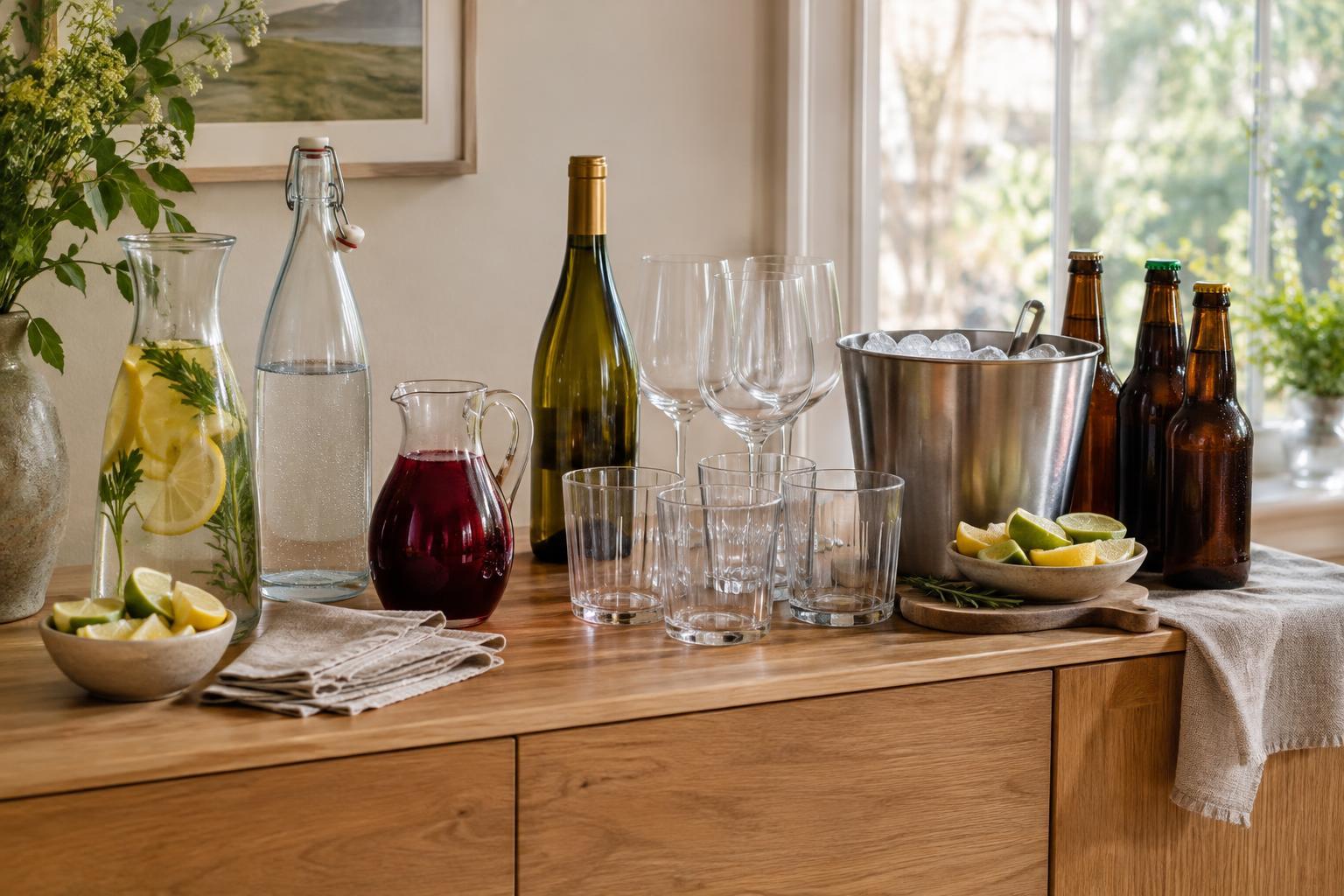
Choose one spot for drinks, preferably away from the busiest part of the cooking area. Set out glasses, a bottle opener if needed, napkins, and a place for empty bottles or cans. Keep chilled drinks in the refrigerator or a cooler nearby, and put water in a pitcher that guests can refill. If a drink needs mixing, a short label with the ingredients can be enough; better still, serve something ready to pour.
Simple labels are useful when bottles look alike or when a drink contains alcohol. They also help guests distinguish regular and nonalcoholic versions without having to ask. You can say, “The drinks are on the side table; please help yourself,” when people arrive. After that, a quick check for water, ice, and clean glasses is usually more helpful than repeatedly offering to make another round.
Plan for the pace of the gathering
You do not need a precise formula for how much everyone will drink. Consider the length of the visit, the weather, whether food is being served, and what you already know about your guests’ preferences. Keep a little extra water and a shelf-stable nonalcoholic option on hand if you have the space. You can open additional bottles as needed instead of putting everything out at once.
Serving food alongside drinks makes the arrangement feel hospitable without creating another task. Even a bowl of nuts, sliced vegetables, or bread and a spread gives guests something to share while they talk. If you are serving alcohol, offer it without urging anyone to have it or to have more. Hosts can make room for choice without managing other people’s choices.
Let the occasion, not the glassware, set the tone
Matching glasses, elaborate garnishes, and a fully stocked bar are optional. A few clean glasses that are comfortable to hold will do the job. If you want one small flourish, make it something that reduces work rather than adds to it: a tray that gathers supplies in one place, a pitcher of cold water on the table, or a bowl of citrus wedges guests can use as they please.
A good drinks setup fades into the background. People can find what they want, pour it easily, and return to the conversation. You can refill a pitcher or clear a few empties now and then without spending the gathering behind a counter. That balance—thoughtful choices with little ceremony—is often all a relaxed host needs.


