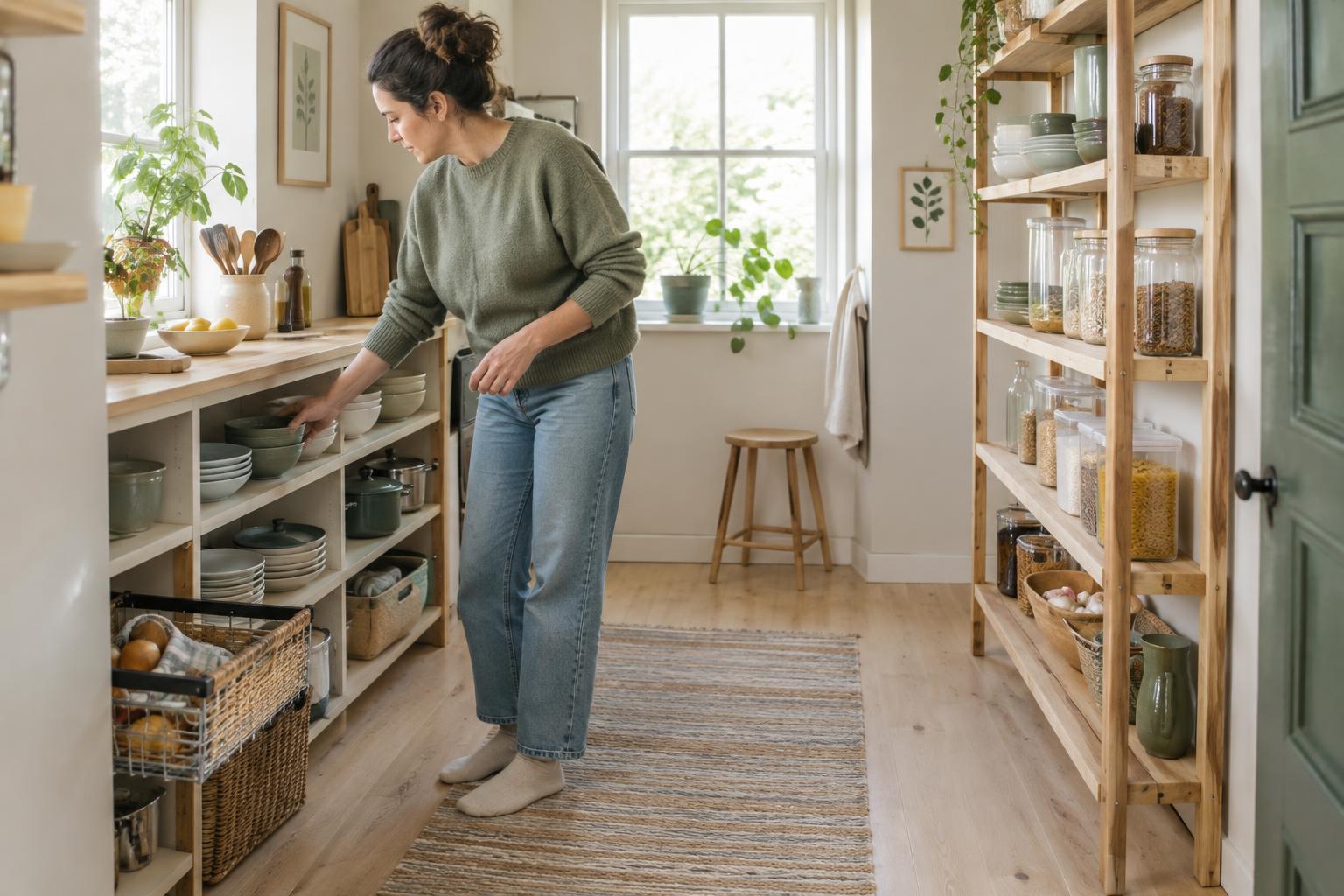
Start with the task, not the cabinet
Accessible storage is less about fitting a single standard and more about making everyday objects easier for the people who use them to find, reach and put away. Before buying an organizer, notice where a routine slows down. Does someone have to move three things to reach a pan? Is a frequently used coat stored above a comfortable reach? Does opening a drawer block the path through a small room? These observations make a better starting point than a picture of a perfectly arranged shelf.
Choose one routine, such as making breakfast or leaving the house, and list what it requires. Keep those items near the place they are used and within a comfortable reach for their primary user. That might mean moving mugs to a lower shelf, keeping keys in an open tray or giving a seated household member a dedicated section of a shared cupboard. The aim is not to make every shelf equally accessible. It is to make important tasks simpler without adding work elsewhere.
Give useful space to the things used most
The most convenient storage space is often occupied by things that rarely move. Try putting daily items in easy-to-reach drawers, the front of shelves and open sections of a wardrobe. Reserve high, deep or awkward spaces for lighter objects used less often. Where possible, avoid storing heavy items in places that require stretching, bending far down or lifting them over other objects.
A shallow bin can group supplies that belong to one task, while a tray can stop small objects from drifting across a shelf. Choose containers that can be grasped and moved comfortably; a large, packed box may make its contents harder to access than they were before. If a deep cupboard is troublesome, consider using fewer items in it rather than filling every inch. Leaving room to see and lift what is there can be more valuable than maximizing capacity.
Clear pathways matter, too. A basket placed on the floor may solve a storage problem but create an obstacle beside a bed or entryway. Look for places where the household can approach storage and open doors or drawers without having to step around furniture.
Make contents easy to see and identify
Storage is easier to use when its contents are predictable. Give related objects a consistent home, and avoid changing that location simply to make a room look tidier. Labels can help in shared spaces, especially when several similar containers sit together. Use words, pictures or both, depending on what works for the household. Labels are most useful when they can be read from the position where someone reaches for the item.
Visibility also depends on light and contrast. A small lamp near an entry shelf may make it easier to sort gloves and keys, provided its cord does not cross a walkway. Within a drawer, a light-colored liner can help darker objects stand out, while a contrasting tray may make small items easier to spot. Transparent containers are useful for some people, but they can look busy or be difficult to distinguish at a glance. Try one before replacing every box.
Open storage can reduce the need to operate a door, but it is not automatically the best choice. Objects may collect dust or become visual clutter. A mix of open space for daily essentials and closed storage for less-used items often makes a room easier to navigate.
Choose small changes that are stable and reversible
Many improvements can be tested without changing the room itself: rearrange shelves, add a drawer divider, swap a heavy storage box for two smaller ones or place a hook where a bag is usually dropped. In a rental, removable accessories may be appealing, but check whether they are suitable for the surface and the weight they need to hold. A hook that fails under a loaded coat is not a helpful shortcut.
Treat stability as part of usability. Freestanding shelves and tall storage furniture may need securing in line with the manufacturer’s instructions, particularly if someone could pull on them while retrieving an item. Avoid placing heavy objects where they might fall during normal use. Before adding a rolling cart, ask whether it stays put when an item is removed and whether it narrows a route people use. A simple, sturdy setup is often more useful than an elaborate system with several moving parts.
Test the arrangement in daily life
After changing one area, use it for a week or two before reorganizing the next. Notice whether items return to their new homes, whether anyone has to ask for help reaching them and whether a solution gets in the way of another task. Invite the people who use the space to describe what works from their own position and routine. A shelf that feels convenient to one person may be awkward for another.
Accessible storage is an ongoing arrangement, not a finished look. Seasonal clothes, changing interests and household needs can all alter what deserves the easiest space. A calm, functional interior leaves room for those adjustments: fewer unnecessary obstacles, clear places for familiar objects and storage that serves daily life rather than demanding that daily life adapt to it.


