Start with the conditions, not the destination
A pleasant outing begins before you leave home. Check the forecast for the place you intend to visit, including temperature, humidity and any heat advisories. Think about how exposed the setting will be: an open field, a paved waterfront and a wooded path can feel quite different on the same day. If the conditions look uncomfortable for your group, choose a shorter outing, a shadier location or another day.
Timing gives you another way to adjust the plan. An early walk or a later picnic may be more comfortable than spending the middle of the day outside. Keep the journey to and from the outing in mind, too. A short activity can become a long stretch in the heat if it includes a walk across an unshaded parking area or a wait for transport.
Choose a route with places to pause
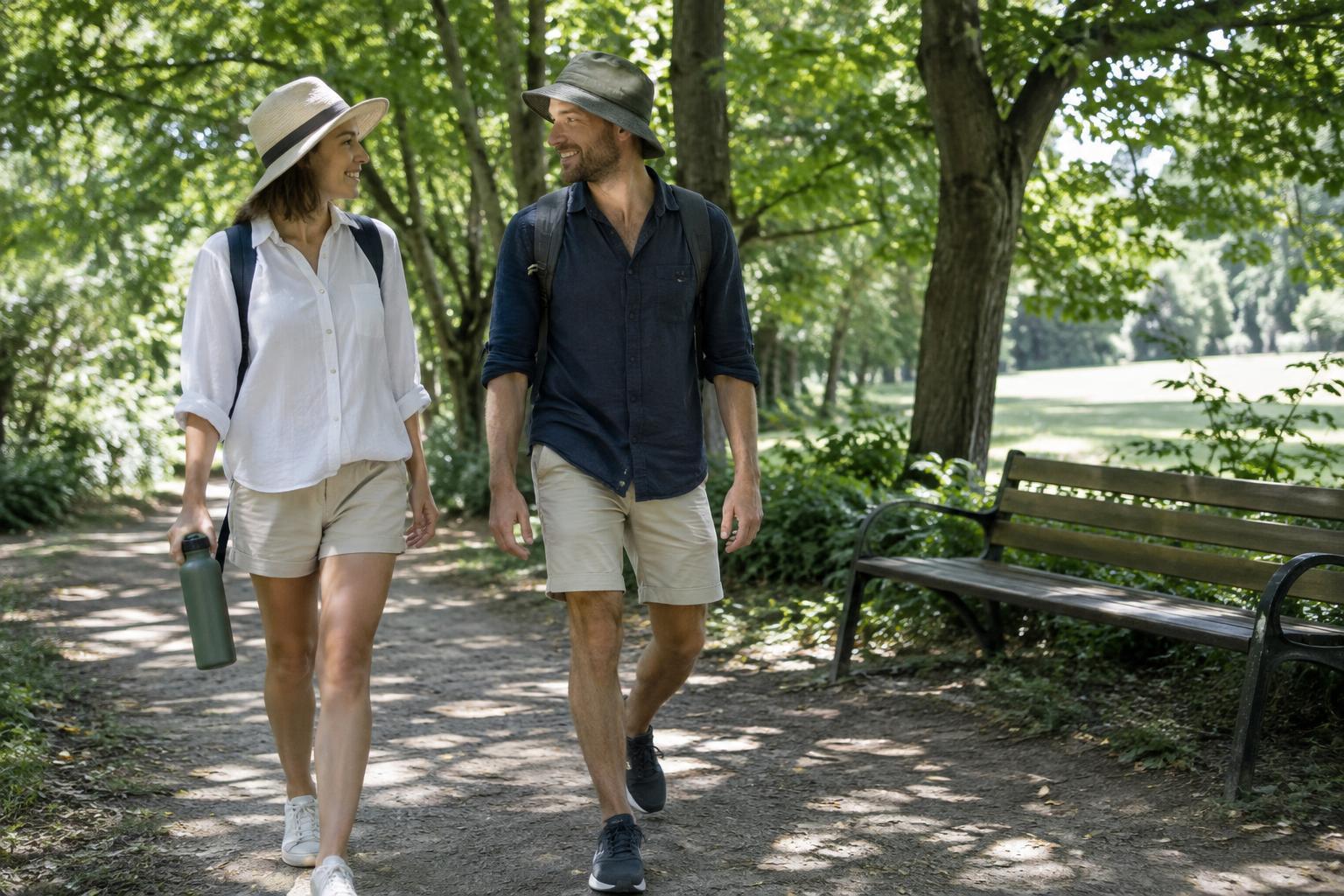
On a hot day, a modest destination is often the most enjoyable one. Look for a route with dependable shade, somewhere to sit and a straightforward way back. A loop near home, a park with mature trees or a short path beside a sheltered picnic area can offer more flexibility than a long trail with no easy exit. If you are visiting somewhere unfamiliar, check the route and access details before you go rather than assuming that water or shade will be available.
Plan a few natural stopping points instead of trying to cover a set distance. A bench, a sheltered overlook or a spot to refill bottles can become part of the outing rather than an interruption. Let the pace suit the person who needs to move most slowly, and be ready to turn around early. The aim is time outside, not finishing an itinerary.
Pack for comfort without overpacking
Bring enough drinking water for your plans, with extra room for delays, and make it easy to reach. If you are bringing food, choose items that are simple to carry and eat in the shade; store perishable foods appropriately. A small bag can also hold sunscreen, a brimmed hat, sunglasses, a light layer for indoor stops and a cloth to sit on. Check whether your destination has bins or restrooms, and pack accordingly.
Comfortable, breathable clothing and suitable footwear make it easier to settle into the day. Light-colored clothes may feel preferable in direct sun, while a loose long-sleeved layer can provide coverage when you cannot avoid it. Choose what works for the weather, the terrain and your own comfort rather than dressing to match an outdoor ideal. If you are responsible for children or pets, consider their need for shade, water and breaks when deciding how much to carry.
Make the outing easy to change
Before setting off, agree on a simple fallback: where you can stop, how you will get home and what you will do if the heat feels too much. Share the plan with anyone joining you. For a longer or more remote trip, let someone else know where you expect to be. A charged phone can be useful, but it should not be the only way you know your route.
Pay attention to how everyone is doing once you are outside. Unusual weakness, dizziness, confusion or feeling unwell are reasons to stop, move to a cooler place and seek appropriate help; severe symptoms call for urgent assistance. You do not need to wait until anyone feels ill to change course. If conversation fades and the group is no longer enjoying itself, a shaded rest or an early return may be the best part of the plan.
Keep the pleasure small and simple
A hot-day outing can be as brief as a slow walk to a shady place with a cold drink and a view. Bring one uncomplicated activity if you like: a book, a sketchbook or a snack to share. Leaving open time makes it easier to notice a breeze or linger where the air feels comfortable, without feeling obliged to keep moving.
Before you leave, gather your belongings and any litter, and leave shared spaces ready for the next visitors. On the way home, take a moment to note what worked: the timing, the route, the amount you carried or the place you chose to rest. Those small observations can make the next warm-weather outing simpler to plan.