The short answer depends on the outing
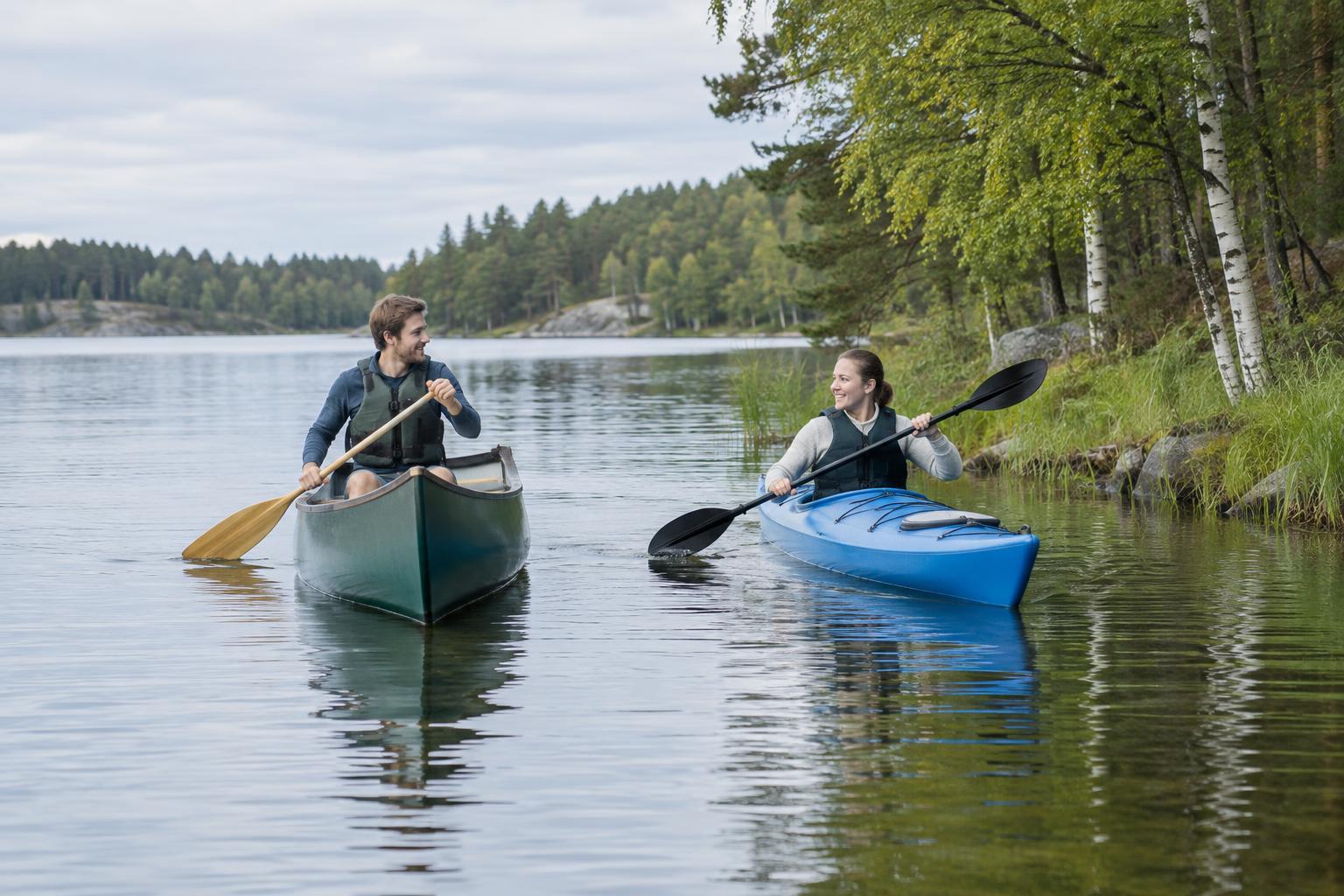
For many first-time paddlers, a wide recreational kayak is the simpler boat to move across calm water. Sitting low can feel reassuring, and the double-bladed paddle lets you alternate strokes without switching sides. A canoe may be easier to enjoy if you want to paddle with a companion, carry a picnic or change your sitting position. Neither label guarantees an easy ride: a wide, stable rental boat will usually feel more approachable than a narrow boat built for speed.
Start by picturing the day you want. Will you paddle alone or share the work? Do you want to cover a short loop or drift between pauses? Will you have only a water bottle, or a bag of extra layers and lunch? These ordinary questions often point toward a better choice than asking which craft is best in general.
How each boat feels on the water
In a kayak, you sit close to the water and use a blade on each end of the paddle. Many beginners find it straightforward to make the boat go forward: a stroke on one side is followed by a stroke on the other. A sit-on-top kayak has an open seat that can make boarding feel less confining, though you may get wetter. A sit-inside recreational kayak can offer more shelter from splashes, but its cockpit may feel less convenient to enter or leave.
A canoe usually has a higher seat and an open hull. The extra room is useful for a shared outing, but the higher position can feel less settled at first. With a single-bladed paddle, you will need to switch sides or learn a steering stroke to keep a straight course. In a tandem canoe, the two paddlers also need to agree on a rhythm. That can be pleasant teamwork—or one more thing to learn while the boat turns toward the reeds.
Balance starts before the first stroke
Getting in and out can be the trickiest part of either experience. A low kayak may require you to lower yourself carefully into a seat; a canoe asks you to step into a taller, more open space. Both can shift when your weight moves suddenly. At a suitable launch spot, keep your movements slow, hold the boat steady as directed by the rental staff or guide, and enter one person at a time. If bending down, stepping up or sitting with your legs forward is uncomfortable, mention that when choosing a boat.
Wind and waves change the comparison. A canoe with plenty of open space can be convenient for belongings, yet its exposed sides may catch the wind. Kayaks vary too: a short, wide model can feel steady but may take effort to keep on course. For a first trip, sheltered water and a short route matter more than small differences in speed. Leave yourself enough energy and daylight to return without rushing.
Match the boat to your companions and belongings
Choose a recreational kayak if you want to set your own pace and focus on one set of strokes. If you are going with another beginner, separate kayaks let each of you steer independently, provided everyone is comfortable staying together on the water. A tandem kayak is another option, although sharing one boat still calls for some coordination.
Choose a canoe if the shared journey is part of the appeal. Its open interior can make it simpler to stow a small bag and pause for a snack, especially on a gentle outing with someone who has paddled before. Pack light either way. Secure belongings so they cannot slide around or float away, and keep items that must stay dry in suitable waterproof protection. Leave room to move comfortably rather than filling every available space.
Make the first trip small and enjoyable
A brief rental or beginner session is a useful way to try both crafts before forming a preference. Ask which boats are intended for novices, where to launch, what conditions are appropriate and how to return if you tire sooner than expected. Wear a properly fitted life jacket, follow local rules and the provider’s instructions, and check the weather before setting out. Dress for the possibility of getting wet, not just for how warm the air feels, and avoid heading out if the conditions are beyond your comfort or experience.
The easier first paddle is the one that lets you relax enough to notice where you are. On calm water, a recreational kayak often gives a solo beginner a quick sense of control; a stable canoe can make a slower, shared afternoon feel natural. Pick the boat that fits your body, company and plans, then keep the route modest. There will be other days to go farther.