Check the rules before you pack
Food storage is part of planning a campsite, not a task to work out after dinner. Before leaving, check the requirements for your campground or backcountry area. A site may provide food lockers, require a particular type of bear-resistant container or restrict where cooking and food storage can take place. Follow those rules even if you do not expect to see a large animal: mice, birds and other wildlife can also find an easy meal.
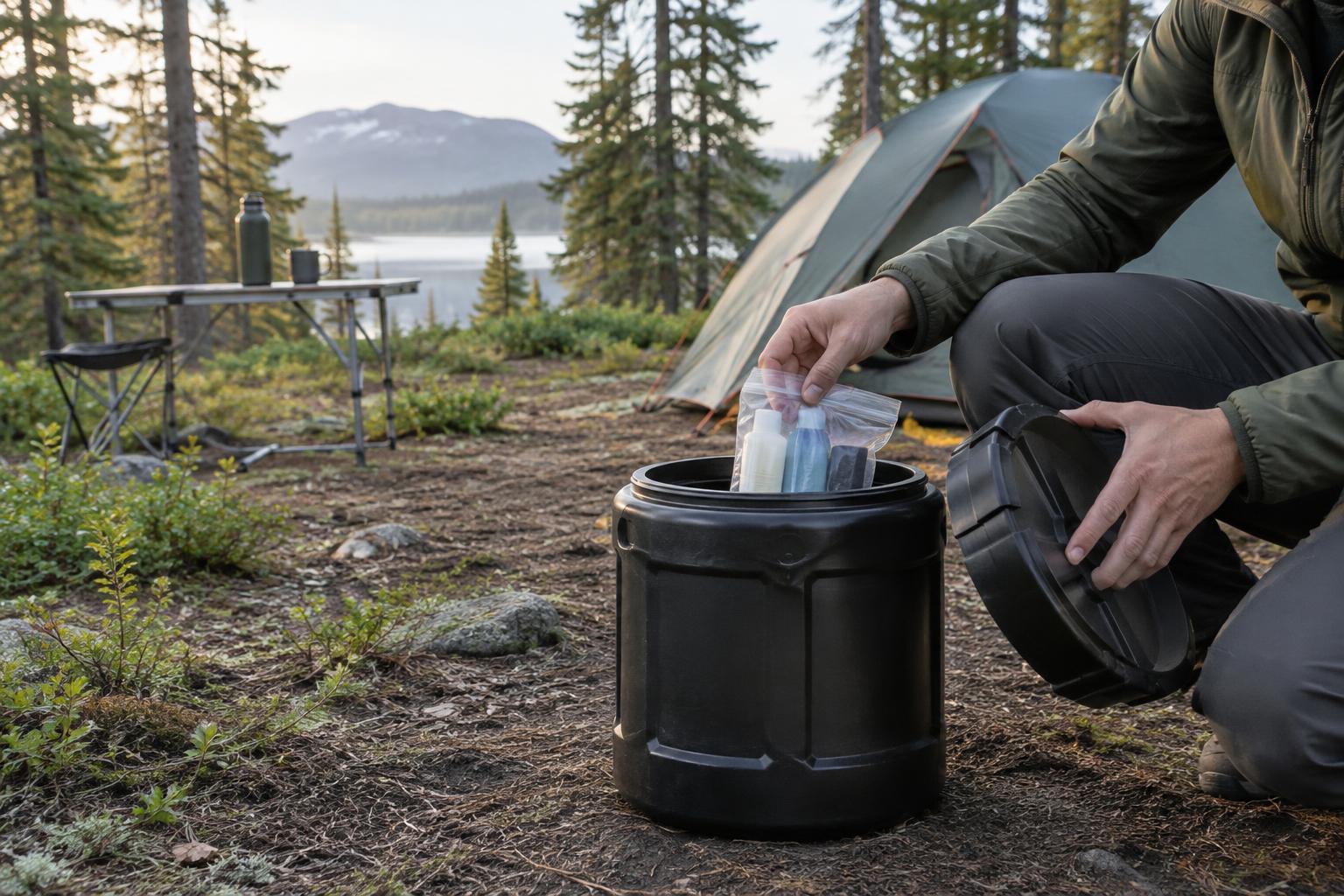
Choose your storage method to match the place you are visiting. A provided locker is useful only when its door closes and latches properly. A bear-resistant canister must be used according to its instructions and any local requirements. A hard-sided vehicle may be an allowed option in some places but not others, so do not assume that parking beside your tent settles the question. Hanging food takes suitable trees and careful technique; use it only where permitted and practical. If you are unsure what the site requires, find out before setting off.
Treat scented items as part of your food supply
The food bag is not the only thing that may interest an animal. Snacks in a coat pocket, used cookware, drink mixes, pet food, rubbish and scented toiletries can all draw attention. Keep them together in the approved storage place whenever they are not in use. Before bed, check pockets, daypacks and the area around chairs for wrappers or forgotten treats.
Put food in containers that are easy to close and carry, but do not mistake ordinary packaging for wildlife protection. A sealed tub can help contain crumbs and spills; it is not a substitute for a required locker or canister. Pack meals so you can take out what you need without spreading supplies around camp. That small habit makes both storage and cleanup simpler, especially when it is dark or raining.
Keep meals contained
Set up a clear place for preparing and eating food, following any instructions about its location relative to sleeping areas. Bring out ingredients when you are ready to cook, and return the rest to secure storage rather than leaving a bag open nearby. Keep an eye on food while you eat. If you need to leave the cooking area, put it away first, even for a short walk.
Plan portions with cleanup in mind. Fewer loose scraps mean less to collect from the ground afterward. Keep pets' meals supervised too, and store their food with your own supplies. Feeding wildlife, intentionally or by leaving food accessible, can encourage animals to return to campsites. Watching them from a distance is a better way to share the outdoors.
Clean up before you settle in
After each meal, gather crumbs, wipe preparation surfaces and wash cookware where the site allows. Strain food bits from dishwater if required, then dispose of both scraps and wastewater according to local guidance. Do not pour greasy water or leftovers beside the tent or into a water source. Put rubbish in a designated wildlife-resistant bin when one is available; otherwise, secure it with your other scented items until you can take it out.
Do a final walk around camp before sleeping or heading out for the day. Look beneath the table, around the stove and near the fire area for dropped food. Do not burn packaging or food waste as a way to dispose of it. Once the cooking area is clear, store cookware and anything else with a food smell as the site directs. Keeping the sleeping space free of food and scented items makes that last check easier.
Make secure storage an everyday camp habit
Good food storage need not feel complicated. Decide where supplies belong when you arrive, make sure everyone in your group knows, and return items there after every use. If a locker or container is shared, close it fully each time. At a new site, check the rules again rather than carrying over assumptions from the last trip.
If you notice wildlife nearby, give it space and do not offer food or try to retrieve an item from an animal. Follow the site’s guidance for reporting encounters or unsecured food. A campsite with fewer tempting smells and accessible scraps is more comfortable for visitors and less likely to teach wildlife to look to people for meals.


