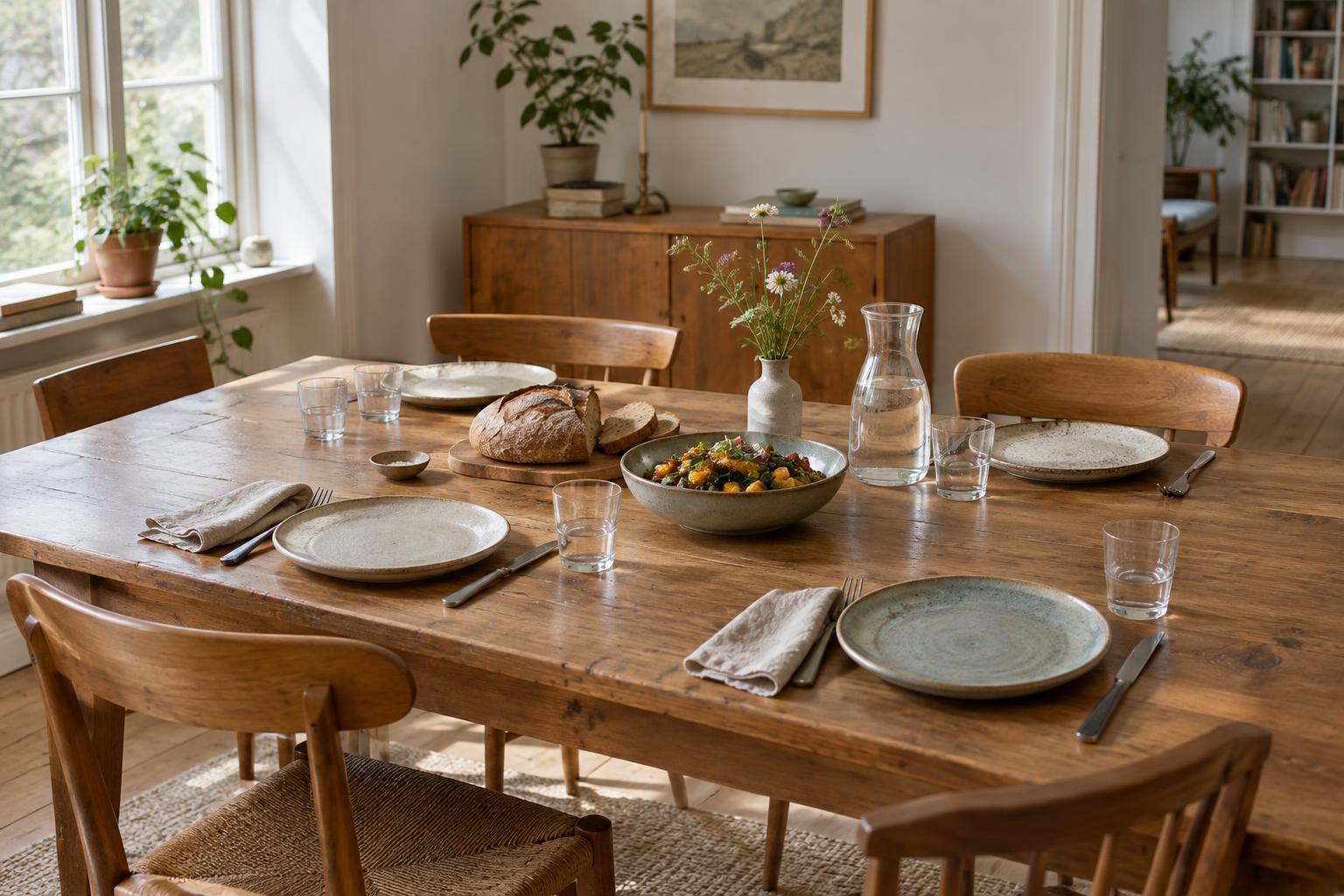
Start with the meal, not a place-setting diagram
Before putting anything on the table, think through how the food will be served. A bowl of soup needs a spoon and somewhere to set bread. A shared platter needs serving utensils and enough clear space for people to pass it. A meal served from the kitchen may need little more than individual plates, cutlery, napkins and drinks. Let the food determine the setup rather than laying out every utensil you own.
Count the seats, then check whether each person can reach their place without squeezing past a crowded corner. Leave room to lift a glass and rest an elbow comfortably. If the table is small, keep serving dishes on a nearby counter and bring them over as needed. A casual table works best when it is easy to use, not when every surface is filled.
Put the essentials where they are easy to find
Give each person a plate or bowl suited to the food, the cutlery they will actually use, a napkin and a drinking glass. Place the main plate in front of the chair. A fork can go to its left and a knife or spoon to its right, but guests can find their way just as easily if cutlery rests on a folded napkin beside the plate. There is no need to add a knife to a meal that does not call for one.
Set out water so people can help themselves, with a jug or pitcher within easy reach and space to refill it. If you are serving something else to drink, check whether the same glass will do or whether a second one would genuinely help. Shared salt, pepper or condiments are useful when they suit the food; they do not need to appear by default. Keep hot dishes on a heat-safe surface and leave a clear spot for lids or serving utensils.
Choose extras that earn their space
A tablecloth or runner can soften a hard surface, while individual mats can make wiping up spills simpler. Neither is required. Use whatever you can clean without worry, including a bare tabletop if that is most practical. Matching pieces can look calm, but a mix of everyday plates and glasses works just as well when everything is clean and comfortable to hold.
For a little warmth, try one low arrangement: a small bunch of greenery, a bowl of fruit or a few flowers in a short vessel. Keep sightlines open so people can talk across the table, and avoid anything that competes with serving dishes. Candles are optional, too; if you use them, place them where sleeves and passing hands are unlikely to brush the flames. Soft light is pleasant only when everyone can still see their food.
Make serving and clearing straightforward
If guests will serve themselves, give each shared dish its own spoon, tongs or other suitable utensil. Put heavier platters where they can rest securely, rather than asking people to hold them while serving. Bread, sauces and other small additions can stay off the table until they are needed. This keeps the meal moving without making the table feel crowded.
Plan for what happens after the first course as well. A small, unobtrusive place for used serving utensils helps prevent drips, and an available counter makes it easier to clear plates without piling them between guests. If dessert or tea is coming later, bring out those dishes when the time comes. Setting the entire meal at once often creates more clutter than convenience.
Leave room for people to settle in
The most useful finishing check is to sit down at one of the places. Can you reach your glass? Is there space to put down a serving bowl? Can you see the person opposite you? Adjust anything that gets in the way. If a guest needs a different seat, a steadier cup or more room to move, make the change without treating the arrangement as precious.
A casual table can be set in a few minutes or assembled gradually while guests arrive. You might invite someone to carry glasses over or put napkins beside the plates. The goal is not to demonstrate a particular style of hosting. It is to give everyone what they need for the meal, then make enough space for conversation to take over.


