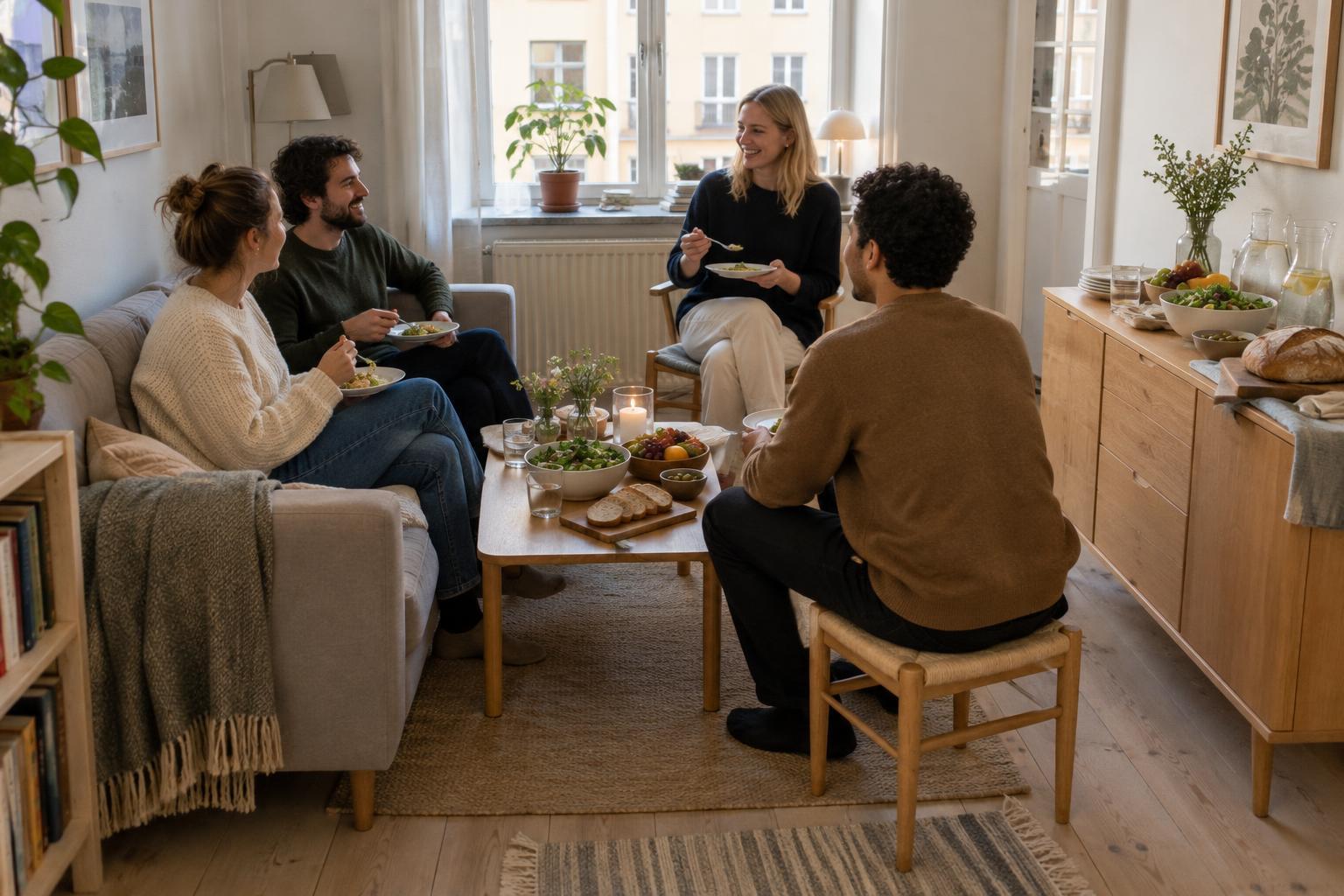
Start with the space you actually have
Before choosing a menu or sending invitations, look at your home as a guest would. Where will someone put a coat? Can they reach the bathroom without edging around a chair? Is there a place to set down a drink? A small home does not need to look empty, but it helps to leave a clear route between the entrance, seating, food and bathroom. Moving a side table or storing a floor lamp for the evening may do more than rearranging the whole room.
Let the comfortable capacity of the room guide the guest list rather than trying to fit in one more person because there is technically another chair. Count seats that people can use for the length of the gathering, not just stools or cushions that look good in a photograph. If a guest may need a supportive chair or an easier route through the room, make that part of the plan. A smaller invitation can give everyone more room to relax.
Choose a format that suits the seating
A seated dinner asks each guest to have a stable place for a plate, cutlery and a drink. If your table cannot offer that, choose a format with different demands. Soup and bread at the table, an afternoon coffee, or snacks served over a couple of hours can all make good gatherings. The aim is not to disguise the size of your home; it is to match the occasion to the space available.
If guests will sit in different parts of the room, plan food they can eat comfortably without balancing a full dinner plate on their knees. Place the most supportive seats where they are easy to reach, and avoid assuming everyone will be happy on the floor. A bench or a borrowed chair can help, provided it does not block circulation. Check that people seated apart can still join the conversation without having to shout across the room.
Keep the menu simple to serve
In a compact kitchen, the best menu is often one that leaves you free to be with your guests. Choose dishes you can prepare mostly ahead, with only one task that needs your attention just before eating. A tray of roasted vegetables, a make-ahead salad and bread, for example, can be easier to manage than several dishes that all need a burner at once. Ask about dietary needs when inviting people, so you can plan a meal everyone can take part in.
Think through serving as well as cooking. Decide where hot dishes will land, where guests will find glasses, and what will happen to used plates. A clear section of counter can serve as a drinks station; a small tray can keep cups and napkins together. If space is tight, bring food out in stages instead of displaying everything at once. Before guests arrive, empty the sink or dishwasher if you have one, so cleanup has somewhere to begin.
Give food and conversation room to move
A buffet works best when guests can approach it without stopping traffic. In some homes, serving at the kitchen counter is sensible; in others, it creates a bottleneck at the only doorway. Walk the route with a plate in your hand. If people would need to squeeze past one another, consider plating the main dish yourself or passing food around the table instead.
Keep everyday essentials within reach without covering every surface. A small landing spot near each seating area is useful for a glass or cup. Put water where guests can help themselves, and place napkins near the food rather than across the room. Good lighting matters too: guests should be able to see their plates and move safely, even if you prefer a softer light for the gathering.
Leave a little flexibility in the plan
A thoughtful setup does not have to be rigid. Someone may prefer to stand for a while, or the conversation may drift toward the kitchen. Clear pathways and a few movable pieces make it easier to adjust without turning every change into a furniture project. If a chair is needed elsewhere, move it; if a side dish has no place on the table, leave it in the kitchen and offer seconds from there.
Before the doorbell rings, do one last practical check: seats are ready, the bathroom is easy to find, and the first drinks or snacks can be served without a rush. Then let the home be lived in. Guests are more likely to feel at ease when the food is manageable, the seating is comfortable and their host can sit down with them.


