Start with the job, not the look
Open shelving and closed cabinetry solve different problems. A shelf makes its contents visible and easy to reach, which can be helpful for objects used every day. A cabinet offers a visual pause and a place for things that do not need to be on display. Neither choice is automatically simpler or more functional: an open shelf can become crowded, while a closed cabinet can hide a jumble you struggle to find.
Before choosing storage, name what will go in it. Sort belongings into three groups: things you use often, things you use occasionally, and things you mainly want to keep. Then consider whether each item benefits from being visible. A familiar stack of plates may be easy to grab from a shelf; spare batteries, mismatched cords and backup supplies may be easier to manage behind a door, ideally in labeled containers.
When open shelves earn their space
Open shelves work well when access matters and the contents are straightforward to put back. In a kitchen, that might mean frequently used mugs, plates or a few cookbooks. Near an entry, a small shelf can hold a tray for keys and a place for outgoing mail. In a living area, books and regularly used games can remain visible without requiring a door to be opened each time.
Visibility can also make a modest room feel less visually heavy than a wall of full-depth cabinets. But open storage asks for ongoing editing. Everything on it contributes to the room’s appearance, and exposed surfaces may need regular dusting or cleaning, especially near cooking areas. If that maintenance sounds tiresome, reserve shelves for a limited number of useful or meaningful objects rather than making them your primary storage.
Where doors make daily life easier
Closed cabinets suit items that vary in shape, come in unattractive packaging or tend to accumulate. They can calm a busy room by hiding supplies, appliances, linens or household tools. Doors also offer some protection from dust and splashes, though the amount depends on the cabinet and its location. In a kitchen, enclosed storage is often a practical choice for pantry goods and less-used equipment; in a living room, it can conceal cables and hobby materials.
A door does not replace an internal system. Give bulky items enough space, group smaller ones in bins or drawers, and keep frequently used supplies at a comfortable height. If a cabinet requires you to move several objects to reach one thing, its neat exterior is not doing much for your routine. Drawers, pull-out trays or adjustable shelves may make enclosed storage easier to use.
Match the choice to each room
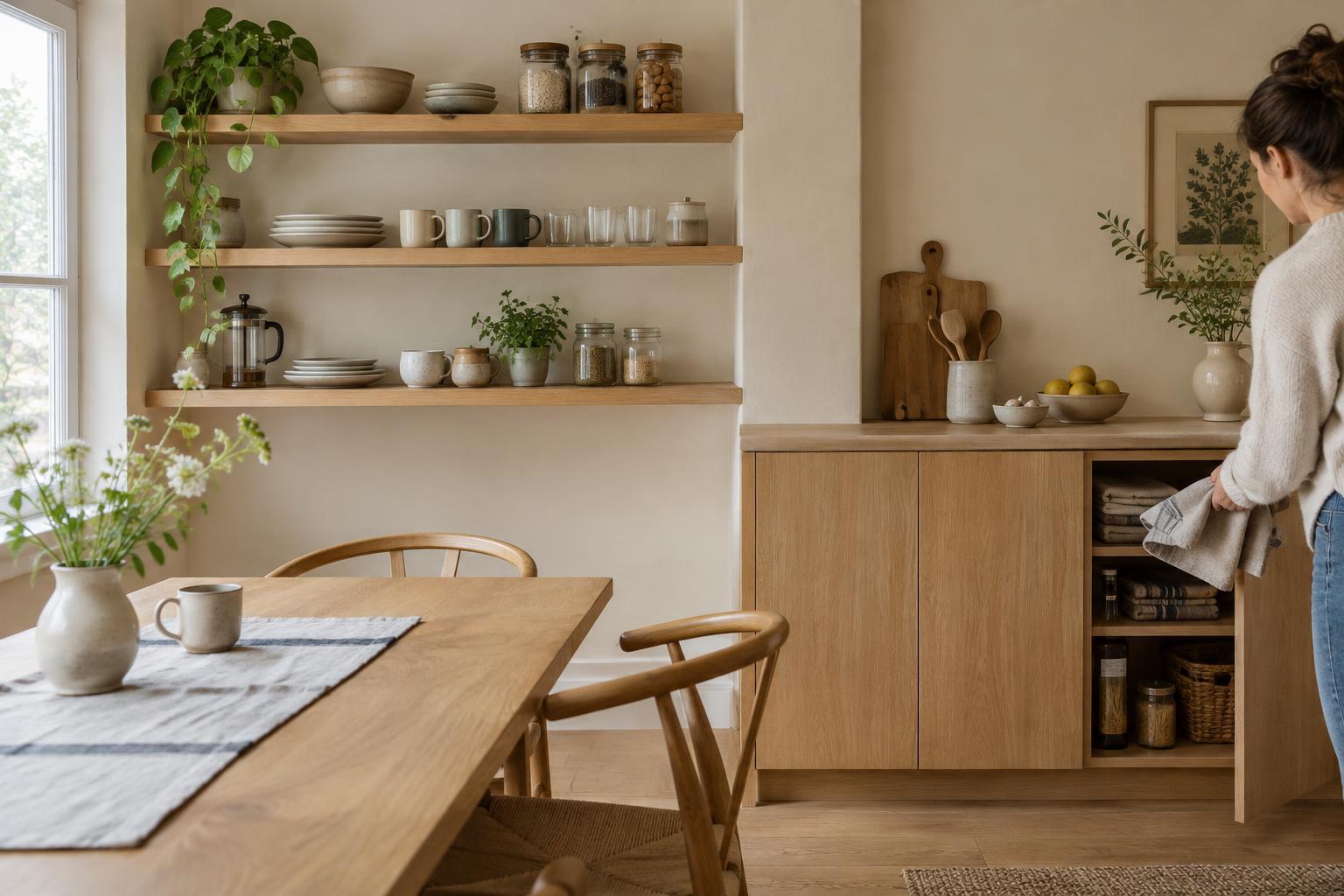
A mixed approach often works better than committing to one type throughout the home. In a kitchen, open shelves can hold everyday dishes while cabinets contain food, cleaning supplies and irregularly shaped tools. In a bathroom, closed storage can keep spare toiletries together, while a small open ledge holds the few items used each morning. Where moisture is common, consider how easily the shelf, cabinet and stored objects can be cleaned and dried.
Entryways benefit from storage that makes arriving and leaving easy: a visible hook or shallow shelf for daily essentials, plus a cupboard or drawer for off-season accessories. In a bedroom, closed storage often helps clothes and linens feel less visually busy, while a small shelf can hold a book or bedside lamp. Secure shelving appropriately, avoid overloading it, and keep breakable or hazardous items out of reach of children where relevant.
Test the balance before you commit
If you are planning a change, try living with a temporary version first. Clear one shelf, place only the items you expect to keep there, and notice what happens over a few weeks. Do you reach for those things easily? Do they return to the shelf, or does it collect unrelated objects? Likewise, put loose supplies into a box or drawer to see whether hiding them makes the room easier to use or merely harder to navigate.
Measure available wall space, shelf depth and door clearance before buying furniture or installing anything. Leave room for hands to lift objects out, and consider whether a cabinet door would block a walkway when open. The aim is not a perfectly arranged display or a room with everything concealed. It is storage that helps you find, use and put away the things that support your everyday life.


