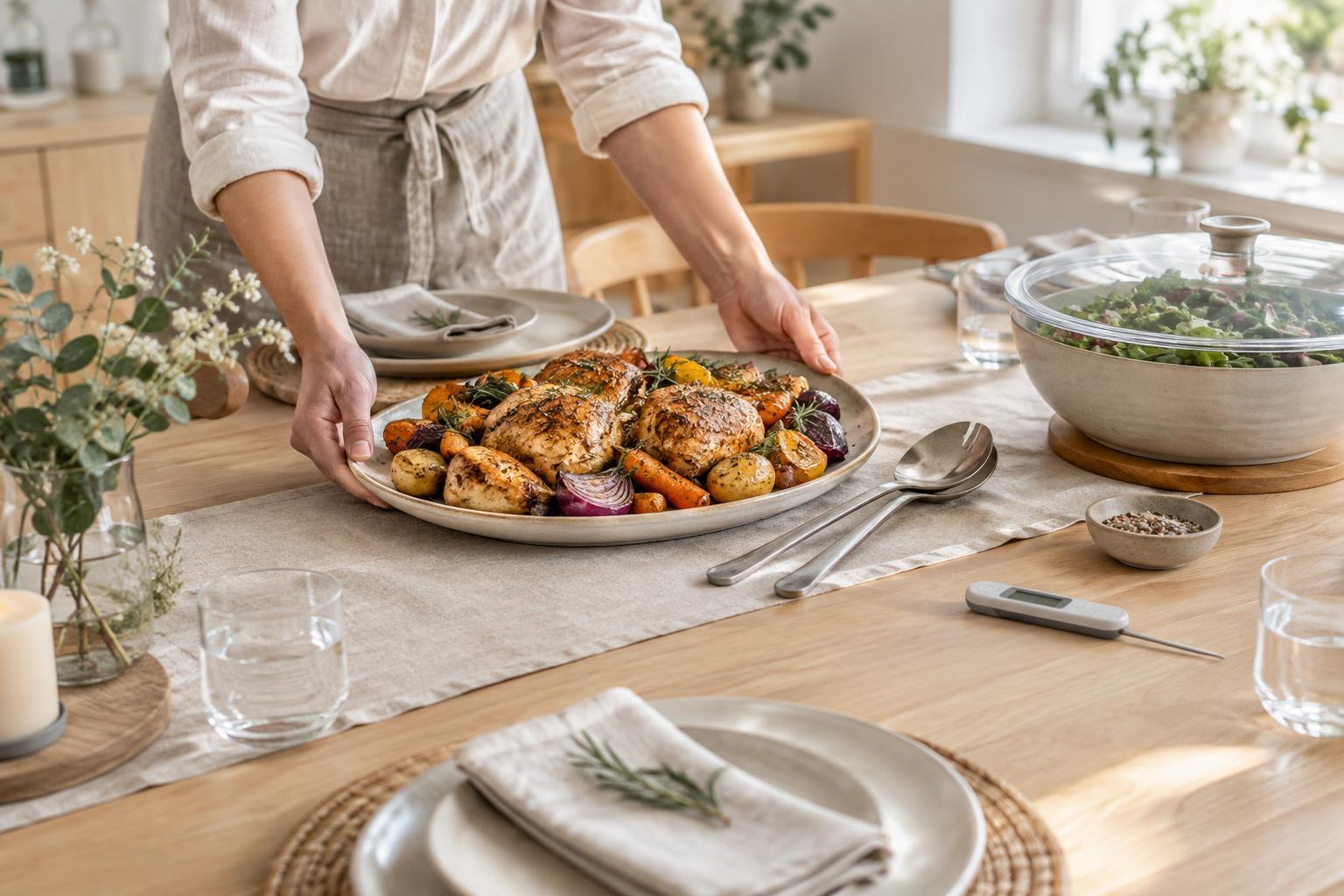
Make a simple plan before guests arrive
Food safety is easier when it is part of the hosting plan rather than a final check before dinner. Choose a menu you can prepare comfortably with the space and equipment you have. If refrigerator space is limited, avoid making more chilled dishes than you can store properly. For a long, relaxed gathering, think ahead about which foods can stay out for guests to enjoy and which should be brought out only when people are ready to eat.
Ask about allergies and other dietary needs when you invite guests, and keep ingredient information available while you cook. A guest may need to know about an ingredient in a sauce, garnish or packaged product, not just the main dish. If you cannot reliably prevent contact with an allergen in your kitchen, say so plainly rather than promising that a dish is safe. Clear communication is more hospitable than a guess.
Start with clean hands and separate workspaces
Wash your hands with soap and water before handling food and again after touching raw meat, poultry, seafood or eggs. Wash them after handling rubbish, using the bathroom or doing anything else that could transfer germs to food. Clean worktops, utensils and boards between tasks. A fresh cloth or clean paper towel is more useful than repeatedly wiping surfaces with the same damp cloth.
Keep raw foods away from ingredients that are ready to eat. Use separate boards and utensils where possible, or wash them thoroughly before switching tasks. Store raw meat, poultry and seafood in covered containers low in the refrigerator so their juices cannot drip onto other food. Wash produce as appropriate, but do not wash raw poultry: splashing water can spread contamination around the sink.
Cook and hold food with care
Follow reliable cooking instructions for the food you are serving, and use a food thermometer where temperature matters, especially for meat, poultry and reheated dishes. Colour and texture alone do not always show whether food has cooked through. Keep chilled ingredients refrigerated until you need them, and thaw frozen foods using a safe method such as the refrigerator rather than leaving them on the counter.
Once food is ready, avoid leaving perishable dishes at room temperature for a long stretch. Serve hot dishes while they are hot and keep cold dishes chilled until serving. If guests will graze over several hours, bring out smaller portions and replace them as needed instead of putting everything on the table at once. For an outdoor meal, make sure chilled food has a way to stay cold; shade alone is not a substitute for cooling.
Set up a serving table that stays orderly
Give each dish its own serving utensil, particularly when guests have told you about allergies. Place raw-food preparation tools out of reach before setting out cooked food. If you refill a platter, use a clean dish rather than adding fresh food to food that has been sitting out. These small choices help prevent accidental mixing and make the table easier for everyone to use.
You do not need an elaborate buffet to be a thoughtful host. A smaller spread that you can manage safely often feels more relaxed than one that needs constant attention. Keep extra portions in the refrigerator until they are wanted, and let guests know what is in a dish when its ingredients are not obvious.
Put leftovers away promptly
When the meal winds down, deal with perishable leftovers before settling in for the rest of the evening. Refrigerate food promptly in suitable containers; dividing a large batch into smaller, shallow containers can help it cool more efficiently. Do not assume that food left out for an extended period is safe simply because it looks or smells normal.
Label containers if several dishes look alike, and follow appropriate storage and reheating guidance for each food. When you are unsure how long something has been out or whether it was handled safely, it is sensible to discard it. A little preparation and a few timely checks let you focus on the part of hosting that matters most: sharing an enjoyable meal with your guests.


