Start with the job the window needs to do
Window coverings can soften daylight, limit glare, provide privacy, or make a room feel more settled. They do not all perform those jobs equally well. Before looking at fabrics and colors, notice what happens at each window during an ordinary day. Is morning sun welcome but afternoon glare troublesome? Can people see in after dark? Does the window sit behind a sofa, over a sink, or beside a desk?
Choose a priority for each room rather than expecting one treatment to do everything. A bedroom may need darkness and privacy; a living room may benefit from adjustable daylight. In a kitchen, a covering that stays clear of splashes and wipes clean easily may be more useful than one that drapes beautifully. This room-by-room approach keeps the choices functional without requiring every window to match.
Curtains: softness and flexible coverage
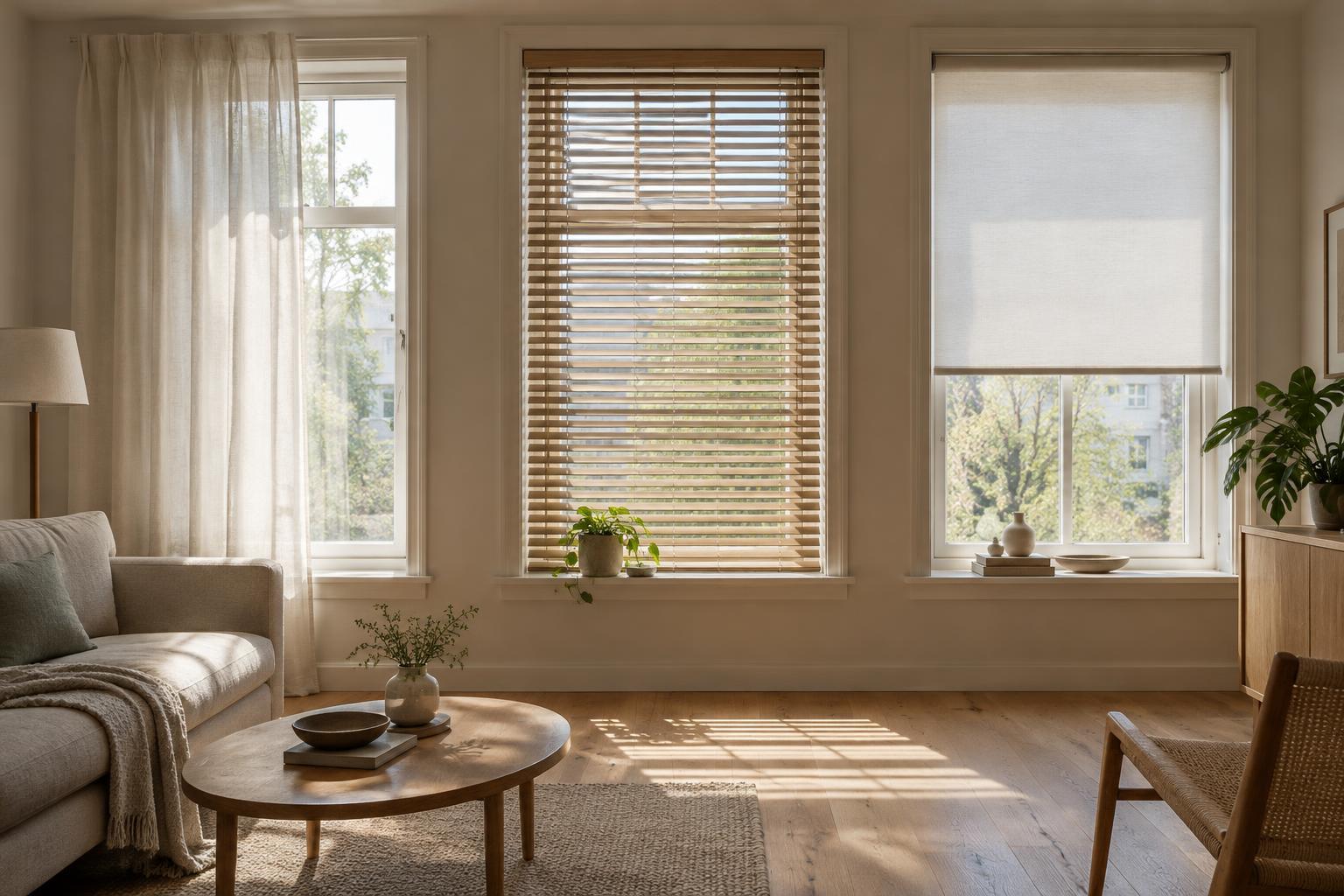
Curtains are a good choice when you want fabric to add softness or cover a broad window. A sheer curtain can filter daylight while leaving the room feeling open, though it may offer little privacy when interior lights are on at night. A denser fabric provides more screening and can reduce light, but gaps around the edges may remain. For a bedroom, look at how the curtain closes, not just how dark the fabric appears on a sample.
Curtains also need room to operate. Check that panels can stack beside the glass without blocking too much daylight, and that their length will not interfere with a radiator, desk, or frequently used door. Fabric tends to collect dust and may require washing or other care, so check the care instructions before buying. If you want a lighter daytime option and stronger coverage at night, layering sheers with heavier panels can offer both.
Blinds: precise control in a compact space
Blinds use adjustable slats, making them useful where you want to redirect light without fully uncovering a window. Tilting the slats can ease glare at a desk or allow daylight into a room while limiting direct views. Their relatively compact shape can also suit a window where hanging fabric would get in the way.
The trade-off is upkeep: horizontal slats give dust more places to settle. Materials differ in how well they tolerate moisture, so consider the conditions around a bathroom or kitchen window and follow the product’s cleaning guidance. Slats may not block light completely, even when closed. If darkness is the main goal, a blind alone may disappoint. For homes with young children, favor cordless or otherwise child-safe operating options and follow installation instructions carefully.
Shades: a tidy way to filter or block light
A shade is typically one continuous piece of material that raises and lowers. That simple movement makes it easy to leave the window fully open during the day and cover it when needed. Different designs serve different purposes: a light-filtering shade can soften daylight, while an opaque or blackout material can make a sleeping room darker. The material matters, but so does the fit; light can still enter around the edges.
Unlike blinds, most shades do not offer the same fine control over the angle of incoming light. Some styles allow coverage from the top or bottom, which can help when you want daylight and privacy at the same time. Think about what the shade looks like both raised and lowered, especially on a window you use throughout the day. As with blinds, choose an operating mechanism suited to the household and install it according to the manufacturer’s directions.
Check fit, maintenance, and daily use before deciding
Once you know which type suits the room, measure the window according to the chosen product’s instructions. Check the depth available for an inside mount and look for handles, vents, or trim that could obstruct movement. If you rent, confirm what mounting is permitted before ordering. These details can affect performance more than a small difference in color or texture.
Finally, picture the routine: who opens the covering, how often, and how easily can it be cleaned? A curtain can make a living room feel gentle and relaxed; a blind can manage shifting glare; a shade can keep a small window visually quiet. There is no need to pick one solution for the whole home. A useful window covering supports the way a room is lived in, then lets the rest of the space speak for itself.


