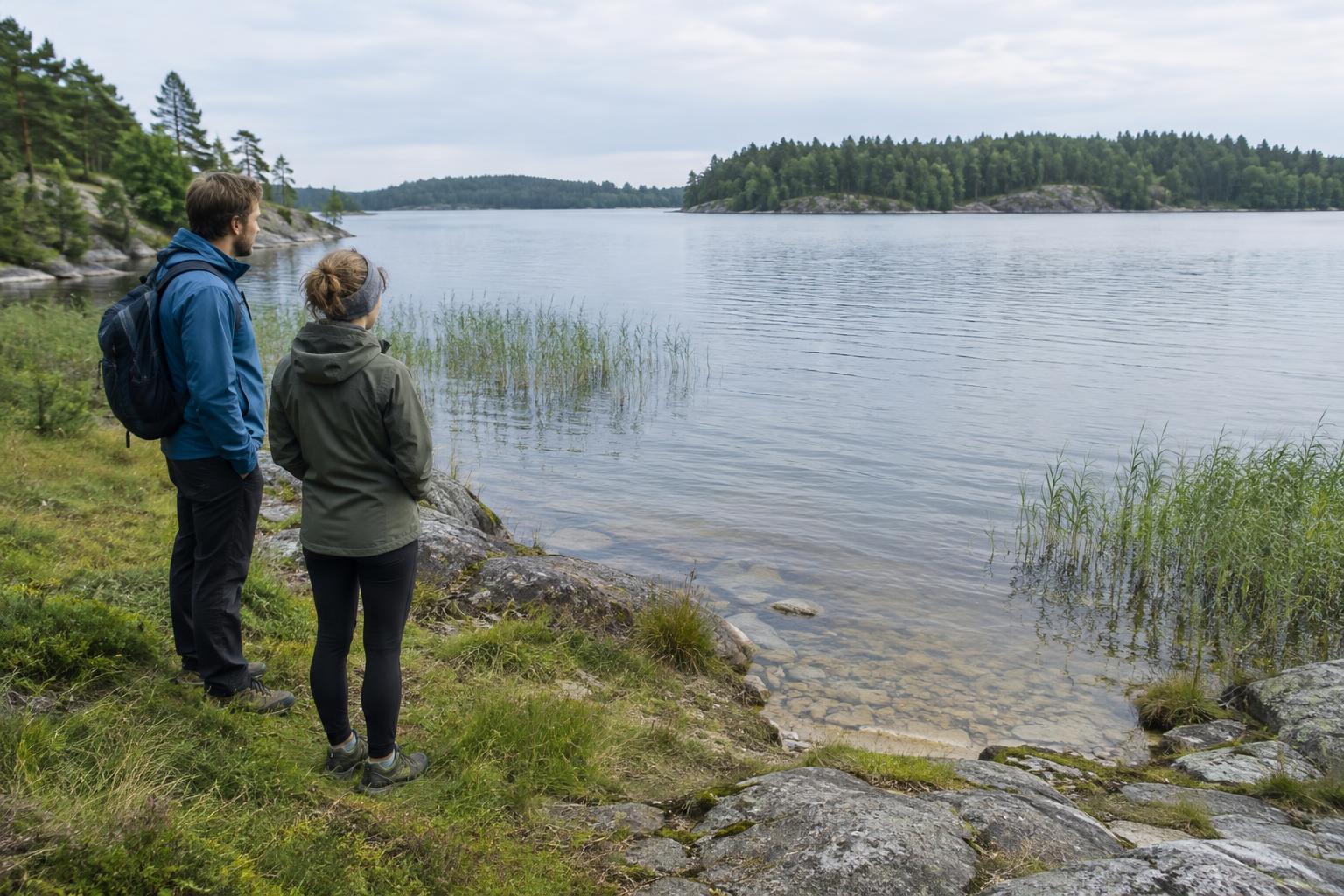
Start with permission and local information
Before unpacking a towel, find out whether swimming is permitted. Look for signs at the access point and follow closures, warnings, and instructions from lifeguards or site staff. A familiar place can change after heavy rain, strong wind, or work nearby, so do not rely only on a previous visit. Where available, check local information about water quality and conditions before leaving home, then read any notices again when you arrive.
A designated swimming area with a lifeguard is often a better choice than an unmarked shore, especially for someone new to open water. No setting is risk-free, however. If you cannot establish whether access is allowed, or a warning is unclear, choose another activity rather than treating the absence of a barrier as an invitation.
Watch the water before approaching it
Pause where you can see the whole area. Notice which way the water is moving, whether waves are building, and whether wind could push a swimmer away from shore. In rivers, currents can be stronger than they appear at the surface; near the sea, tides and breaking waves can alter a route back. Avoid swimming near boat traffic, spillways, weirs, steep banks, or other features that leave little room for error.
Clear, calm-looking water is not proof that it is safe. You may not be able to see sudden drop-offs, submerged branches, rocks, or fishing line. Do not dive or jump into water whose depth and underwater hazards you cannot verify. If the surface is discolored, has an unusual smell, or has visible scum or debris, stay out and seek local guidance rather than guessing at the cause.
Plan the way in and the way out
Find an entry point where you can step in without slipping or scrambling. Then identify at least one exit you could reach comfortably if you became tired or conditions changed. Check whether the bank is muddy, the rocks are slick, or a ladder is difficult to use with cold hands. An easy entry does not help much if the only way out is steep or exposed.
Keep the planned swim modest and close to a reliable exit. A route that looks short from land can feel different once you are in moving or cold water. Leave belongings where they will not block access, and make sure someone on shore or a swimming companion knows where you intend to go. Swimming with another person is sensible, but neither person should count on being able to perform a rescue.
Account for temperature and your own capacity
Open water can feel much colder than the air, even on a pleasant day. Enter gradually rather than plunging in, and give yourself time to notice your breathing and how well your arms and legs are working. If you feel overwhelmed, unusually breathless, or unable to move comfortably, get out promptly. Plan for a warm, dry change of clothes afterward instead of assuming sunshine will warm you up.
Be honest about fatigue, recent exertion, swimming ability, and how familiar you are with the setting. Avoid alcohol before swimming. If children are present, keep close, active supervision; a companion or flotation aid is not a substitute for it. When the conditions exceed anyone’s comfort or ability, a walk along the shore may be the better outdoor plan.
Make the final decision on site
Before entering, ask yourself a few simple questions: Is swimming allowed here? Do I understand the local warnings? Can I see a manageable route and a dependable exit? Is the water movement, temperature, and visibility suitable for my ability today? If any answer is uncertain, there is no need to test it from the water.
Conditions can shift during a swim, so continue paying attention rather than treating the initial check as a guarantee. Return to shore early if wind, waves, current, or your energy changes. If someone else gets into difficulty, call for help and use a reach or throw aid from a safe position if one is available; do not enter hazardous water after them. A good swimming spot is one you can enjoy without needing to prove you can manage a risky one.


