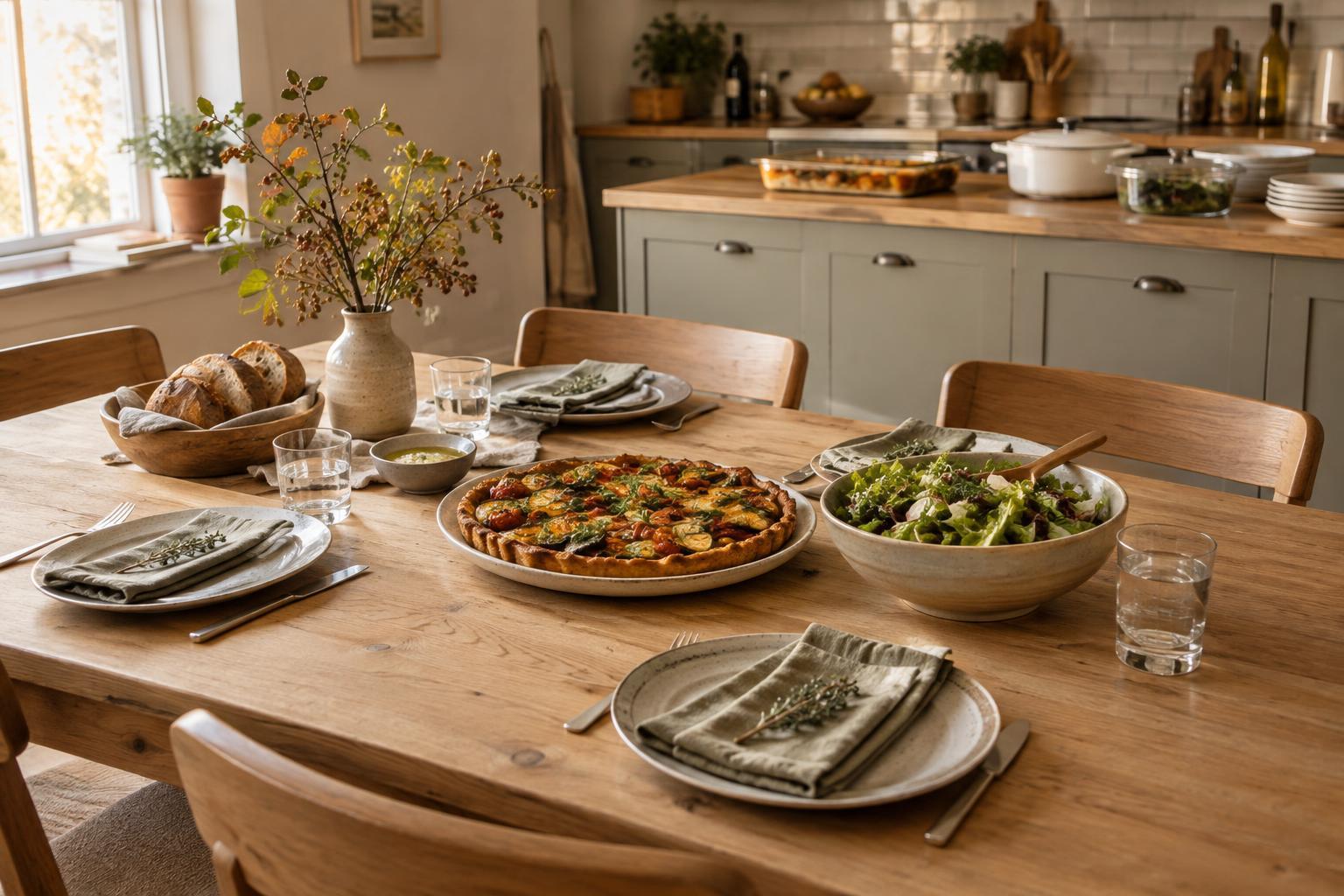
Start with the evening you want to have
Before choosing recipes, decide how you want the meal to feel. A seated dinner for four needs a different plan from a casual gathering where people help themselves. Think about where guests will sit, whether you want to serve courses, and how much time you would like to spend at the table. The best make-ahead menu fits the room and the people, not an idealized picture of a dinner party.
Ask about dietary needs when you invite people, while there is still time to plan around them. Then choose a main dish that most guests can share, rather than building several separate meals. A vegetable-based main with optional toppings, for example, can be easier to manage than a dish that requires last-minute substitutions. Make sure there is enough satisfying food for everyone, including guests who will skip an optional ingredient.
Choose dishes that improve or hold well
Build the menu around one dependable centerpiece: a stew, baked pasta, grain-based dish, or hearty salad whose components can be prepared in advance. Look for food that tastes good after resting and is straightforward to reheat or assemble. This is not the night for a dish that needs constant stirring, precise timing, or individual portions cooked to order.
Add contrast without adding much work. If the main is rich and warm, serve something crisp or bright alongside it, such as a green salad with its dressing kept separate, quick-pickled vegetables, or a bowl of citrus. Bread, a simple dip, or a platter of cut vegetables can welcome guests without becoming another cooking project. For dessert, consider a cake, chilled pudding, or fruit with yogurt or cream. One pleasing option is enough.
Check the menu for bottlenecks before committing. If the main, side, and dessert all need the oven at different temperatures just before serving, the evening will feel less relaxed. Aim for one item to reheat, one to assemble, and the rest ready to set out. A short menu with different textures usually feels more generous than a long menu that keeps the host in the kitchen.
Plan backward from the moment guests arrive
Write down each dish and mark what can be done a day ahead, earlier on the day, and just before serving. The day before might be for cooking the main, making dessert, washing greens, and mixing a dressing. On the day, you can set the table, prepare garnishes, and arrange serving dishes. Keep the final window deliberately light: reheat the main, dress the salad, and put out the food.
Include non-cooking tasks in the plan. Clear space in the refrigerator before filling it with prepared dishes. Check that you have a pot or baking dish large enough for the main, plus spoons or tongs for serving. Put drinks where guests can reach them and leave room on the table or counter for plates. These small decisions prevent a search for utensils at the moment you would rather be talking.
Store prepared food appropriately and follow the storage and reheating guidance for the ingredients you use, especially for perishable dishes. If a recipe seems uncertain after sitting overnight, choose a different one. Make-ahead cooking should reduce worry, not create a new question about whether dinner is still good to serve.
Make serving easy for everyone
A relaxed meal benefits from a clear serving path. Put plates at one end of a counter or table, followed by the main, sides, and finishing touches. Keep optional ingredients, such as cheese, herbs, or a spicy sauce, separate so guests can adjust their plates. If someone has an allergy or other dietary restriction, avoid assuming that a topping can simply be picked off a finished dish; plan a suitable portion and serving method in advance.
Decide what you will do when guests arrive. You might offer a drink, point out a small snack, and wait until everyone has settled before bringing out dinner. If you are serving at the table, place dishes where people can pass them comfortably. If you are serving buffet-style, tell guests what is available and where to find water. A little direction makes the evening feel welcoming without making it formal.
Leave room for the evening to unfold
The final step is to stop adding steps. Resist the urge to make one more sauce or an elaborate garnish because the kitchen feels quiet. Use that time to tidy the work surface, change clothes if you wish, or sit down for a moment. A host who can join the conversation contributes more to the evening than an extra dish.
Keep the menu plan afterward, with a note about what worked: which dish held well, whether there was enough food, and what took longer than expected. Next time, you can repeat the easy parts and change one thing. A make-ahead menu is not about making everything perfect before the doorbell rings. It is a way to make space for the people who came to share the meal.


