Start with the activities, not the furniture
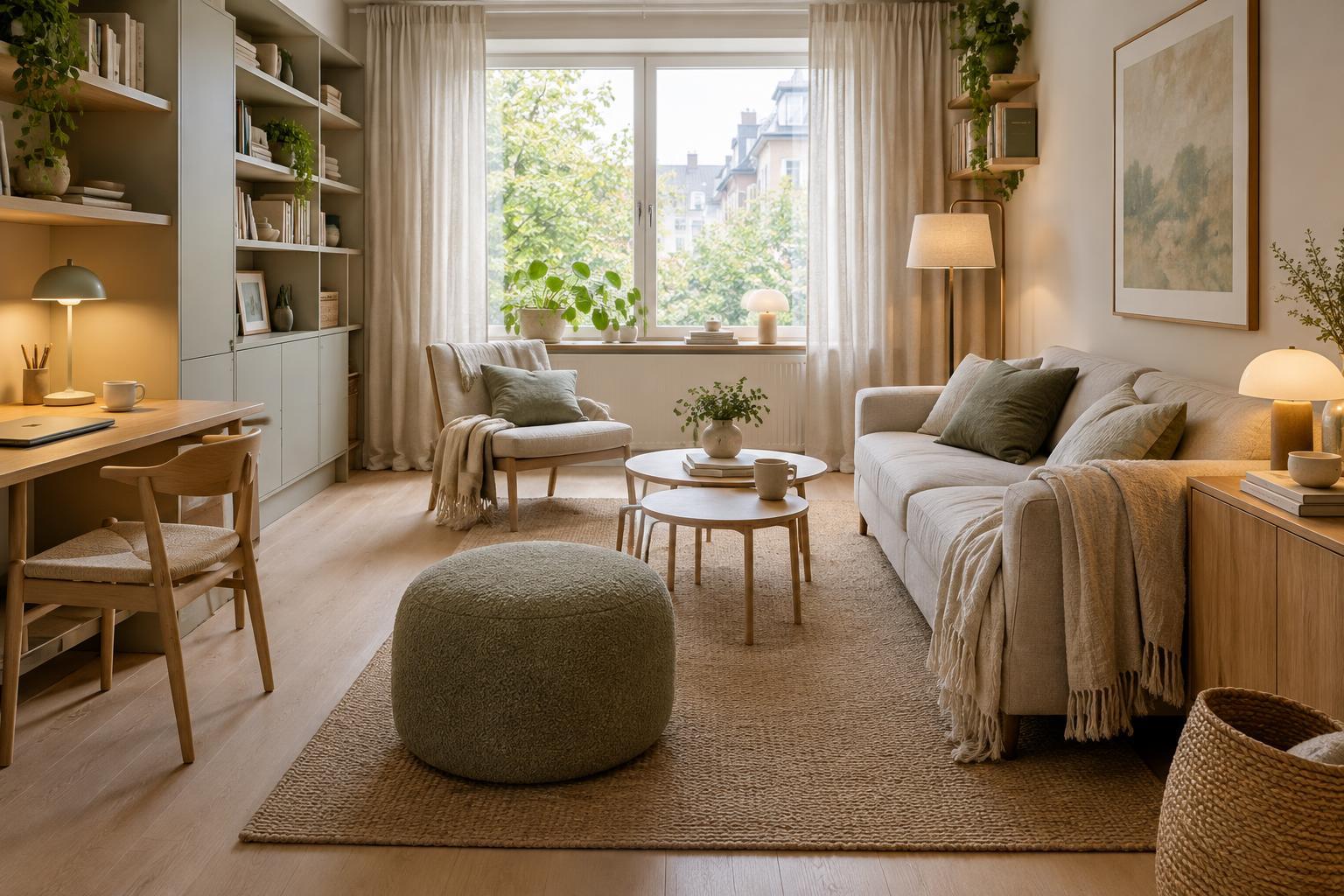
A flexible living room does not need to look like three separate rooms. It needs to make its most common activities easy. Before moving furniture, picture an ordinary week: where would you sit with a laptop, stretch out after dinner, or talk with two or three guests? Note what each activity requires. Work might need an outlet and a clear surface; rest might call for a softer light; conversation needs seats that face one another.
Keep the floor plan simple enough that you can cross the room without navigating around a chair or side table. Place the largest pieces first, then check whether doors, drawers, and walkways still work comfortably. If the room is small, leaving one open patch of floor can be more useful than filling every corner. It gives you space to pull up an extra chair, unfold a small table, or simply move around freely.
Give work a place without letting it take over
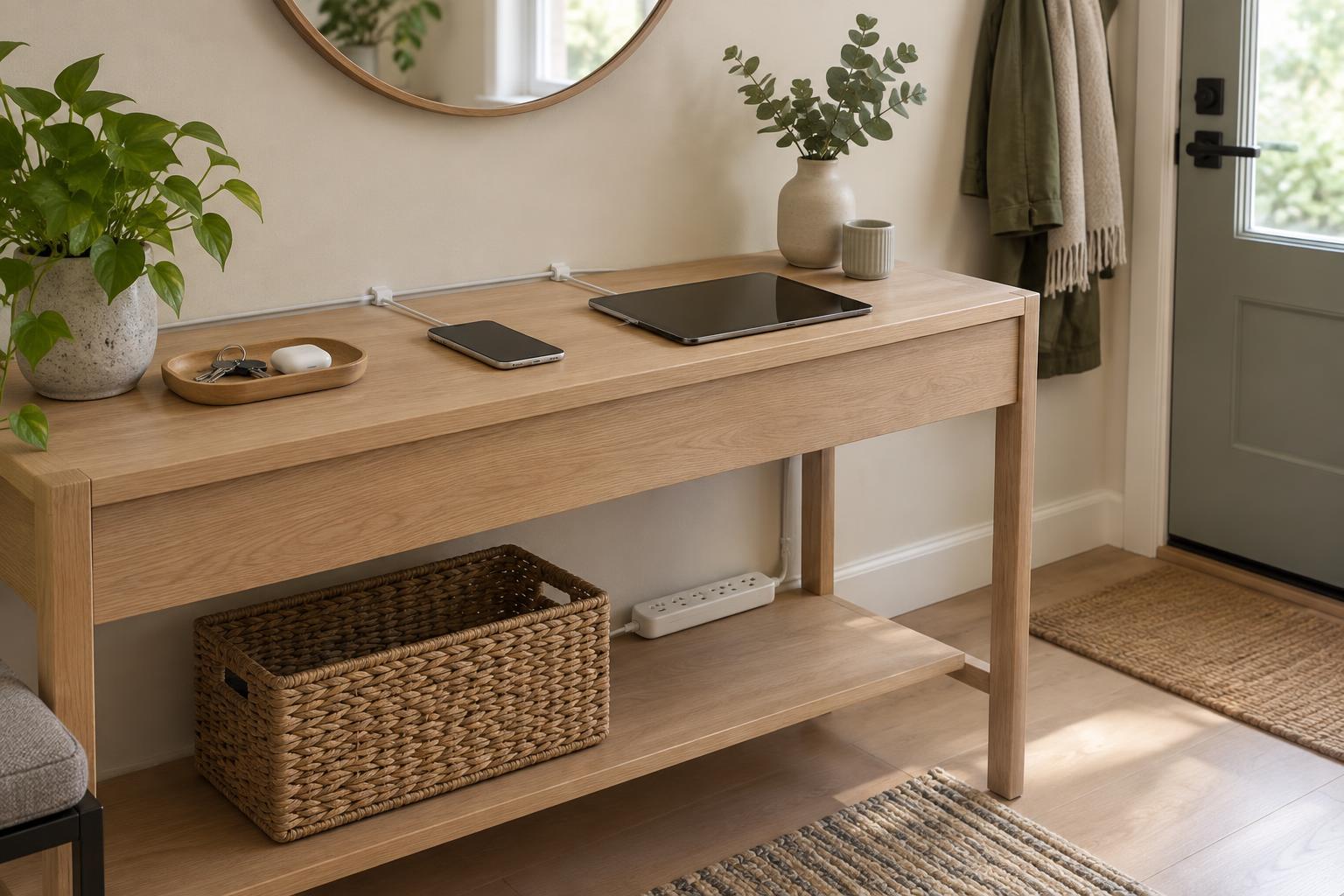
If the living room doubles as a workspace, choose a spot with a dependable surface rather than assuming the sofa will do everything. A compact desk, a narrow table, or a stable side table can hold a laptop and notebook. Position it where a task light and power source are practical, while keeping cables out of walking paths. If you make video calls, consider what is behind your seat and whether you can close a door to reduce interruptions.
The end of the workday should be easy to see as well as feel. A tray can gather pens, a charger, and a notebook; a drawer or lidded box can hold them when work is done. If you cannot put the equipment away, try turning the chair toward the living area or switching off the task lamp. Small changes help the room return to its other purposes without requiring a full reset.
Layer comfort for different kinds of rest
Rest is not always the same activity. Reading asks for light in a particular spot, while watching a film may feel better with a gentler glow. Use more than one lamp if possible so you can change the mood without relying on a single bright ceiling fixture. A floor lamp beside a chair and a table lamp near the sofa can also make the room feel welcoming when guests arrive.
Choose seating for how you actually relax. A sofa with enough support for sitting upright may be more versatile than one intended only for lounging. Add cushions or a throw if you like them, but leave room to sit without moving a pile of textiles first. A washable rug, easy-to-reach coasters, and a table at a comfortable height can make daily use simpler. The aim is not a perfect-looking room; it is one that feels good to use on an unremarkable evening.
Make room for conversation and extra seats
For hosting, test the layout from a guest’s point of view. Is there an obvious place to sit, a surface for a drink, and enough space to reach it? Seating does not have to match. An occasional chair, sturdy stool, or dining chair can join the sofa when needed, then return to its usual place afterward. Lightweight pieces are especially helpful if you often change the arrangement.
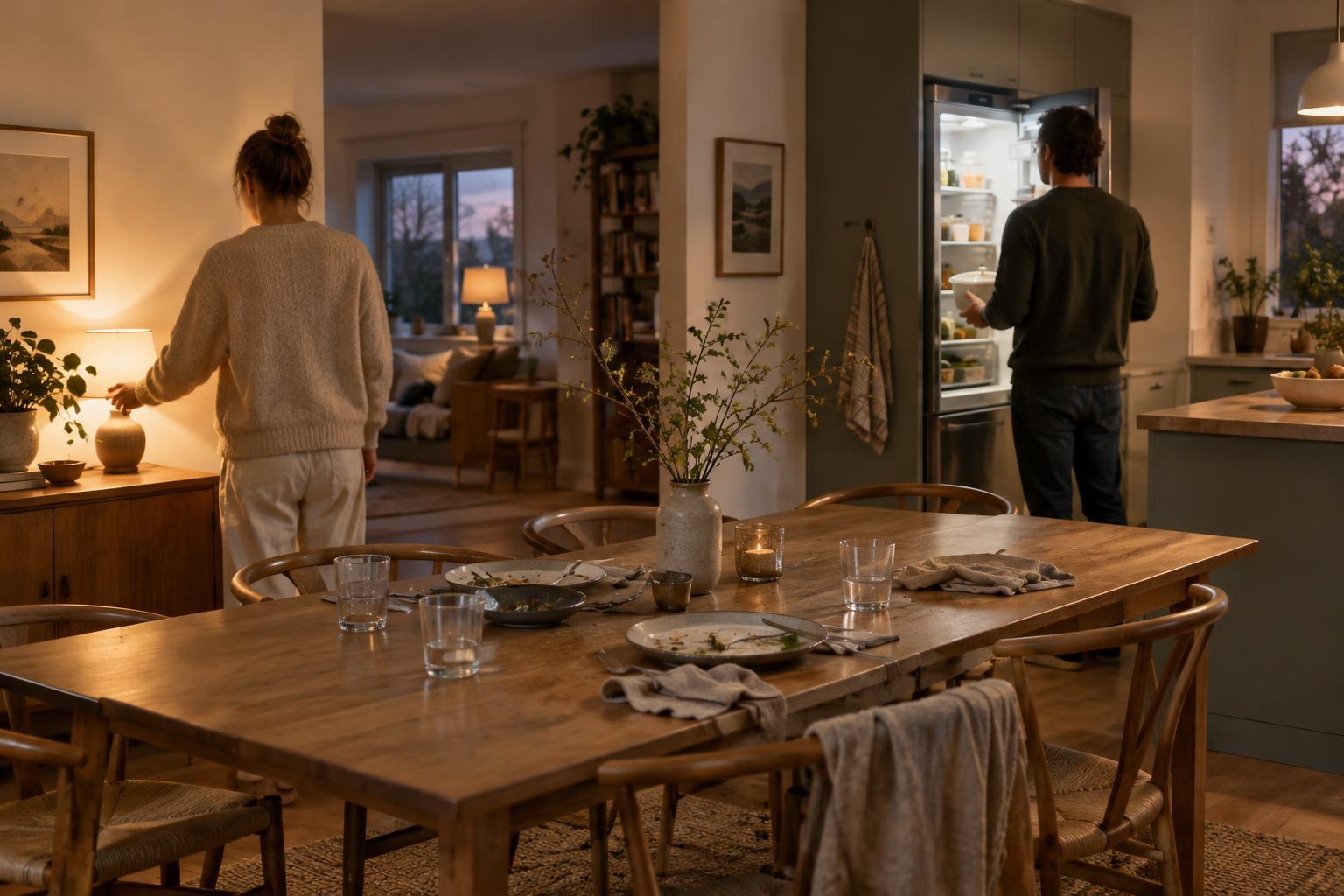
Try to create a loose conversation area rather than lining every seat against the walls. Turning one chair toward the sofa can make a small gathering feel more connected. Keep a clear route to the door and avoid placing a temporary seat where someone must squeeze past it. Before people arrive, clear the main table and put everyday clutter into its assigned home. That small preparation often matters more than adding decorative objects.
Choose storage and habits that support change
Flexible rooms depend on quick, repeatable transitions. Give frequently used items a home close to where they are needed: a basket for throws near the sofa, a shelf for books, and a box or drawer for work supplies. Closed storage can calm a busy view, while open shelves make sense for things you reach for daily. Neither approach is inherently better; choose according to what you can maintain.
Before buying a multipurpose piece, consider what happens when it changes roles. A coffee table with storage is useful only if you can still reach what is inside. A foldable guest chair helps if there is somewhere convenient to keep it. Start with one or two adjustments to the room you have, then live with them for a while. A flexible living room is not finished once and for all; it becomes more useful as you notice which transitions feel effortless and which still need attention.