Plan for a window, not a single dinner bell
When guests are arriving over an hour or two, a meal timed to one moment can make everyone feel slightly hurried. Early guests may wait for dinner, while later guests may worry they have held it up. Instead, tell people roughly when food will be available: for example, drinks and snacks on arrival, with a more substantial dish ready after a certain time. That gives guests a useful expectation without turning the evening into a schedule.
Choose a menu with two layers. The first is a small welcome offering that anyone can enjoy immediately. The second is a filling dish that can be served in portions as people arrive or once most guests are there. This approach works for a casual supper, an afternoon gathering or a weekend open house. It also lets the host spend less time watching the door and more time talking.
Start with bites that are easy to replenish
Set out a modest amount of food at first, then refill it as needed. Crackers, bread, nuts, olives, cut vegetables or whole fruit are straightforward options; choose a combination that suits the guests and the rest of the meal. A dip or spread can make the offering feel more complete. Keep spare portions in the kitchen rather than putting everything on the table at once, so later arrivals see a fresh selection.
Think about how guests will eat while greeting one another. Small items that need only a napkin are easier to manage than anything that requires careful cutting or a complicated topping. Put plates and napkins where they are visible, and leave a little clear space near the food for someone to set down a drink. These details matter more than making the table look elaborate.
If you know about dietary needs, include something clearly suitable rather than expecting guests to piece together a snack from garnishes. Asking ahead of time is more reliable than guessing. You can also keep ingredients or packaging available so people can check for themselves without having to make an announcement.
Choose a main dish that serves well in portions
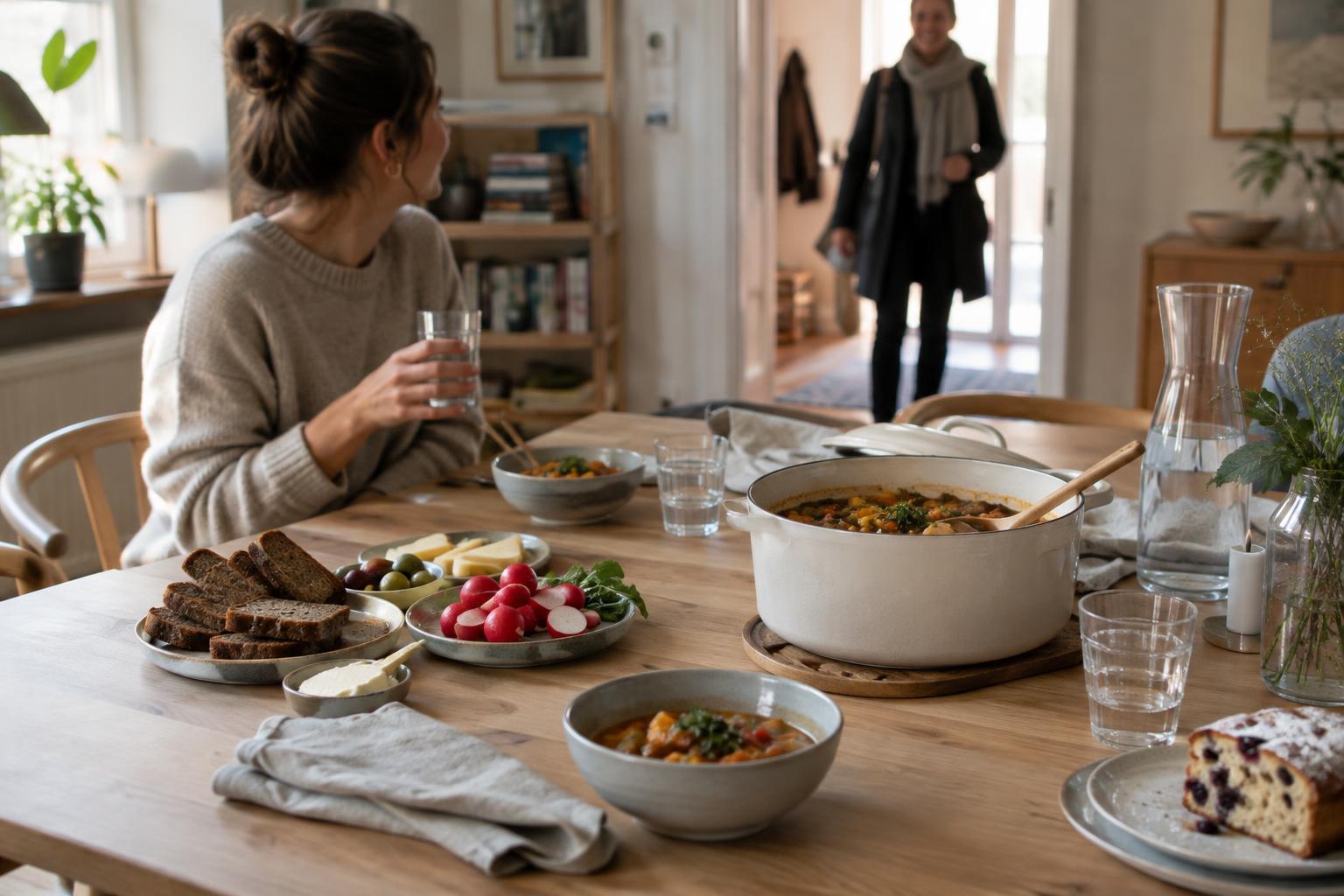
A good staggered-arrival main dish is satisfying without needing a last-minute finish for every plate. Soup with bread, a vegetable-rich stew, a baked pasta or a grain-and-roasted-vegetable meal can all be served in portions. The best choice is one you are comfortable making and have the space to store and serve properly. Prepare components ahead where possible, then decide whether to offer the main dish as guests come in or invite everyone to eat during a broad window.
For a less formal meal, let guests assemble a plate from a few complementary parts: a substantial base, vegetables, a sauce or dressing, and bread if it fits. Keep toppings separate when that helps guests choose what they like. Avoid a menu in which every component must be cooked at the exact moment someone arrives. If one element benefits from being fresh, make it a simple addition rather than the center of the plan.
A self-serve setup can be welcoming, but it still needs attention. Use smaller serving dishes that you can replace or refill, and follow appropriate food-storage guidance for anything perishable. Keep foods that need chilling cold and foods meant to stay hot properly warm; do not leave either sitting out for the whole gathering.
Make drinks and dessert work on their own schedules
A small drinks station gives guests something to do when they arrive and frees you from pouring every glass. Water should be easy to find, alongside whatever other drinks you choose to offer. Set out cups or glasses, and keep extras close by. If the entrance is busy, place the drinks a few steps away so people can move into the room rather than gathering at the door.
Dessert does not have to mark a formal end to the meal. A cake that can be sliced as needed, biscuits, or fruit with a simple accompaniment allows early guests to have something sweet without closing the kitchen before later guests eat. If you prefer to serve dessert together, say so casually and keep the earlier snacks available until then. Either choice is fine when guests understand the plan.
Leave room for the gathering to unfold
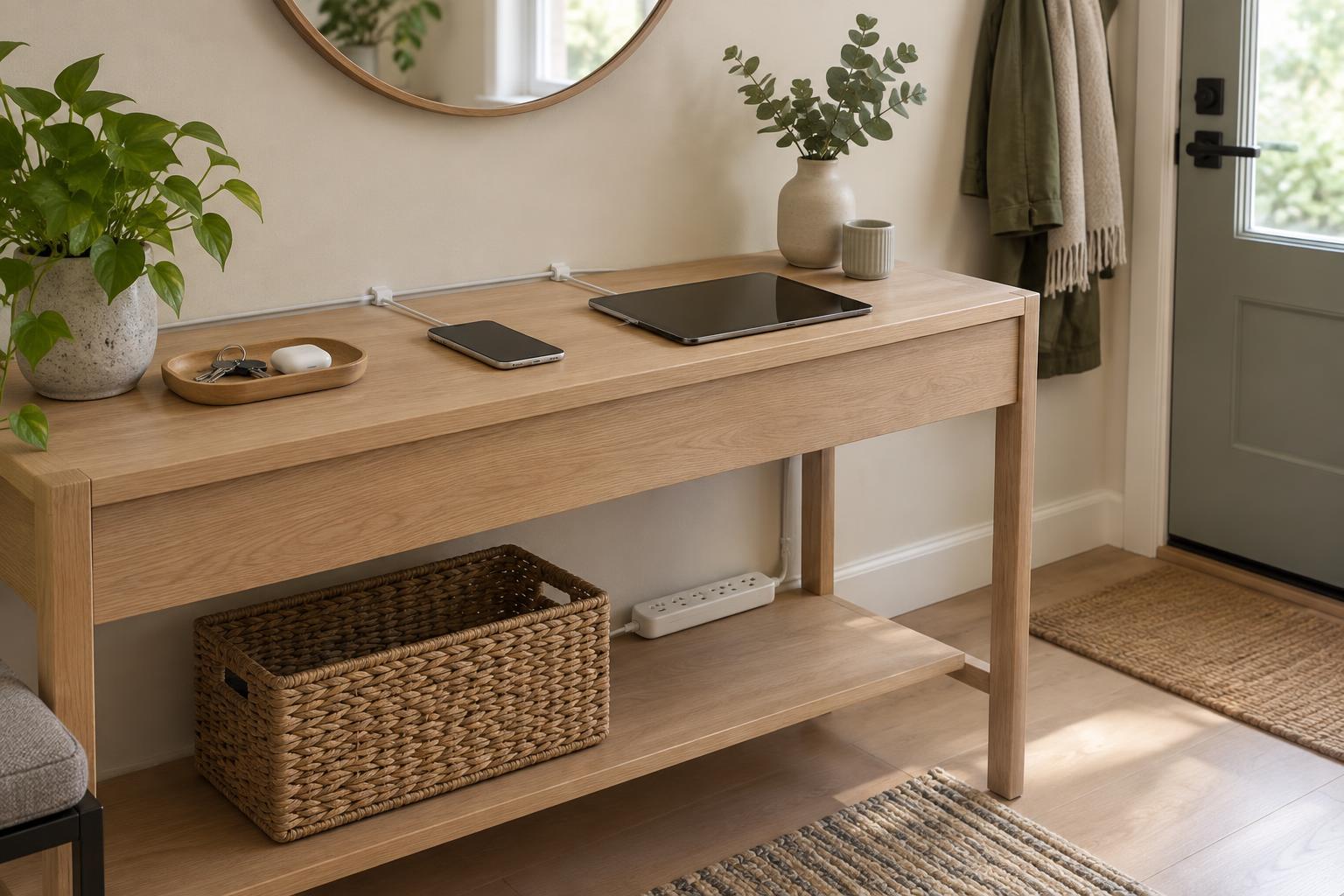
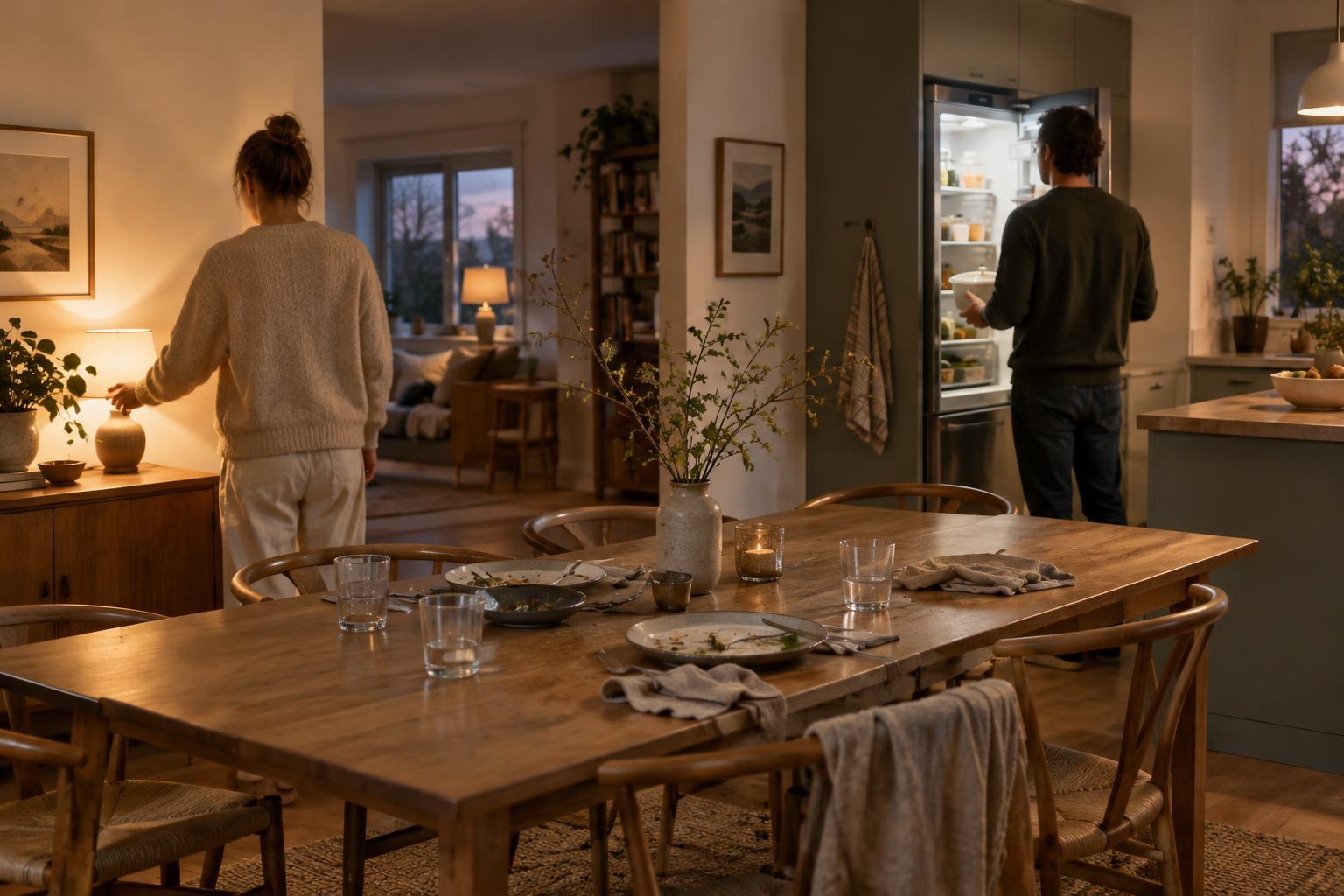
Before guests arrive, decide where coats will go, clear a place for used dishes and check that serving utensils are ready. Those small preparations make it easier to welcome someone who appears while you are refilling food. You can tell each new guest, “There are snacks here, and the main dish is ready whenever you are.” A simple invitation is usually more comfortable than a detailed explanation of the evening.
Staggered arrivals need not mean constant hosting in shifts. With a few replenishable bites, a flexible main dish and an easy way to serve drinks, everyone can settle in at their own pace. The goal is not a perfectly synchronized table; it is for each person to feel there is a place for them when they arrive.