Start with the kind of morning you want
A good weekend brunch does not need to resemble a restaurant service. It can be a few friends around a kitchen table, family gathered after a walk, or neighbors stopping by for an unhurried meal. Before choosing recipes, decide how many people you can comfortably seat and how much time you want to spend cooking while they are there. That decision will do more to shape the occasion than a complicated menu.
Give guests a clear start time and a general idea of what you are serving. A quick check about dietary needs helps you plan food everyone can enjoy without making assumptions. If children are coming, consider whether there is space for them to sit, move around or take a break from the table. Simple hosting begins with making people feel considered, not with arranging every detail perfectly.
Build a menu you can actually manage
Choose one main dish, one fresh element and something easy to put on the table. A baked egg dish with bread and sliced fruit is one option; yogurt, fruit and toast with several toppings is another. If you prefer a sweeter main, pancakes or baked oats can sit alongside a savory item such as cheese or boiled eggs. The point is to offer a satisfying combination without preparing several dishes that all demand your attention at once.
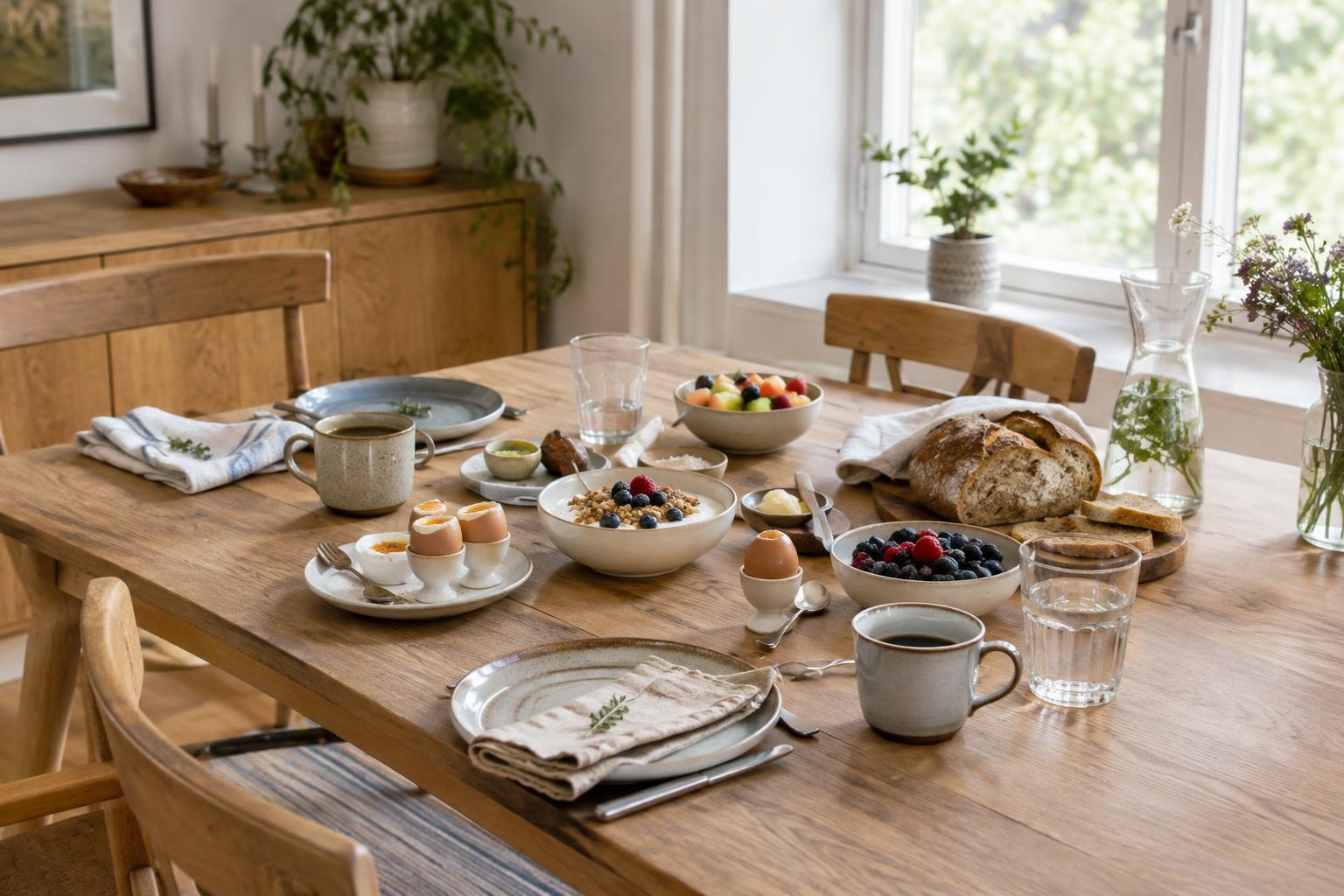
Think about how guests will serve themselves. Bread, fruit, spreads and a pitcher of water can go out before anyone arrives. Keep foods that need to stay cold refrigerated until it is time to eat, and serve hot dishes when they are ready rather than leaving them out throughout a long morning. Store-bought bread or pastries are useful shortcuts. A menu assembled from a few good basics can feel generous, especially when there is enough for guests to take seconds.
Do the quiet work the day before
Advance preparation makes room for conversation. The day before, check that you have enough plates, cups, cutlery and places to sit. Clear the table and a little counter space, wash fruit, and set out the serving dishes you expect to use. If your main dish has components that can be prepared ahead, handle those too. You do not need to clean the whole home; focus on the spaces guests will use.
In the morning, make a short list in the order things need to happen: preheat the oven, start the main dish, prepare drinks, then bring out the foods that are ready to serve. Leave a little flexibility in the schedule. Someone may arrive late, a dish may need a few extra minutes, or the conversation may move more slowly than planned. A brunch that can tolerate those small changes is easier for everyone to enjoy.
Set a table that invites people to settle in
A welcoming table can be functional rather than formal. Put cups near the drinks, serving utensils beside the food, and napkins where people can reach them. Use the plates and linens you already have, even if they do not match. A small branch, a bowl of fruit or a candle can add a warm touch without taking up the space needed for dishes. Leave enough room for guests to pass food and rest their cups comfortably.
Make drinks simple to find and refill. Water, coffee or tea may be all you need; an additional option is welcome if it suits your guests. If you have a small table, place some food on a nearby counter and let people bring their plates back to their seats. The most useful setup is one that lets guests help themselves without asking you where everything is.
Leave room for the unplanned moments
Once people arrive, offer a drink and let the meal find its pace. It is fine to say that the food is nearly ready or to invite someone to carry a dish to the table. Guests often feel more at ease when they can take part in a small way. You do not have to refill every cup immediately or keep the conversation moving without a pause.
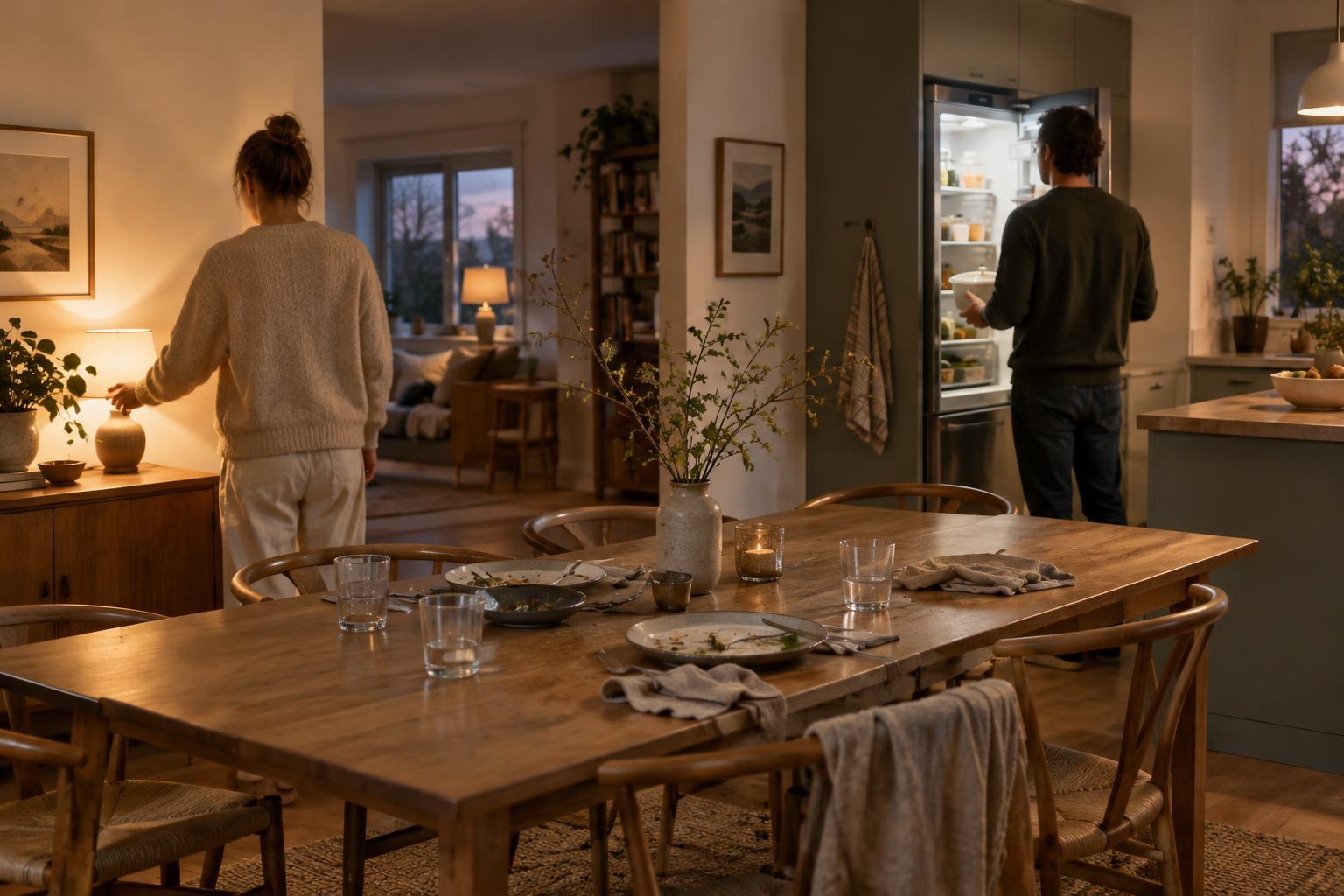
After the meal, clear only what you need to make space. A stack of plates can wait while everyone finishes talking. If the weather and your space allow, a short walk or a move to another comfortable spot can be a pleasant way to extend the visit, but there is no need to plan a second event. A simple brunch succeeds when people have something good to eat and the freedom to linger.