Start with the experience you want to share
The choice between a buffet and a seated meal is less about formality than about how people will move, eat and talk in your space. A buffet invites guests to serve themselves and settle where they like. A seated meal gives everyone a place and lets you bring the food to the table. Either can feel relaxed and generous when it suits the people you have invited.
Before planning the menu, picture the gathering in motion. Will guests enjoy getting up between courses, or would they rather settle into one long conversation? Is there enough room for people to pass one another while carrying plates? Are you hoping to stay at the table, or do you like a meal with a little movement? These questions are more useful than deciding that one style is always easier or more welcoming.
Choose a buffet when flexibility matters
A buffet works well when guests may arrive or eat at slightly different times, or when the menu offers several dishes they can combine to suit their appetites. It can also make a modest dining table feel less crowded: serving dishes stay on a separate surface instead of competing with plates, glasses and elbows. Prepare a clear place for plates at the start of the line, with cutlery and napkins where guests can pick them up without juggling too much.
The trade-off is movement. A buffet needs a route that does not block a doorway or the kitchen, plus comfortable places for guests to eat once they have served themselves. Foods that need cutting or careful balancing may be awkward without a table. If guests have limited mobility, serving them at their seats can be more considerate than asking everyone to join a line. Put drinks somewhere other than the food station if space allows, so people can refill a glass without slowing the meal.
Choose a seated meal when you want everyone together
A seated meal suits a gathering built around shared conversation. Everyone begins together, and nobody has to find a place to rest a full plate. It can be especially comfortable when the menu includes a hot main dish, something that needs to be cut, or several small courses. You do not need matching chairs or elaborate place settings; enough elbow room, a reachable glass and a stable surface matter more.
Seated does not have to mean carefully plated courses. Passing bowls and platters around the table lets guests choose their portions while keeping the group together. For a larger table, place popular dishes in more than one spot if you have enough serving bowls. Think about how you will bring food out and clear it away, too. A simple menu that can mostly be prepared before guests sit down gives you a better chance to enjoy the conversation yourself.
Let the menu and the room make the decision
Look at the dishes you want to serve before committing to a format. A buffet favors food that is easy to portion and carry, such as salads, bread, roasted vegetables and dishes served from sturdy bowls. A seated meal is often simpler for soup, saucy food or anything best eaten as soon as it reaches the table. If a dish needs particular care to stay at a suitable temperature, plan when to put it out rather than leaving it on display throughout the gathering.
Then test the room as if you were a guest. Walk from the entrance to the drinks, food and seats. Notice narrow passages, trailing bags and surfaces that might become crowded. Count places where someone can actually eat, not just places where someone can stand. A small gathering may fit comfortably around a table, while the same room may need a buffet and several eating spots when more people come over.
Borrow the best parts of both
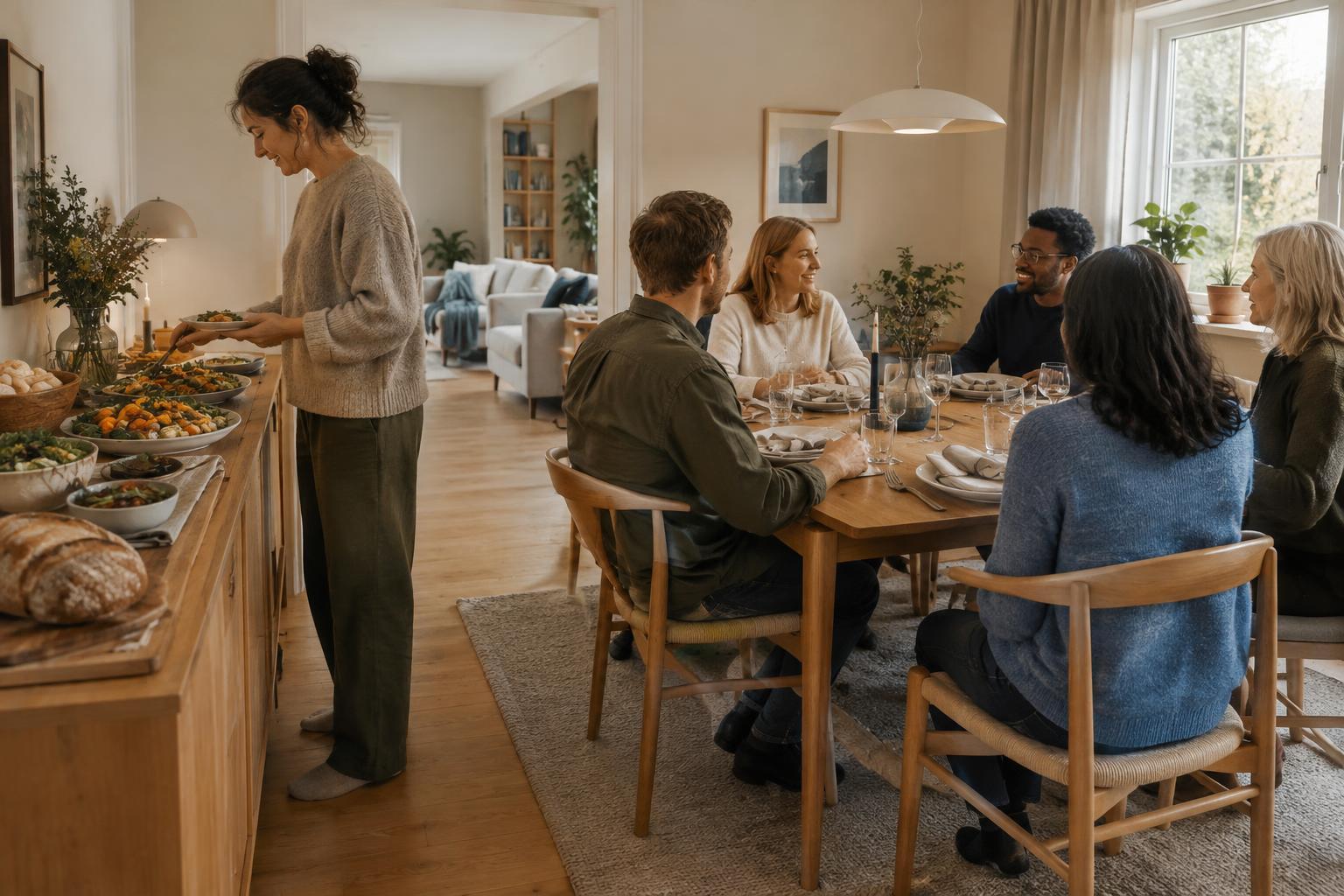
You can combine the two styles without making the plan complicated. Invite guests to serve themselves at a sideboard, then sit together at the table. Or seat everyone for the main dish and leave dessert and tea for guests to help themselves. These small shifts can free table space or give people a natural chance to stretch their legs.
Whichever arrangement you choose, make it easy for guests to understand. Let them know where to put coats, where to find a drink and when food is ready. Ask ahead about dietary needs, and identify dishes clearly rather than leaving anyone to guess. Keep a few practical items close by: an extra serving spoon, spare napkins and a place for used plates. A good serving style is the one that lets guests eat comfortably and leaves you with time to be part of your own gathering.


