Start with the path you are on
Before setting off, look for signs at the trailhead and along the route. A path may be reserved for walking, open to bicycles, or shared with horses and other users. Posted rules and local guidance matter more than any general rule of thumb about who has priority. They may also identify one-way sections, seasonal closures or places where dogs must be leashed.
Once on the trail, travel at a pace that lets you notice what is ahead. Take extra care near bends, bridges, steep sections and busy entrances, where there may be little room to adjust. If you are moving quickly, slow down before reaching others rather than expecting them to step aside at the last moment. A relaxed pace makes it easier to enjoy the surroundings and respond courteously when the path changes.
Make passing predictable
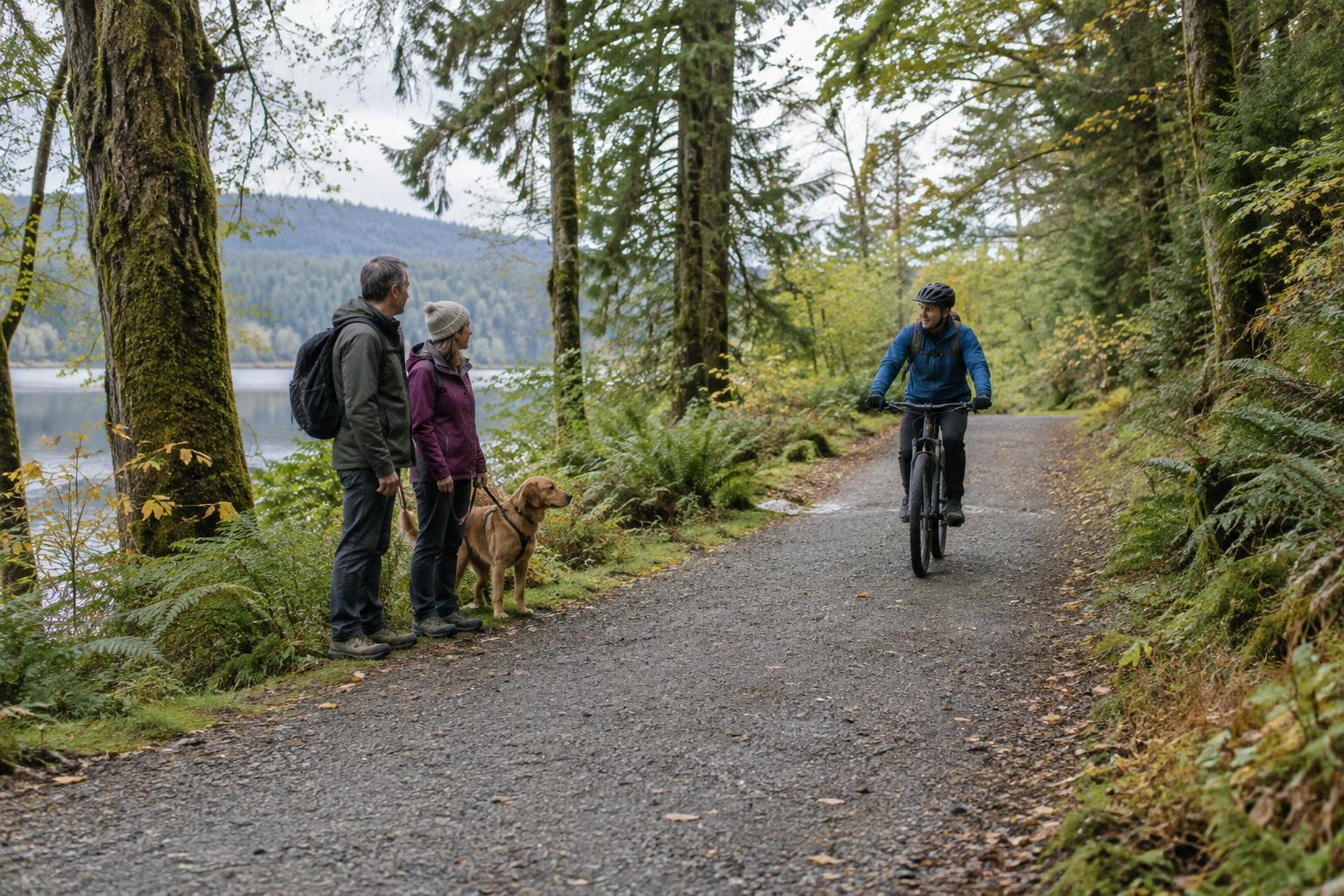
When approaching someone from behind, give a friendly signal with enough distance for them to hear and respond. A simple “Hello, may I pass?” is often clearer than a last-second bell or a sudden move around them. Wait for a safe opening, then pass with as much space as the trail allows. If you are the person being passed, keep your movement steady and make room when you can do so safely.
Meeting someone head-on calls for the same patience. On a narrow path, one person may need to pause at a wider spot; on a slope, it may be easier for the person heading downhill to stop, but conditions vary. Avoid stepping onto fragile ground just to settle a right-of-way question. If horses are permitted, give them plenty of space, speak calmly so the rider knows you are there, and follow the rider’s directions when passing.
Keep groups and pets close
A group can occupy more of a trail than its members realize. Walk in a narrower formation when others approach, and choose a wide, durable spot if everyone needs to stop for a map check or a photograph. Before moving again, count your companions and leave space for others to get through. Children can enjoy exploring while learning to pause and regroup when the path becomes crowded.
If you bring a dog, follow posted leash rules and keep the dog close enough that other visitors do not have to navigate around it. Even a friendly dog may worry someone, startle a horse or interrupt another dog. Ask before allowing greetings, and step aside if the interaction would block the path. Carry waste out as required; leaving a bag beside the trail with plans to collect it later still leaves it in everyone else’s way.
Share the quieter parts of an outing
Outdoor time can mean conversation, exercise or a few quiet minutes. You do not need to be silent, but keeping music and calls at a level that does not follow other visitors down the path gives everyone more room to have their own experience. Headphones can help with personal listening, provided you can still hear people approaching and stay aware of your surroundings.
Rest stops deserve the same consideration as moving space. Leave benches, viewpoints and trail junctions open for others to use, especially when your group is eating or sorting equipment. Keep food and loose items from spreading across the path, and take all packaging with you. Where a trail crosses sensitive vegetation or soft ground, remain on the established route rather than widening it to avoid a puddle or pass another person.
Leave room for different needs
Not everyone can step quickly onto uneven ground, hear a warning from behind or comfortably change pace. A visitor using a mobility aid, a person guiding a child, or someone carrying a heavy pack may need more time and space. Rather than guessing what another person can do, slow down, offer a brief greeting and wait for a clear opportunity to pass. Courtesy works best when it does not demand an explanation from anyone.
If a route becomes crowded, muddy or difficult to share, it is fine to pause, let a cluster of people pass or choose a different place to take a break. Small adjustments rarely cost much time, and they can make a noticeable difference to someone else’s outing. Good trail etiquette is less about memorizing a fixed hierarchy than paying attention: follow the rules of the path, communicate clearly and leave room for the next visitor.