Start with the light you actually have
A cold-weather outing can be as simple as a walk to a viewpoint, a loop through a park or an afternoon exploring a nearby neighborhood. The key is to plan for the day in front of you rather than for your usual summer pace. Check the local forecast and sunset time before choosing a route. Then decide when you want to be back somewhere familiar, leaving a generous margin before dark.
Work backward from that return time. Allow for travel to the starting point, breaks, photographs and the slower pace that can come with slippery ground or bulky clothing. If your route is new, keep it shorter than you think you could manage. A well-timed hour outside may be more enjoyable than a longer walk that ends in a rush.
Give the outing a turning point as well as a destination. You might agree to head back by a certain time even if you have not reached the café, shore or trail marker you had in mind. That small decision, made while you are still warm and comfortable, keeps daylight from becoming a last-minute problem.
Build the route around places to get warm
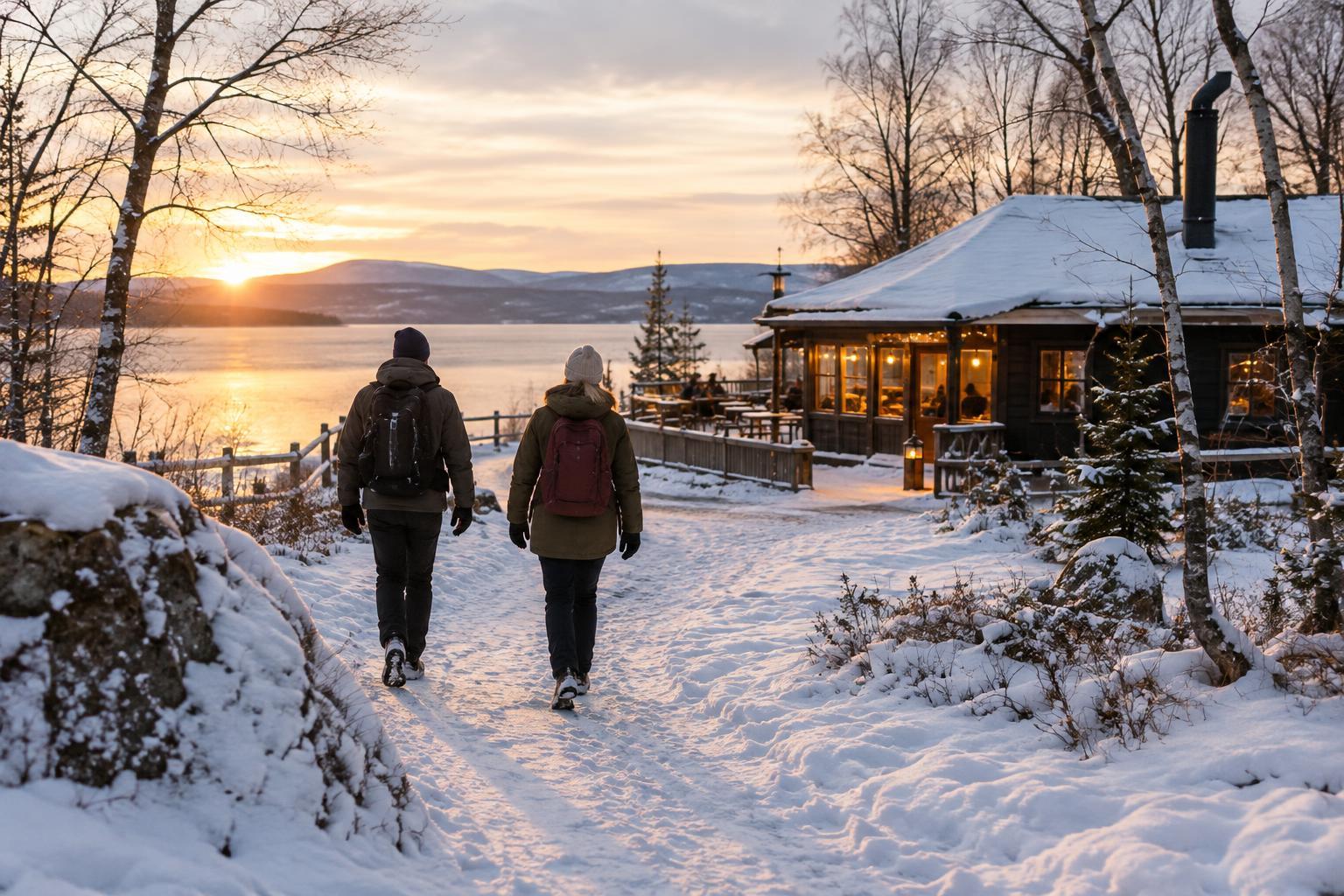
A warm-up stop makes a cold outing feel more relaxed, but it should fit naturally into the route. Look for a café, public building or other indoor place where you can pause without a long detour. Check its opening hours before you leave; seasonal hours and unexpected closures can change a plan. If there is no dependable indoor option, choose a shorter route that brings you back to your starting point for a break.
Place stops where they will be useful, not only at the end. A midpoint stop gives you a chance to notice whether your layers are working, drink something and decide whether to continue. If you are walking with children or people who prefer frequent pauses, plan around their comfort from the outset. The best route is one that the whole group can enjoy, not one everyone feels obliged to finish.
Dress for movement and for pauses
Walking generates warmth; standing still to watch the water or wait for a bus does not. Wear layers you can adjust without unpacking your whole bag. A comfortable base layer, an insulating layer and an outer layer suited to the forecast give you more options than one very heavy garment. Gloves, a hat and footwear appropriate for the ground can make a noticeable difference to how long you want to stay out.
Bring a small extra layer if you expect a long pause, especially at an exposed viewpoint. Keep items you may need quickly, such as gloves or a scarf, near the top of your bag. When you step indoors, loosen or remove a layer if you feel overheated, then put it back on before heading out. The aim is to stay comfortable through changes in pace and setting, rather than to dress for only the coldest moment.
Keep the practical plan simple
Before leaving, share your route and expected return with someone if you are heading somewhere quiet or unfamiliar. Carry a charged phone, but do not make it your only way to understand the route; a saved map or clear written directions can help where reception is unreliable. For an outing that may extend toward dusk, a small light is useful even when the plan is to return before dark.
Check the surface conditions as well as the temperature. A familiar path can take longer when it is icy, wet or uneven. Choose a route with an easy way to shorten it, such as a loop with a nearby street connection or a path that can be retraced. If conditions feel less comfortable than expected, turning back is a sensible use of the plan, not a failure of it.
Leave space to enjoy the outing
Not every cold-weather outing needs a long itinerary. One good destination, one reliable warm-up option and enough daylight to return without hurrying are a strong foundation. Pack a drink or a snack if it suits the length of your trip, and let your stops be moments to rest rather than deadlines to meet.
Before setting out, make one final check: What time will you turn around? Where can you get warm? How will you shorten the route if needed? With those answers settled, there is more room to notice the changing light, enjoy the fresh air and head home while the day still feels welcoming.