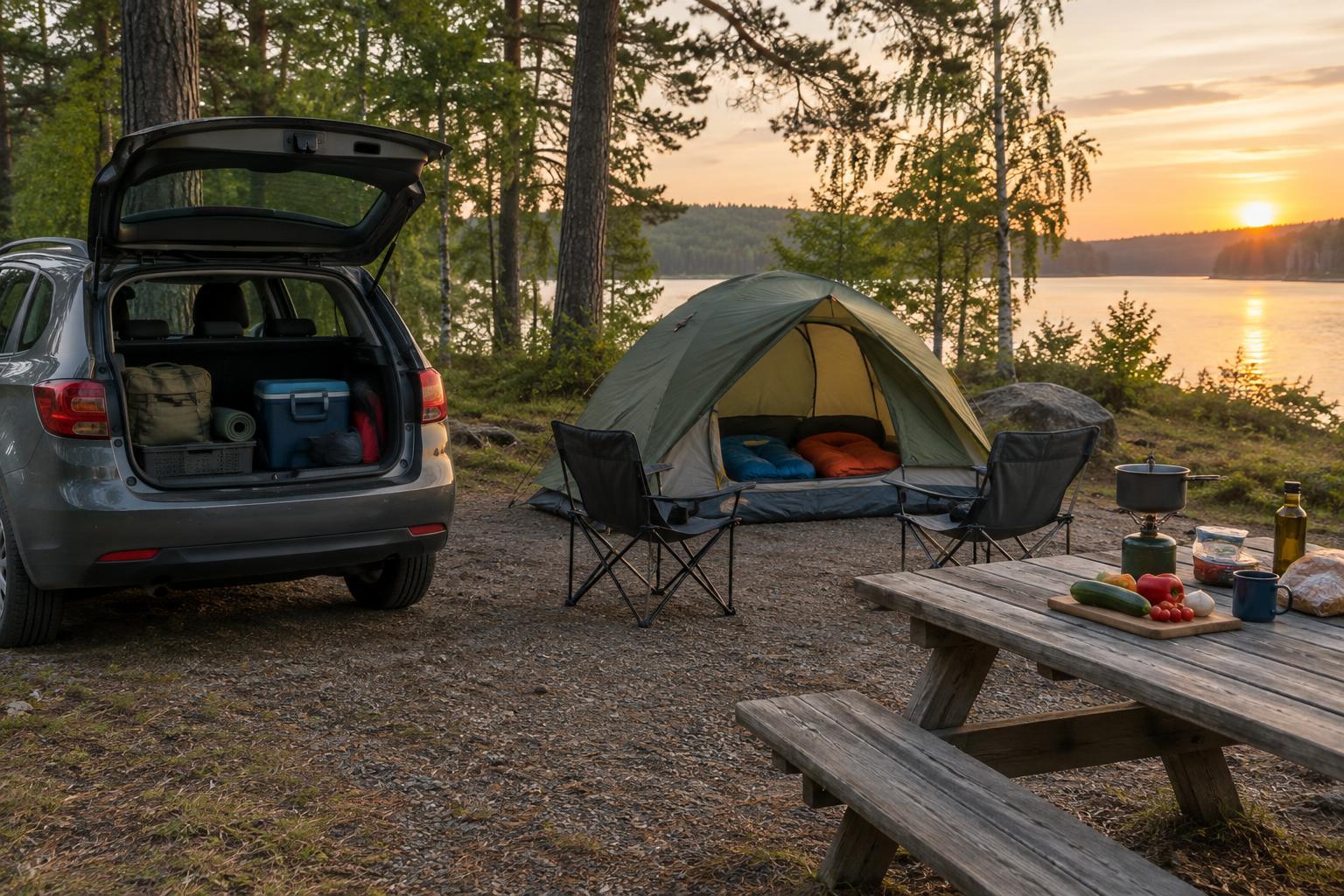
Start with an easy destination
For your first overnight trip, choose a campsite you can drive to without a complicated route. A nearby campground makes it easier to arrive with daylight to spare and gives you a manageable journey home if the weather changes or you discover that you have forgotten something important. One night is enough to learn how your setup works without turning the trip into an endurance test.
Before booking, check what the campsite actually provides. Look for details about parking, toilets, drinking water, picnic tables and the distance between your car and the place you will pitch your tent. Check whether fires are permitted rather than assuming there will be a fire ring. Campsite rules and facilities vary, so keep the booking details accessible offline in case reception is limited.
Look at the forecast close to departure and pack for conditions that may feel cooler after sunset. If the forecast calls for weather your shelter or clothing cannot handle comfortably, changing your plans is a sensible part of camping, not a failed trip.
Build a small, reliable sleep setup
A tent, a sleeping pad and suitable bedding do most of the work overnight. If your tent is new to you, practise putting it up at home so you can identify its poles, stakes and rain cover in good light. A pad matters even if the ground looks soft: it adds cushioning and helps separate you from the cold ground. Choose a sleeping bag or blankets appropriate for the expected night temperature, with an extra layer you can add if needed.
Pack a headlamp or flashlight for each person, along with spare batteries or a way to recharge it. Keep sleep clothes dry in a separate bag and bring footwear that is easy to slip on for a nighttime walk to the toilet. Earplugs and a small pillow can make an unfamiliar place feel more restful, but they are comforts rather than requirements.
You do not need to purchase everything for a first trip. Borrowing or renting larger items lets you find out what you enjoy before committing to a setup of your own.
Plan food around fewer moving parts
For one night, simple meals leave more time to enjoy being outside. Bring a ready-to-eat dinner, prepare ingredients at home or choose a dish that needs only one pot. A breakfast that requires little cleanup is helpful when you are packing up. If you plan to cook, confirm that your stove and fuel are suitable for the site, test the stove before leaving and use it outdoors as directed by its manufacturer.
Bring enough drinking water for the people in your group, plus water for cooking and washing if the campsite does not provide it. A cooler can help keep perishable food cold; store it and other food items according to the campsite’s guidance. Pack a bag for rubbish and consider how you will handle scraps and washing-up water. A tidy cooking area is easier to use and less likely to attract animals.
Pack for the space between activities
Camping involves more sitting, walking and waiting than a packing list might suggest. Bring layers you can adjust, a rain layer and shoes comfortable enough for the paths you expect to use. A camp chair, a warm drink and a book may contribute more to a relaxed evening than an elaborate itinerary. Keep frequently used items together so you can find them without unpacking the whole car.
Useful basics include a first-aid kit, any personal essentials, hand soap or sanitizer, toilet paper in case supplies run out, and a paper or saved map of the area. Tell someone where you plan to stay and when you expect to return. Check your vehicle’s fuel before the final stretch of the drive, especially if services are sparse near the campsite.
Give yourself an unhurried arrival and departure
Aim to reach the campsite early enough to find your pitch, set up the tent and locate the toilets before dark. Park where permitted, choose a level spot if you have a choice and look up for branches before pitching. Set out only what you need at first. Once your sleeping area is ready, you can take a short walk or settle in without worrying about building shelter by flashlight.
Respect quiet hours, keep light and noise considerate of nearby campers, and follow local guidance for food storage and wildlife. In the morning, leave time to dry or air out damp gear when possible. Check the ground for stakes, small pieces of packaging and other belongings before you drive away.
After you get home, note what you used, what stayed untouched and what would make the next trip easier. A first overnight trip is not a test of camping expertise. It is a chance to develop a straightforward routine that suits your own comfort and the places you choose to visit.


