Start with the room, not the sofa
A sofa can look perfectly sized in a showroom and feel overwhelming at home. Before comparing styles, measure the wall or area where it will sit, then note nearby doors, windows, radiators and other furniture. Mark the proposed sofa’s footprint on the floor with painter’s tape or sheets of paper. Walk around it, open doors and pull out chairs as you normally would. This simple test reveals whether there is enough room to move comfortably.
Look beyond width. A deep sofa may take up more usable floor space than its outline suggests if you need to pass in front of it. A high back can interrupt a view or make a compact room feel divided; a low back may suit an open layout but offer less support for someone who likes to lean back. Leave practical space for a side table, lamp or place to set down a cup. The best proportions support what the room is used for, not just how it looks in a photograph.
Choose the seat for the people who use it
Comfort is personal, so treat dimensions as a starting point rather than a verdict. Seat depth matters if you want to sit upright with your feet on the floor, curl up with a book or lie down occasionally. Seat height, arm height and back angle can be just as noticeable. If possible, sit on a sofa for more than a few seconds. Try your usual positions, stand up without using your hands, and notice whether the cushions support you or push you into a posture you would not choose.
Think about the household’s habits, too. A firm, shallower seat may make conversation and standing up easier, while a deeper, softer seat may appeal to people who lounge. Neither choice is universally better. Removable back cushions can make a deep sofa more adaptable, and a movable ottoman may offer flexibility without committing the room to a chaise. If several people will use the sofa, ask them to test it rather than relying on one person’s preference.
Look beneath the upholstery
Durability depends on the whole sofa, not one impressive-sounding material. Ask what the frame is made from, how its joints are secured and what supports the seat. A sturdy frame should feel stable when you sit down, shift your weight or gently press on an arm. Check the manufacturer’s construction details and warranty terms, including what they do and do not cover. A long warranty alone is not a substitute for understanding how the sofa is built.
Cushions deserve equal attention. Softer fills can feel inviting but may need frequent fluffing to hold their shape. Firmer foam may keep a neater profile, though its feel can change with use. Combination cushions can offer a middle ground, but maintenance needs vary by design. Ask whether cushions can be rotated or replaced and whether covers can be removed. Those small practical details can matter more over time than the sofa’s appearance on delivery day.
Match the fabric to everyday life
Choose upholstery for the room’s actual conditions: frequent guests, pets, snacks, direct light or an occasional spill. Fabric samples are worth bringing home because colour and texture can look different under your lighting. Handle each sample, consider whether it catches on clothing or claws, and check the maker’s care instructions. If a cover is described as removable, confirm whether it can be washed at home or requires specialist cleaning.
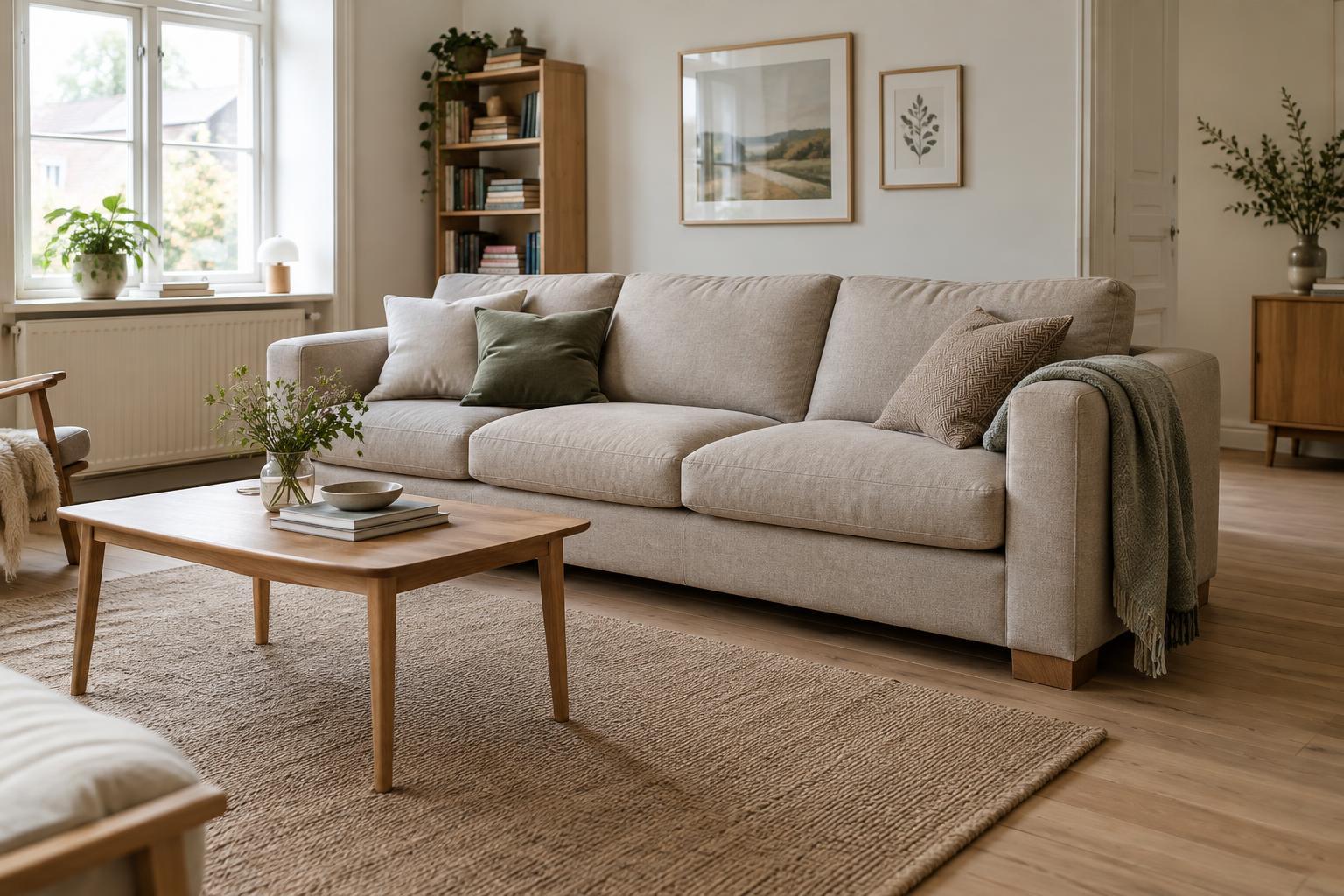
Texture and colour affect how a sofa settles into a room. A tightly woven fabric may suit a household that wants a straightforward surface to maintain, while a more textured weave can give a simple shape warmth. Very light and very dark colours may each show different kinds of marks or lint. Rather than choosing a colour solely to hide wear, select one you enjoy living with and pair it with a care routine you can realistically keep.
Check the final fit before ordering
The sofa must fit through the home as well as into the living room. Measure entry doors, hallways, stairs and tight turns, and check the packaged dimensions. Find out whether legs or sections can be removed for delivery. For a sectional sofa, confirm which side the chaise will occupy when viewed from your intended position; product descriptions do not always use the perspective you expect.
Finally, compare the full cost and the terms for returns, delivery and assembly. Keep your room measurements and fabric sample close when making the decision. A well-chosen sofa does not have to define an entire interior style. It should give people a comfortable place to sit, leave the room easy to use and remain manageable to care for as everyday life changes.