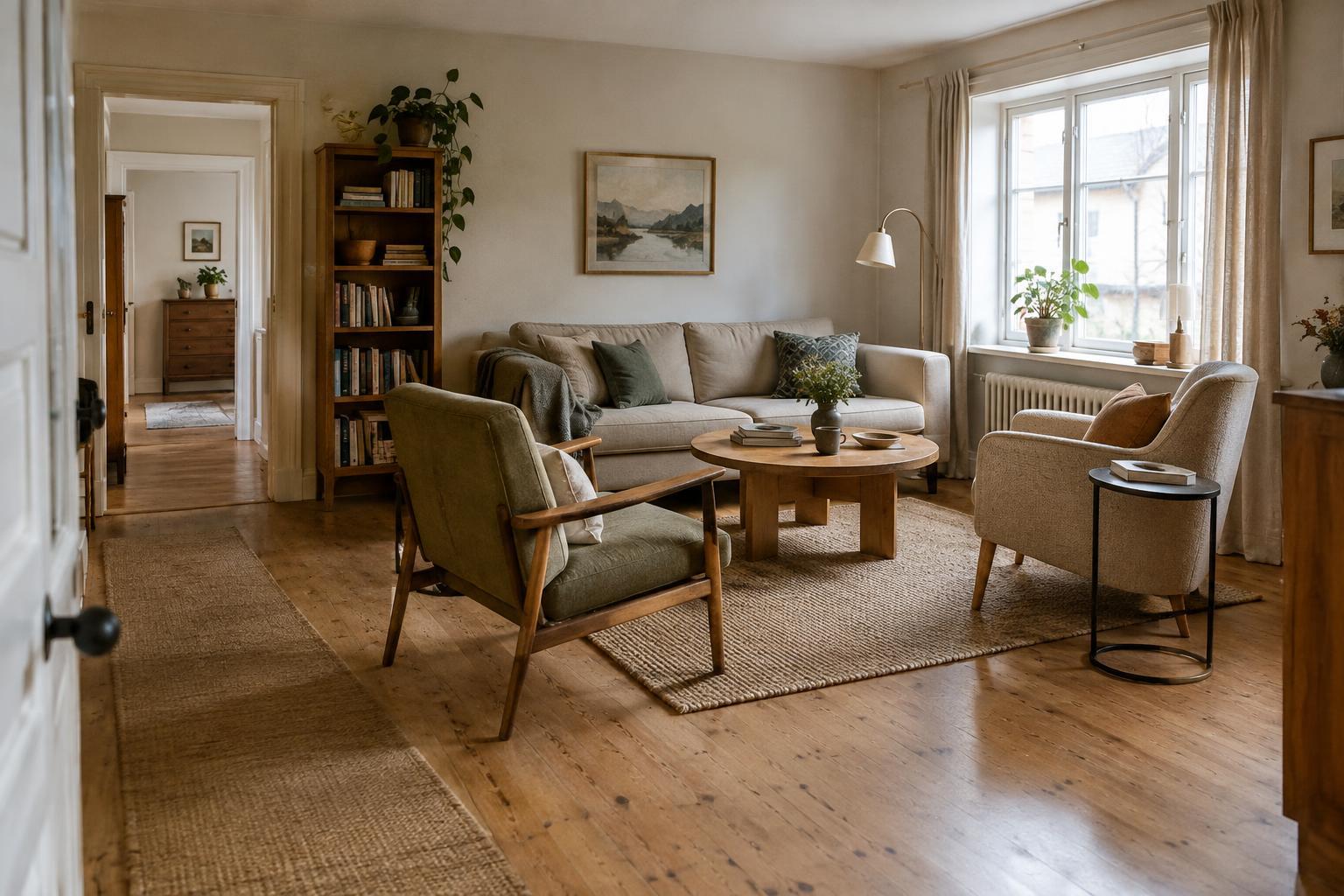
Start with how the room is used
A room can look balanced in a photograph and still feel awkward to live in. Before moving anything, notice what happens on an ordinary day. Where do people walk? Where do they put down a cup, read, talk or take off their shoes? Furniture works best when it supports those habits rather than an imagined version of the room.
One common mistake is arranging everything around a single feature, such as a television or window, without considering the rest of the space. There is nothing wrong with giving a feature priority, but check what the arrangement costs you. If reaching a chair requires a detour or conversation feels difficult, try shifting the emphasis. A layout can serve more than one purpose without being perfectly symmetrical.
Clear the routes people actually take
Blocked walkways make a room feel crowded even when it contains relatively little furniture. A coffee table may interrupt the path to a doorway; a dining chair may need more room to pull out than it appears to when tucked in. Watch how people move through the space, including while carrying laundry, groceries or a tray. Those movements reveal pinch points that a floor plan may miss.
To fix them, start by moving small pieces rather than replacing large ones. Shift a side table to the other end of a sofa, turn a chair slightly or pull a rug away from a frequently used door. Leave a clear route where traffic naturally flows instead of forcing people around a decorative arrangement. If a piece repeatedly needs to be moved to use the room, it may belong elsewhere.
Bring seating into a useful relationship
Pushing every seat against a wall can create an empty center and leave people talking across a wide gap. The opposite mistake—packing seats tightly around a table—can make it hard to stand up or pass through. Neither approach is automatically wrong; the question is whether people can sit comfortably and use nearby surfaces without stretching or squeezing.
Try bringing a sofa or chair a little closer to the seating area, even if its back remains visible. Place a small table where someone can reach it from a seat, and check that lamps serve the activities happening there. In a narrow room, one chair angled toward the sofa may work better than two chairs placed side by side. Let a rug help define the area, but do not let its edges dictate an arrangement that feels inconvenient.
Check scale before blaming the room
A layout sometimes fails because one piece is doing too much. An oversized coffee table can dominate a modest seating area, while several tiny tables may create visual clutter without offering useful surface space. Likewise, a deep sofa might be comfortable but leave too little room for the way people need to move. Measure the space a piece occupies in use, including opened drawers, cabinet doors and pulled-out chairs.
You do not have to replace furniture immediately. Remove one occasional piece and see whether the room feels easier to use. Swap a bulky table for one already in another room, or move storage toward a wall where its doors can open fully. If you are considering a purchase, mark out its footprint on the floor first. Living with that outline for a day can reveal conflicts that are easy to overlook while shopping.
Treat light and flexibility as part of the layout
A final mistake is deciding where furniture goes without checking what the arrangement does to light. A tall shelf may darken a favorite chair, and a sofa placed in front of a window may make opening it inconvenient. Observe the room at the times you normally use it. A reading spot needs usable light; a shared seating area may benefit from more than one lamp so it still works after daylight fades.
Once the main pieces are in place, allow for small changes. A lightweight chair can join a conversation or move aside when guests arrive. A table that serves both a seat and a nearby shelf may be more useful than two dedicated pieces. Functional interiors need not follow one fixed look or a set of universal rules. The strongest layout is the one that makes everyday movement and activities feel straightforward in your particular home.


