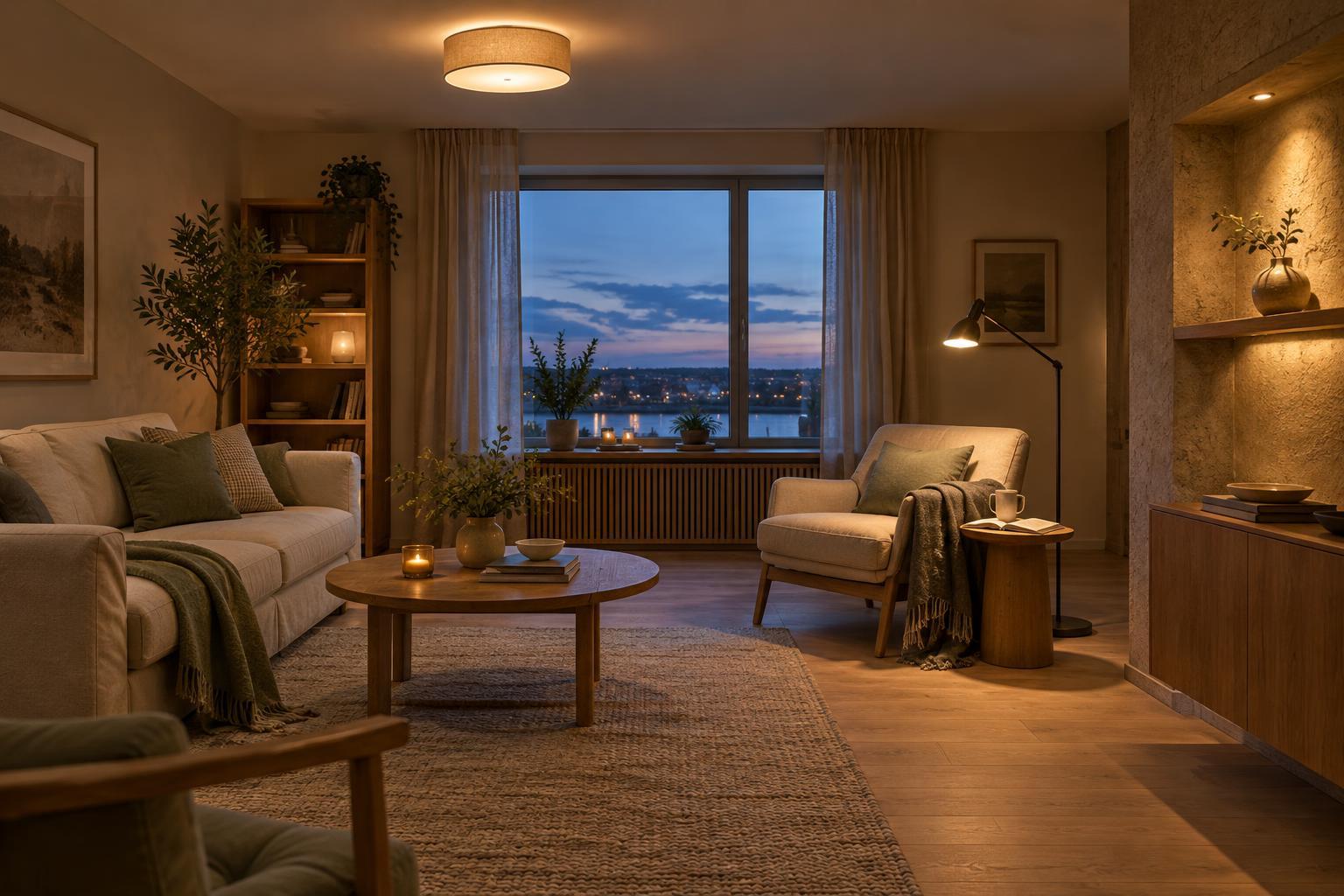
Why a room needs more than one kind of light
A single overhead fixture can make a room bright enough to cross, but it may not help you read on the sofa, prepare food, or settle in for a quiet evening. Layered lighting means using several sources for different purposes. The three familiar layers are ambient light for general visibility, task light for focused activities, and accent light for emphasis and atmosphere.
Think about what happens in a room over the course of a day before choosing fixtures. A living room might need clear light for tidying, a directed lamp for reading, and a softer glow when people gather. Those needs do not require every light to be on at once. The point of layering is choice: you can adjust the room to suit the activity rather than asking one lamp to do everything.
Ambient light: the room’s starting point
Ambient lighting provides the broad, usable light that lets you move around and see the room as a whole. Daylight can contribute when it is available; after dark, ceiling fixtures, wall lights, or several well-placed lamps can provide this base. Ambient light does not have to come from a central fixture. In a small room, light spread across two or three locations may feel more even than a single bright source.
Pay attention to where the light lands. A bare bulb or a fixture directly in your line of sight can be uncomfortable even if the room itself looks dim. Shades, diffusers, and light reflected off walls or ceilings can soften the effect. If your existing overhead light feels harsh, try using a lower setting where possible and adding lamps in the darker parts of the room before replacing the fixture.
Useful ambient light is not necessarily uniform light. Gentle differences between brighter and darker areas can help a space feel settled. The goal is to keep routes through the room visible without flooding every corner with the same intensity.
Task light: put brightness where work happens
Task lighting supports a specific activity. A reading lamp should illuminate the pages of a book; a desk lamp should reach the work surface; lighting near a kitchen counter should help you see what you are doing. Placement matters as much as the bulb. If your own body casts a shadow over the task, move the light to the side or in front of the working area.
Choose a fixture that suits how the space is used. An adjustable arm is helpful when different people use the same chair or desk. A lamp with a broad shade can cover a larger worktop, while a more focused beam may be better beside a bed, where you want to read without lighting the whole room. In kitchens, make sure task lights illuminate the counter rather than only the floor in front of it.
More brightness is not always better. Strong contrast between a very bright work area and a dark surrounding room can feel tiring. Keep some ambient light on when doing detailed tasks, and check for reflections on screens, glossy pages, and polished surfaces. Small changes in angle can make a useful lamp much more comfortable.
Accent light: draw attention without creating clutter
Accent lighting highlights something you enjoy looking at, such as a shelf, a textured wall, a plant, or a picture. It can also give depth to a room by lighting a corner that would otherwise disappear at night. A compact lamp on a bookcase or a wall light aimed at a surface may be enough; accent lighting need not be elaborate.
Let the object or area guide the choice. Light aimed at artwork should reveal it without shining into someone’s eyes. A lamp beside a plant may look pleasant, but it should not be mistaken for the specialized light a plant might need to grow. If every shelf and corner is highlighted, nothing stands out. Select one or two features, then leave some areas quieter.
Build a lighting plan with what you have
Start by observing one room at the times you use it most. Turn on your current lights and ask three questions: Can I move around comfortably? Can I see clearly where I read, cook, or work? Is there a place I would like to draw attention to? These questions reveal gaps more reliably than choosing fixtures by appearance alone.
Add light in stages. First establish enough ambient light for the room, then place task lights at the activities that need them. Add accent light only if it serves a feature or creates a welcome sense of depth. Try moving an existing lamp before buying anything new. A shift from one side of a sofa to the other, or a different shade, can change how useful its light feels.
Finally, make the layers easy to control independently. Separate switches, plug-in lamps, or compatible dimmers let you change the balance without turning everything on. Keep cords out of walking routes and use bulbs and fixtures according to their stated requirements. A good lighting plan is one you can adjust easily as daylight, activities, and seasons change.


