Start with a walk you already know
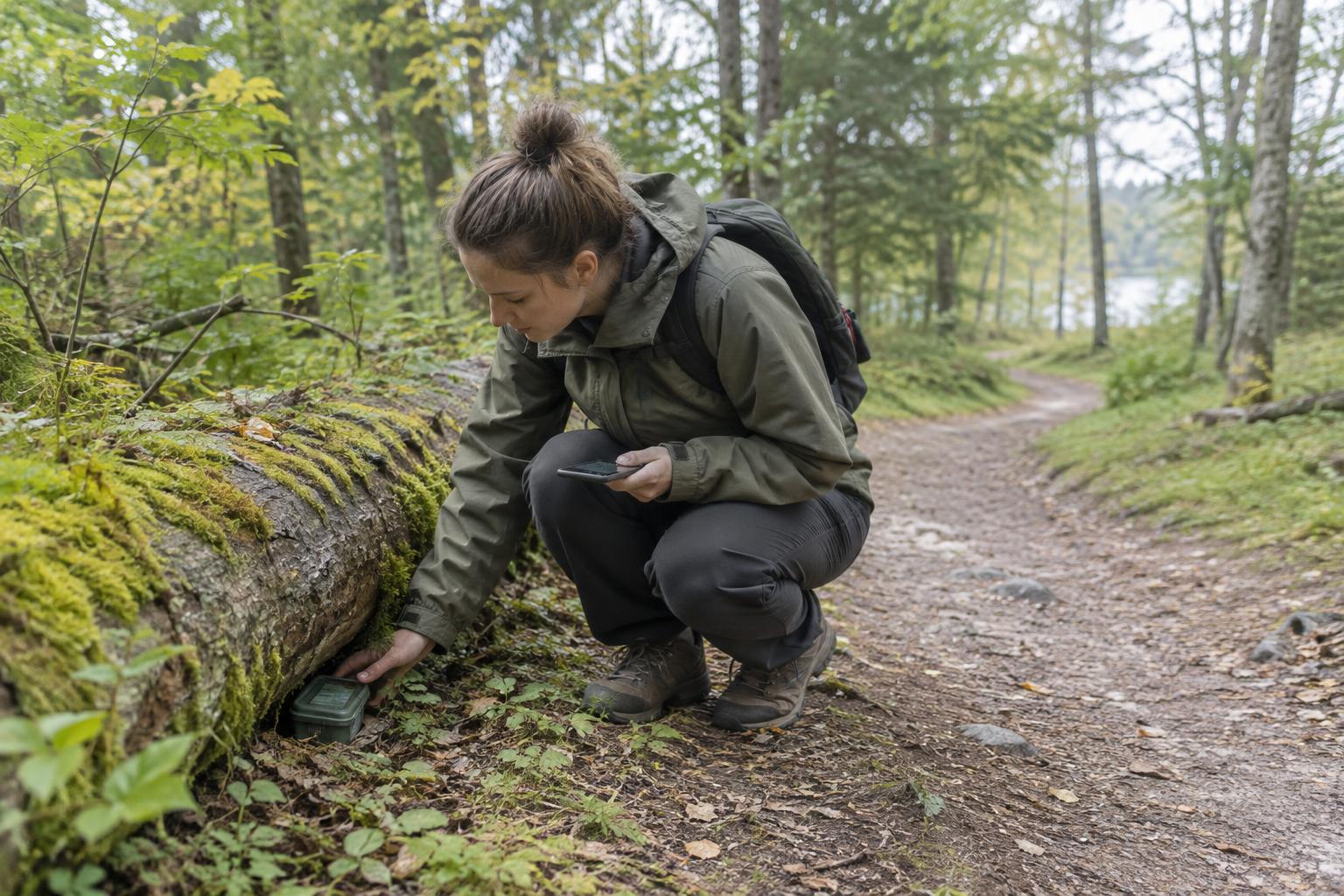
Geocaching is an outdoor search for a hidden container using a location listed on a geocaching platform. The container, often called a cache, may hold a paper logbook for visitors to sign. Some also contain small objects that people can exchange. You do not need to make a day trip of it: one cache near a familiar walking route is enough to see whether you enjoy the search.
Choose a location you would feel comfortable visiting even if you did not find anything. A park path, a public trail or a walk through your neighborhood can make a good first outing. Keeping the route familiar leaves you more attention for reading the listing, noticing your surroundings and working out where the container might be.
Choose an approachable first cache
Browse a geocaching app or website before you leave. Look for a cache with a beginner-friendly difficulty rating, an accessible route and a description that suits the time and distance you have in mind. Cache size matters too: a larger container may be easier to recognize than a tiny one. Read the listing for access notes, hints and any information about when the area is open.
Check whether the listing appears active and read a few recent visitor notes if they are available. A run of unsuccessful searches does not necessarily mean a cache is gone, but it may make that one a frustrating first choice. Save a second nearby option if you like, without turning the walk into a checklist. The aim is to enjoy being outside, not to collect as many finds as possible.
Pack lightly and plan for the conditions
For a short local walk, comfortable footwear, clothing suited to the weather and a charged phone may be all you need. Bring a pen in case the cache has a logbook but no working pencil. Water and a small bag for your own rubbish are useful additions. If you are walking somewhere with unreliable reception, check your route and the cache details before setting out; map and listing features vary between platforms.
Tell someone your plan if you are heading somewhere quiet, and give yourself enough daylight to return without rushing. Stay within your own comfort and mobility limits. A cache is never worth climbing an unstable surface, crossing a barrier or entering a place where public access is unclear. If conditions change, it is fine to leave the search for another day.
Search with patience, not force
When you reach the listed area, pause and look around before reaching into anything. Phone location can be imprecise, especially near buildings or under trees, so treat it as a guide rather than an exact pointer. Read the hint if you want one. Notice features that might conceal a container without requiring you to disturb plants, move heavy objects or dismantle anything.
Keep the search discreet and considerate of other people using the space. If someone is nearby, you can wait, continue your walk and return later. Once you find a cache, open it carefully, sign the logbook if there is room and close the container securely. Put it back where and how you found it so the next visitor can have the same chance to discover it. If it seems damaged or its logbook is full, note that in your online log rather than trying to repair it on the spot.
Leave room for a good walk
If a cache contains small items, check the listing for any exchange guidance. A simple approach is to leave an item only if you take one, and to choose something clean, durable and suitable for a shared container. Avoid food or anything that could leak. Log your visit honestly, whether you found the cache or not, without giving away its hiding place to future searchers.
Not finding a cache is a normal part of the activity. Set a loose time limit, then carry on with your walk rather than searching until it stops being pleasant. You might notice a path you usually pass, sit for a few minutes outdoors or take a different route home. Geocaching works best as a gentle reason to pay attention to a place—not a reason to forget why you went outside.