Start with the space around the table
A dining table can look perfectly sized in a photograph and feel awkward once chairs are pulled out. Before choosing a shape, mark the proposed tabletop on the floor with paper or removable tape. Then place a chair where it would sit and try the ordinary movements: pulling it back, sitting down, walking past someone who is seated, and carrying plates into the room. Check doors, drawers, and routes through the space rather than judging the empty floor alone.
Think about how many people eat there most days, not just how many you might host occasionally. Also note whether the table doubles as a desk, a place for hobbies, or a spot to fold laundry. These uses affect how much clear surface you need and whether you can leave a table extended. Shape matters, but leg placement, chair width, and the table’s edge can make two tables of similar dimensions feel quite different.
Round tables: sociable and easy to move around
A round table has no corners to navigate, which can make it comfortable in a compact dining nook or an open room where people pass on several sides. Everyone faces toward the center, so conversation feels easy at a modest size. A pedestal base may also give chairs more freedom than legs placed near the edge, though it is worth testing for stability and knee room.
Round does not automatically mean space-saving. As a round table grows to seat more people, its center can become harder to reach and it may need more floor area than expected. It also will not sit flush against a straight wall without leaving unused space. If your dining area is narrow, draw the full circle on the floor and test the walkways before committing.
Rectangular tables: straightforward and flexible
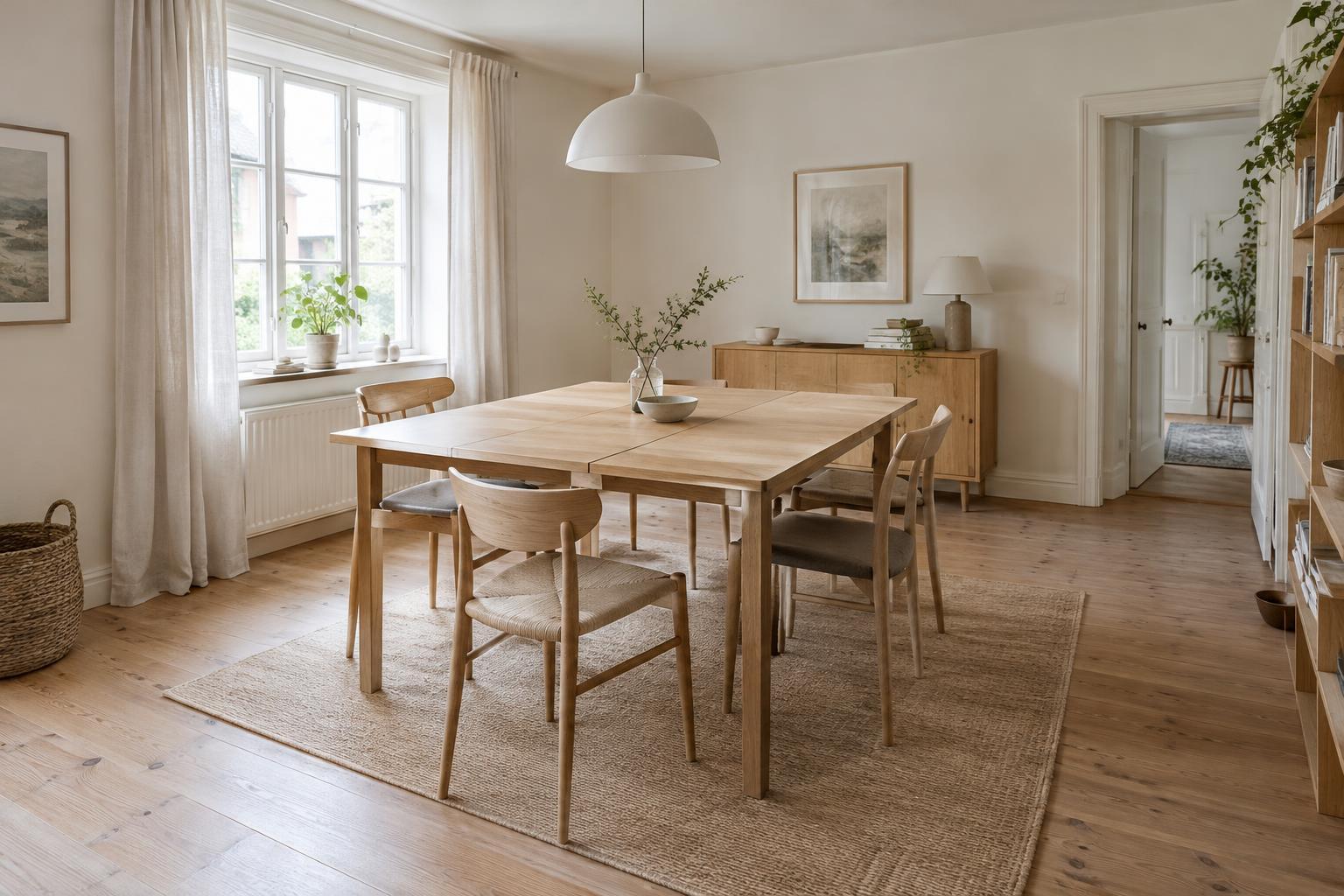
A rectangular table often suits a long room, a dining area beside a kitchen run, or a household that seats several people regularly. Its straight sides make it easy to line up chairs, serve food along the middle, or push one side nearer a wall when the table is not in full use. A simple, durable top can support meals and other daily tasks without requiring the room to be arranged around a formal occasion.
The ends offer useful seats, but do not count on them without checking the base. Legs, stretchers, and thick aprons can limit where knees fit. Corners can also interrupt a tight route, especially when chairs are occupied. Rounded corners or an oval tabletop may be worth considering if you like a longer table but need softer circulation around it.
Extendable tables: room to adapt, with a few trade-offs
Extendable is a mechanism rather than a separate shape: both round and rectangular tables can expand. It can be a sensible choice when your usual household is small but you sometimes share meals with more people. The everyday footprint stays manageable, while the larger setting is available when needed. Decide where the extra chairs will come from and where they will go afterward; a longer tabletop alone does not create a comfortable gathering.
Try the extension mechanism in person if you can. Notice whether one person can operate it, whether the leaves store inside the table or elsewhere, and whether the join leaves a ridge that affects writing or cleaning. With the table fully extended, repeat your chair-and-walkway test. A design is only useful if its larger setting fits the room and the steps to open it are easy enough that you will actually use them.
Choose for ordinary life first
Materials and finishes deserve the same practical attention as shape. A surface that shows every mark may demand more care than you want from a table used daily. Feel the edge where your arms will rest, check that chairs slide under it, and consider how the finish will work with warm dishes, spills, and regular wiping. Care requirements vary by material and finish, so ask what the table needs rather than assuming it will be effortless.
The right choice is not tied to a single look. A round table can give a small group a welcoming place to gather; a rectangular one can organize a long, hardworking room; an extendable design can make occasional hosting easier. Let the room’s paths, your usual number of diners, and your willingness to move furniture settle the decision. A table that works well on a quiet weekday is more valuable than one chosen only for its largest possible dinner.