Start with a meal that fits the day
A solo meal does not need to justify itself with an ambitious recipe. When you are tired, something familiar may be more inviting than a plan that creates a sink full of dishes. Soup with toast, a filled sandwich, or leftovers warmed and served with something fresh can all make a satisfying stopping point. On a day when cooking sounds enjoyable, the pause might begin with chopping vegetables or waiting for a pan to heat. The useful question is not whether the meal is impressive, but whether making it feels manageable today.
Keep a few flexible ingredients that you actually like within easy reach. Bread, eggs, beans, frozen vegetables or a sauce you enjoy can give you options without requiring a fixed menu. If deciding what to eat is the hardest part, make a short list of dependable meals and put it where you will see it. Repeating a favorite is not a failure of imagination; it can leave more energy for enjoying the meal itself.
Give the meal a place to land
A pause is easier to notice when it has a beginning. Clear just enough space at the table or counter for a plate and a drink. Put away the packaging if you can, and serve the food in a bowl or on a plate that feels good to use. You do not need a styled table or a special occasion. Moving a stack of papers aside, pulling up a comfortable chair and sitting down can be enough to distinguish lunch from the tasks around it.
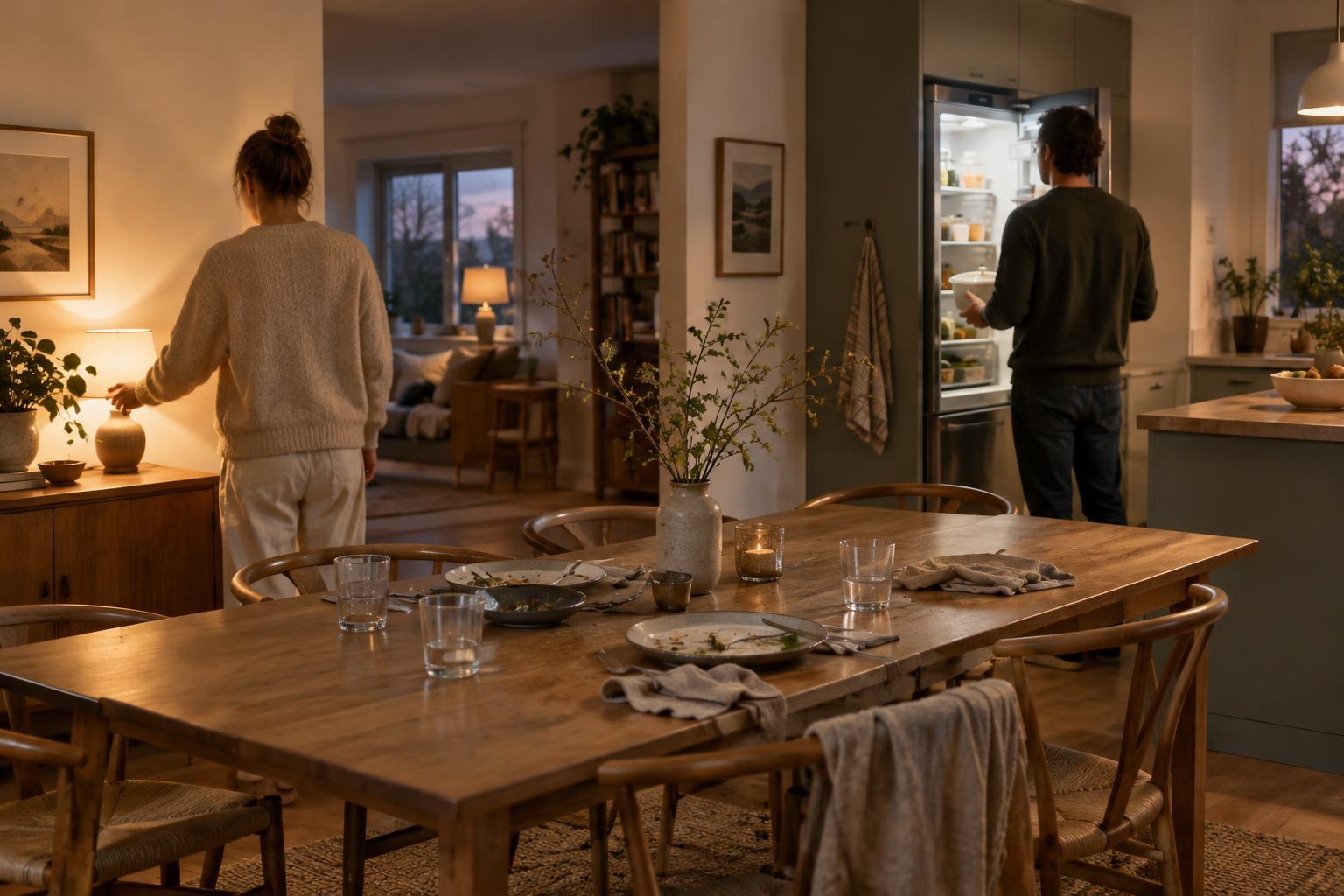
Light and sound can help shape that small change of pace. In daylight, you might sit near a window; in the evening, a nearby lamp may feel gentler than an overhead light. Silence is pleasant for some people, while others prefer music or a familiar program. Choose what helps you settle rather than following a rule about the right way to eat alone. If you are eating at a desk because that is the space available, closing work tabs for a few minutes can still create a boundary.
Let the first few minutes be simple
It is tempting to use a solo meal to catch up on messages, finish a small job or plan the next one. Sometimes that is necessary, but it can make eating feel like another form of multitasking. Try giving the first few bites your attention before deciding whether to pick up a screen. Notice the temperature, texture or flavor of what you made. This does not need to become an exercise in doing the meal perfectly. It is simply a way to arrive before the meal is over.
If your thoughts keep returning to unfinished tasks, put a brief note on paper and leave it nearby. The task will still be there afterward, but you may not have to rehearse it through dinner. A glass of water poured before you sit down, a napkin within reach and everything else you need at the table can also prevent repeated trips back to the kitchen. Small preparations make it easier to stay put.
Make room for company, or quiet
Eating alone does not always feel the same. One day it may be a relief to have no conversation to manage; another day it may feel a little flat. You can respond to the day you are having without making every meal into an occasion. Read a few pages, listen to a podcast, or send a message to someone after you eat if connection sounds appealing. If quiet feels better, let the meal be quiet. Neither choice makes a solo dinner more or less worthwhile.
It may help to include one thing that feels generous but takes little effort: a piece of fruit you look forward to, a warm drink, or a spoonful of something flavorful added to a basic meal. These details are not rewards you have to earn. They are ways of treating your own appetite and time as deserving of care, even when no one else is at the table.
End without turning cleanup into the main event
A restful meal can lose its appeal if you spend it anticipating the dishes. When possible, choose a level of preparation that matches your willingness to clean up. Wash a cutting board while something warms, or use one pan when that makes sense for the food. Afterward, you might clear the plate and soak anything stubborn, leaving the rest for a time that works better. A workable routine is more useful than an immaculate kitchen at every meal.
Before moving on, give yourself a moment that marks the end: finish your drink, look out the window or take a few unhurried breaths. The meal may have lasted only fifteen minutes, and the day may still be busy. It can still count as a pause. The aim is not to transform every solo meal, but to make ordinary eating a little more comfortable when you have the chance.