Start with the shape of the meal
Before asking guests what they will bring, decide what kind of gathering you are hosting. Is it an afternoon visit with snacks, or a seated dinner? Will people eat as they arrive, or at roughly the same time? A clear plan helps guests choose dishes that fit the occasion, and it keeps the host from discovering too late that every contribution needs the oven at once.
Think in broad categories rather than assigning a detailed menu: a filling main dish, a substantial vegetarian option, vegetables or salad, bread or another accompaniment, fruit or dessert, and drinks. Adjust the categories to the size of the group and the food you plan to provide yourself. This is a planning tool, not a rule about what belongs on anyone’s table.
Give guests an easy way to claim a dish
Send one short message with the time, the number of people expected, what you will make, and the categories that are still open. Ask guests to reply with a specific dish when they can. A shared list can work for a larger group, but a group message is often enough for a smaller one. Keep the list visible to everyone or send an occasional update so guests do not have to guess what has already been claimed.
When someone offers to bring “a salad,” a gentle follow-up can prevent an accidental repeat: “That sounds great. What kind were you thinking?” You do not need to approve recipes. The goal is to spot gaps and make practical arrangements, especially for dishes that require reheating, refrigeration or assembly on arrival.
Treat overlaps as choices, not mistakes
Two similar dishes do not necessarily cause a problem. Guests may enjoy trying different versions of a favorite food, and extra bread or dessert is rarely difficult to serve. If a duplicate would leave a real gap, ask early and give the guest an easy option: “We have a pasta salad coming already. Would you rather bring yours, or switch to something with vegetables?” Make it clear that either answer is welcome.
A useful potluck has variety without making every guest responsible for the whole menu. The host can fill a remaining gap with something simple and dependable, such as cut vegetables, bread or a dish that can be prepared ahead. Keep a modest backup plan, but avoid cooking a second full meal in case other people’s contributions change.
Make dietary needs and serving needs visible
Invite guests to share dietary needs privately if they prefer, then plan for at least one satisfying option they can eat. Ask contributors for the ingredients or details needed to label dishes accurately, rather than guessing from appearances. Simple labels can also note whether a dish contains common allergens, though anyone with a serious allergy may need to check ingredients and preparation directly with the person who made it.
Ask guests to bring a serving utensil if their dish needs one, and let them know how much refrigerator or oven space is available. Set aside a clear spot for arriving dishes and keep any packaging that contains useful preparation information. Perishable foods should be handled with appropriate attention to temperature and time; if you are unsure how a dish should be stored, ask its maker before leaving it on the table.
Set up a table that runs itself
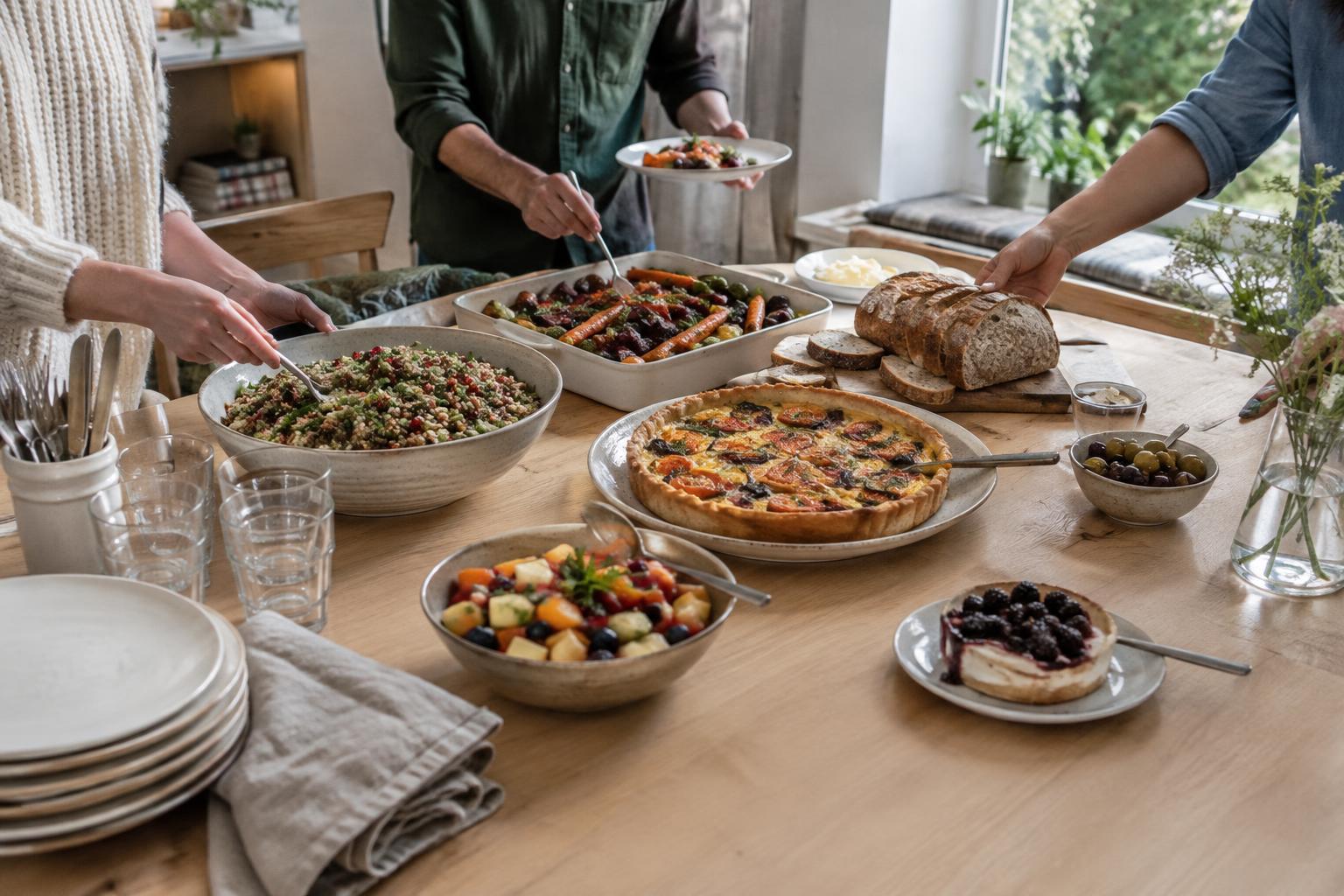
A comfortable serving area does not need elaborate styling. Put plates at the start of the table, then arrange food in an order that makes it easy to move through. Leave room for utensils beside their dishes and a separate place for drinks so people can refill a glass without blocking the food. A few empty surfaces for late arrivals are more useful than a tightly packed display.
As guests arrive, show them where to put their contribution and tell them when you expect to eat. Then let the meal be shared rather than managed. Good coordination should fade into the background: people can see what is available, find something that suits them and spend more time together than they spend navigating the buffet.


