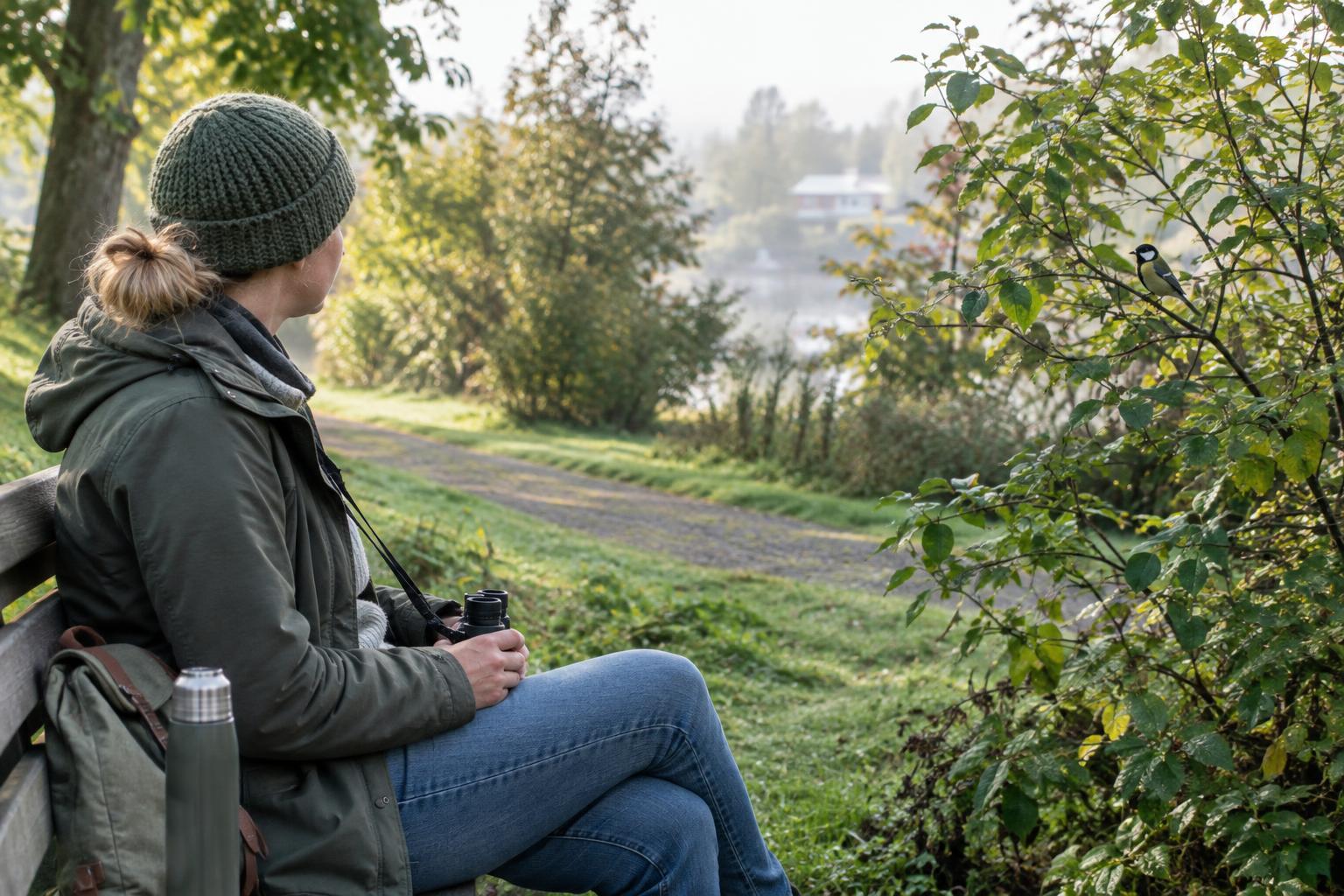
Start close to home
Birdwatching can begin at a kitchen window, on a familiar walking route, or beside a bench in a local park. The best first location is one you can visit comfortably and often. Returning to the same place helps you notice changes: which birds use a hedge, when a patch of ground becomes busy, or how activity shifts with the weather. There is no need to find a rare species for the outing to feel worthwhile.
Look for places that offer birds food, shelter, or water. Trees and shrubs provide cover; open ground may attract birds searching for food; pond edges can offer a different view again. A quiet spot with a clear sightline is often easier for a beginner than a long walk through dense vegetation. Once you settle, give the scene a little time. Birds that seemed absent may become visible when you stop moving.
Let your ears guide your eyes
It is tempting to scan constantly, but listening can tell you where to look. A call from a rooftop, a rustle in a shrub, or a repeated song from the same direction can help you narrow the search. Pause, listen, and then move your gaze slowly toward the sound. If you cannot see the bird, noticing its rhythm and location is still a useful observation.
When a bird comes into view, watch its behavior before reaching for a name. Is it walking on the ground, climbing a trunk, hovering, or moving between branches? Does it travel alone or with others? These clues can be easier to remember than a brief glimpse of color, particularly when the light changes how feathers appear.
Notice shape before small details
A simple sequence makes identification less overwhelming. First, judge the bird’s approximate size against something nearby, such as a leaf, branch, or fence post. Then look at its overall shape: a rounded body, a long tail, a short neck, or a distinctive bill. Next, note broad color areas rather than trying to memorize every marking. Finally, pay attention to where it is and what it is doing.
If you want to keep a record, jot down a few words soon after the sighting. “Small, brown back, pale underside, quick movements in low shrubs” is more useful than a guess you are unsure of. A sketch can capture a tail shape or marking even if you do not consider yourself good at drawing. Later, a local field guide can help you compare possibilities. It is fine to leave a bird unidentified; careful noticing is part of the pleasure.
Keep the kit simple and the outing comfortable
Your eyes and ears are enough to begin. Binoculars can help you see details from a distance, but they are not a requirement. If you use a pair, practice focusing on a stationary object first. When you spot a bird, keep looking at it with your eyes as you raise the binoculars; this makes it easier to find again through the lenses. A notebook or phone note is handy, but you do not need to document every sighting.
Dress for the conditions and for standing still. Comfortable shoes and an extra layer can make a short visit more enjoyable, especially when you choose to wait in one place. On a bright day, try observing with the sun behind you when possible, so the bird is easier to see. In rain or wind, a sheltered window can be just as satisfying as an outdoor route. The point is to make watching easy enough to repeat.
Give birds room to carry on
Good birdwatching lets birds continue their ordinary activities. Stay on permitted paths, keep a respectful distance, and move back if a bird appears alarmed or repeatedly changes its behavior because you are nearby. Avoid approaching nests or young birds for a closer look. If you watch with children or friends, speaking softly and taking turns looking can make the experience calmer for everyone.
Rather than setting a target for how many species to see, choose one small question for each outing. Which birds visit the trees after a shower? Where do you hear calls on your morning route? What changes between a quiet weekday and a busier afternoon? Questions like these turn a familiar place into somewhere worth revisiting. Over time, you may find that recognizing a regular visitor is every bit as rewarding as spotting a bird you have never seen before.


