Tell guests what kind of gathering it is
A table of snacks can be enough for an enjoyable visit, but the invitation should make the plan clear. “Come by for drinks and snacks” may mean a light nibble to one person and an informal dinner to another. If the gathering falls near a usual mealtime, say whether the food will be substantial: “We’ll have plenty of savory snacks, but not a sit-down dinner” gives guests useful information without making the invitation feel formal.
Timing helps set expectations too. An afternoon visit may call for less filling food than an evening that runs across dinner. Think about how long people are likely to stay, whether they are arriving straight from work or an outing, and whether children will be there. You do not need to solve every appetite in advance; you do need to give people a fair idea of what to expect.
Build the menu around a few satisfying foods
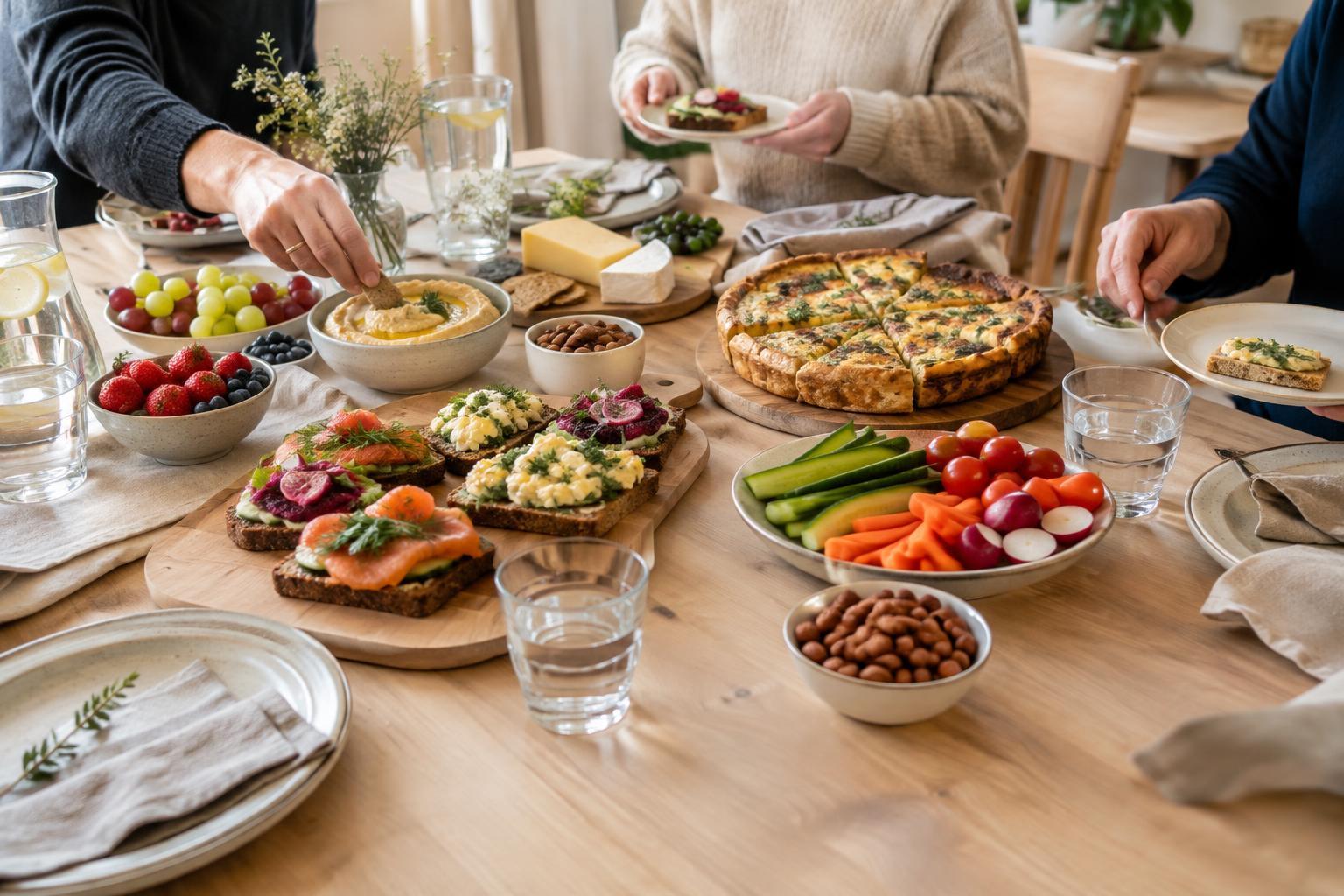
Start with items that could form a small meal when combined. A pot of soup served in mugs, substantial sandwiches cut into manageable pieces, baked potatoes with toppings, or a hearty bean salad can anchor the table. Then add lighter foods such as cut vegetables, fruit, crackers or pickles. This balance lets someone who is hungry make a proper plate while someone else can simply graze.
Choose foods that work together rather than collecting every appealing snack you can think of. A useful test is to imagine a guest who eats none of the chips or sweets: could they still find something satisfying? Include protein-rich or otherwise substantial options, produce, and something easy to pick up. If you know guests have dietary restrictions, ask ahead and make at least one filling choice they can enjoy. Keeping dressings and toppings separate can make that easier.
Plan enough food without overcomplicating the count
A snacks-only menu is easier to estimate when you think in plates, not in the number of different dishes. Picture each guest taking a modest first plate and returning for more of a favorite. Prepare enough of the filling foods to make those return trips possible. If the gathering spans a mealtime or you expect a long evening, lean toward more substantial food rather than a larger assortment of tiny bites.
Buy or prepare a small reserve of items that store well, such as bread, crackers, fruit or ingredients for another simple tray. You may not need to put everything out at once. A reserve gives you an uncomplicated way to respond if people are especially hungry, while keeping the table from looking crowded at the start. For foods that need careful temperature control, follow their storage and serving instructions rather than leaving them out throughout the visit.
Make serving easy for guests and for yourself
Arrange food so guests can see what is available and assemble a plate without blocking one another. Put plates and napkins near the beginning of the spread, serving utensils beside their dishes, and drinks in a separate spot if space allows. Small labels can be helpful when fillings are not obvious or when a dish contains a common allergen. Clear identification is more welcoming than asking guests to guess.
Before anyone arrives, decide what you will replenish and what can simply run out. Keep extra portions ready to bring out in clean dishes, and set aside a little time to check the table between conversations. Foods that taste good at room temperature, when served according to their storage guidance, can reduce trips to the kitchen. A comfortable place to set down a plate matters more than elaborate styling.
Leave room for a relaxed finish
You do not need a separate dessert course, but a simple sweet option can signal that the evening is winding down. Fruit, biscuits or a cake that is easy to slice will do. Keep water readily available alongside any other drinks, and have a straightforward way to pack leftovers once guests leave.
The goal is not to disguise dinner as a dozen miniature dishes. It is to offer honest expectations and enough real food for people to feel looked after. When the menu has a filling foundation and guests can serve themselves easily, snacks-only hosting can stay as informal as it sounds.


