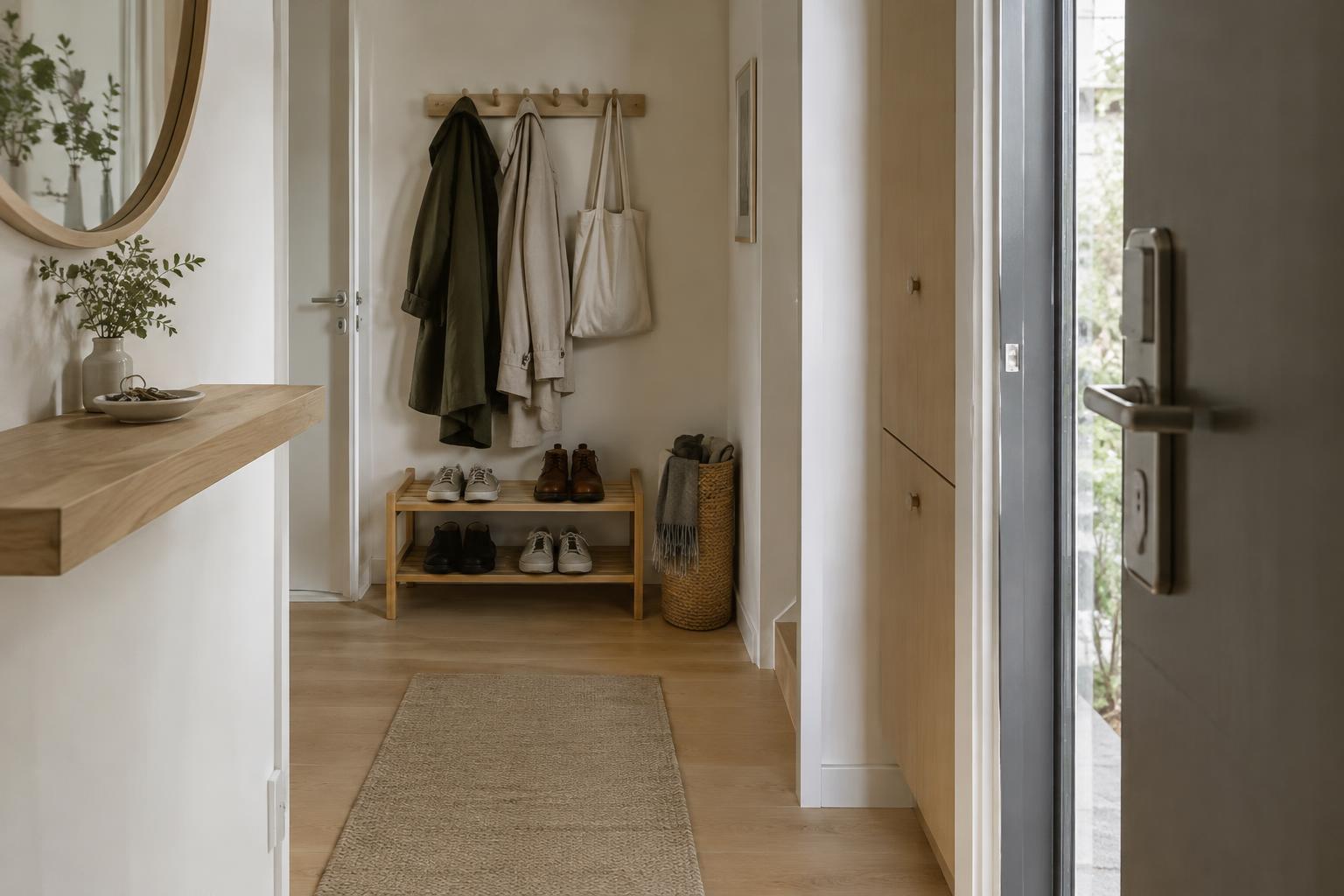
Start with the route through the door
An entryway has a demanding job: it needs to handle arrivals, departures and everything that comes with them. In a small space, the first step is not buying more storage. It is noticing where you stand to take off shoes, where the door swings and which items you reach for on an ordinary day. Keep that path clear before assigning the remaining space to furniture or containers.
Gather what currently lands by the door and sort it by frequency of use. Everyday shoes, outerwear, keys and a bag need the easiest spots to reach. Occasional gear can sit higher, lower or elsewhere in the home. This distinction keeps a compact entryway from becoming storage for every season at once.
Give each daily item a simple landing place
Small items are easy to lose when they have no defined destination. A shallow tray on a shelf or narrow console can hold keys, sunglasses and a wallet without letting them spread across the surface. If there is no room for a shelf, a wall-mounted key rail may do the same work. Choose one landing place and put it close to where you naturally set things down.
Hooks are often more convenient than hangers for coats and bags used every day, particularly when people are coming and going quickly. Mount them where the intended users can reach them, and leave enough space that one bulky coat does not hide everything beside it. A separate hook for a frequently used bag can make departures less of a search.
Keep shoes contained, not concealed at any cost
Shoes can take over the floor even when there are only a few pairs. A low rack, slim shoe cabinet or sturdy mat creates a visible boundary for pairs in regular rotation. The best choice depends on the space: an open rack makes shoes quick to grab and gives damp pairs room to dry, while a closed cabinet can reduce visual clutter if it does not obstruct the walkway.
Give wet or muddy footwear a place that is easy to clean, such as a removable tray or washable mat. If there is room for a small bench, it can make putting on shoes more comfortable; storage beneath it is a bonus, not a reason to squeeze in a seat that blocks the door. Limit the floor area to the pairs currently in use and move the rest to another location.
Use vertical space without making it hard to use
Wall space can relieve pressure on the floor. A narrow shelf above hooks might hold a basket for hats or other light accessories, while a higher shelf can take items needed less often. Before installing anything, check that the door opens fully and that people can move through the entry without brushing against protruding corners.
Containers help most when their contents are specific. One basket for gloves and one for reusable bags are easier to maintain than several mixed bins. Labels can help in a shared household, but placement matters more: daily essentials should be reachable without moving another container first. Leave a little empty capacity so putting things away remains easier than dropping them on the floor.
Let the setup change with the season
A functional entryway does not need to display every coat, scarf and outdoor accessory all year. When the weather changes, swap the most useful items into the easy-access spots and move the rest out. A brief check of hooks, shoe storage and baskets can also reveal what no longer belongs by the door.
Aim for a system that works on a rushed morning, not just after a thorough tidy. When each item has a clear home and the walkway stays open, even a modest entryway can feel calmer. The measure of success is simple: you can find what you need, put it back without effort and leave the house without navigating a pile.


