Start with the space and the people
The easiest game to enjoy is one that fits the place you have. A lawn can accommodate a gentle throwing game, while a courtyard, patio or patch of level ground may be better suited to targets and tabletop challenges. Before choosing, notice any paths, plants, furniture or nearby people you need to leave undisturbed. Set a clear play area that gives everyone room to move without making the afternoon feel organized down to the minute.
Ask what kind of play appeals to the group. Some people enjoy keeping score; others would rather work together or take a turn now and then between conversations. A simple agreement at the start—such as playing until everyone has had three turns—keeps a game from stretching longer than anyone wants. It also makes joining late, stepping away or sitting out feel ordinary.
Make a target game from what you have
For a gentle tossing game, place a basket, empty container or folded cloth a comfortable distance away. Use soft balls or rolled-up socks as the objects to throw. Each player takes a few turns, then moves the target closer or farther away to adjust the challenge. You can count successful throws, but trying to land one in each of several targets gives the game a satisfying goal without requiring a winner.
For a smaller space, set containers at different distances and let players choose their own throwing spot. That allows someone to play while seated and gives younger players a fair challenge without changing everyone else’s turn. Keep throws low and use soft objects where a missed shot might reach a window, a passerby or someone’s drink.
Turn a walk into a noticing game
A walk can become a game without asking anyone to hurry. Choose a short list of things to spot along the route: a curved branch, a shadow with an interesting shape, three different leaf forms or something that makes a quiet sound. Players can point things out as they go rather than collecting them. That leaves the setting as it was and avoids the need to carry anything home.
Try a cooperative version in which the group aims to find one example of each item together. If you want more challenge, give each person a different prompt and compare discoveries at a stopping point. Keep the prompts broad enough for the surroundings; a list that works in a garden may not suit a paved path. The pleasure is in paying attention, not in finishing first.
Use familiar games with lighter rules
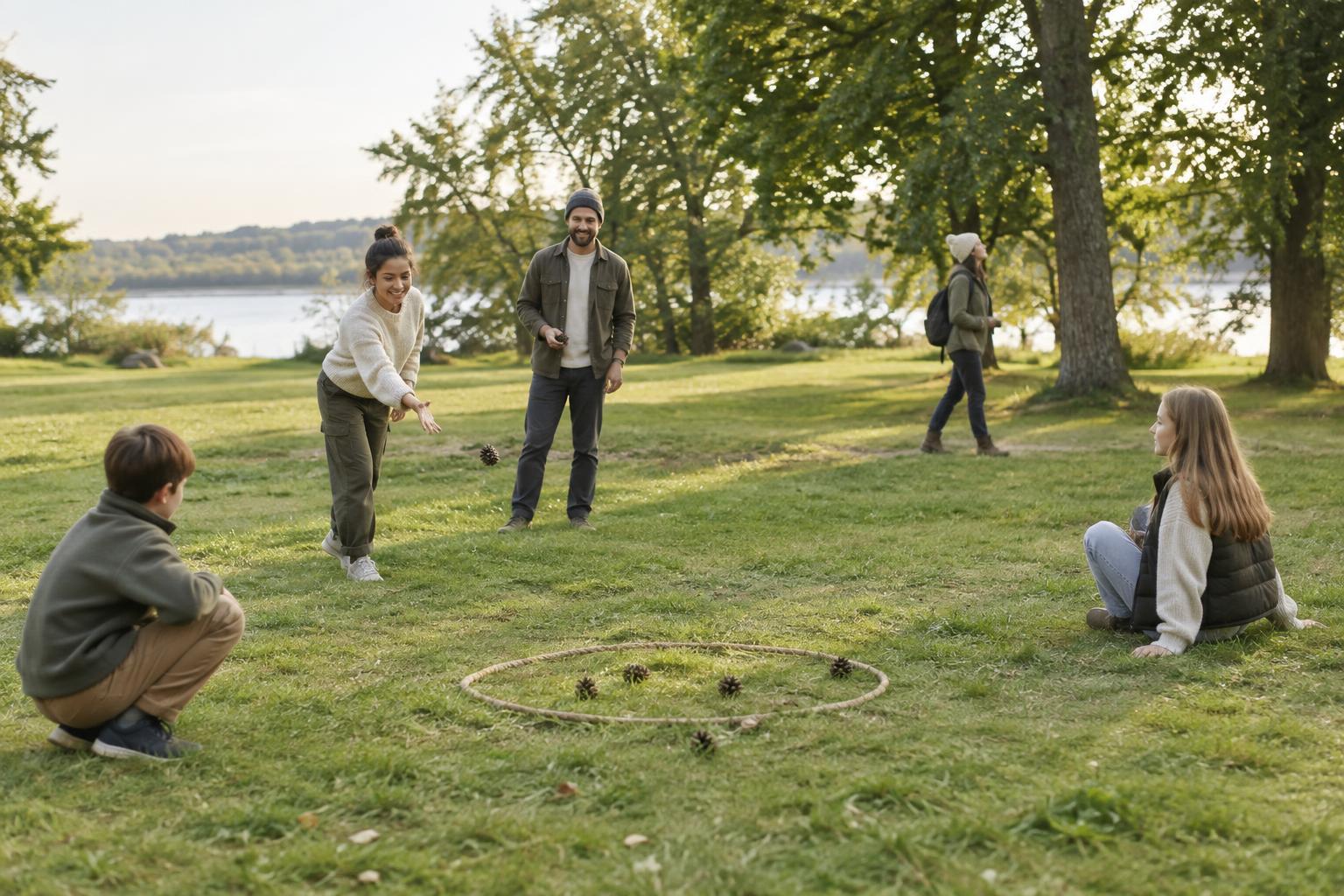
Many familiar games need only one small change to suit a relaxed afternoon. For a version of bocce, place one soft ball or other visible marker on the ground, then take turns rolling or gently tossing objects toward it. For a variation on ring toss, lay a scarf or loop of rope on the grass as the target and toss soft objects into the circle. The materials do not have to match, provided everyone agrees on what counts.
Short rounds help when the group has mixed ages or levels of energy. Play one round to test the distance, then invite everyone to suggest an adjustment. You might remove scoring altogether and see how many throws the group can land near the marker. That small shift can make it easier for hesitant players to join without feeling watched or measured.
Leave room for the afternoon to unfold
Keep the setup small: a bag with a few soft objects, a cloth for a target and perhaps paper for prompts is enough. Put water and a place to sit within easy reach, and choose a spot with shade or a comfortable alternative if the weather calls for it. A few minutes of preparation can make moving between games and conversation feel effortless.
There is no need to fill every pause. One game may turn into another, or people may prefer to watch for a while. Let the group change the distance, simplify a rule or stop mid-round. Low-equipment play works best when the objects are easy to put away and the invitation to take part stays open.


