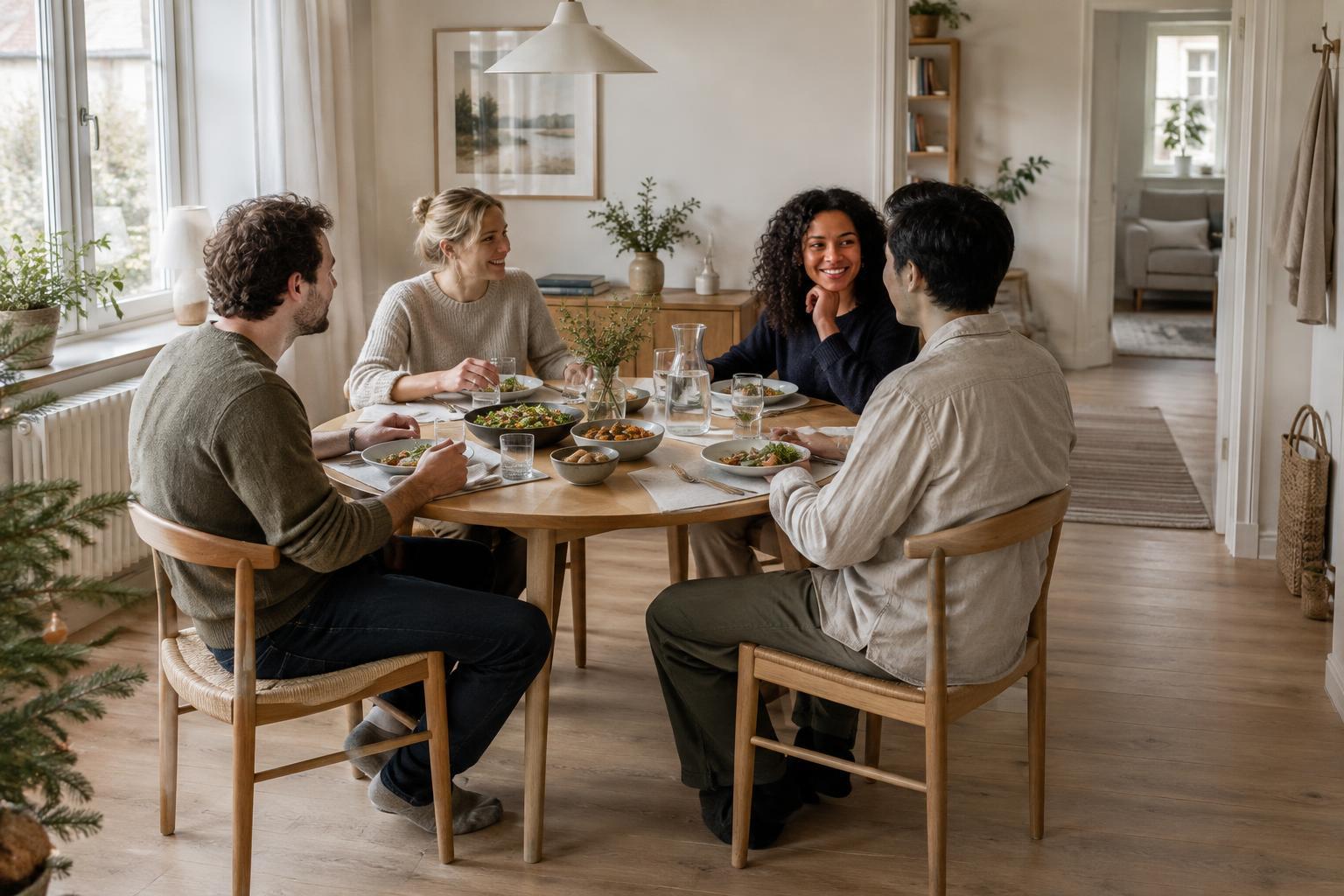
Start with the gathering you want
Before counting chairs, picture the evening. Do you want everyone around one table, a few conversations over drinks, or an afternoon where people come and go? A seated meal asks more of your space and attention than coffee and cake. Choose the shape of the gathering first, then find the number that supports it.
Think about your role, too. If you enjoy cooking while guests chat nearby, you may be comfortable with a different group size than someone who wants to sit down as soon as the doorbell rings. A comfortable count lets you be present rather than spending the visit continually carrying plates, finding glasses or wondering whether someone has a place to sit.
Count usable space, not just floor space
Walk through your home as a guest would. Where will coats go? Can people move between the entrance, seating and bathroom without squeezing past one another? Is there a clear place to set down a cup? The room may technically fit more people, but circulation matters as much as square footage. If you need to move furniture, make sure the new arrangement still feels easy to navigate.
For a meal, count the places where someone can sit and eat comfortably, not every stool you could borrow. For a more relaxed visit, look for a mix of seats and standing spots where people can join a conversation. Consider guests who may prefer a supportive chair, need a step-free route or find a crowded room tiring. You can ask about practical needs privately rather than guessing.
Match the number to what you can prepare
Your menu can either widen or narrow your comfortable guest count. A dish you can make ahead, with food served from the table or a counter, generally requires less last-minute attention than cooking individual portions. If hosting more people appeals to you, simplify the food before you increase the invitations. Bread, a shared main dish and something easy for dessert can make a meal feel complete without turning it into a production.
Check your ordinary supplies before settling on a number: plates, glasses, serving space, bathroom essentials and somewhere to put outerwear. Matching dishes are optional; enough clean dishes are not. Also consider what you want to spend and how much preparation and cleanup you are willing to do. A smaller gathering is a good choice if it leaves you able to enjoy the visit and the next morning.
Leave a little room for people, not perfection
An exact maximum can be a fragile plan. A guest may bring a child by arrangement, someone may need a quieter seat, or conversation may work better with a little distance between groups. You do not need to prepare for every possibility, but a modest margin makes the gathering more forgiving. If six people fit comfortably around your table and eight fit only when everyone holds a plate on their lap, six may be your dinner number.
The mix of guests matters alongside the total. People who already know one another may settle in quickly, while a group of strangers may benefit from fewer guests and more space for introductions. Children can change the rhythm of a gathering, and a lively group may need more room than a quiet one. None of these are reasons to exclude people automatically; they are reasons to plan the occasion you are actually inviting them to.
Set your limit and invite with clarity
Once you have a number, treat it as a useful boundary rather than a test of generosity. Invite the people you most want to spend time with, and resist adding guests out of guilt after you have reached your comfortable limit. If you would like to see more friends, a second small gathering can be more enjoyable than one crowded evening. Different occasions can have different guest counts, even in the same home.
Make the invitation clear about the time and format: a seated dinner, an afternoon snack or a casual visit. If you need to know who is coming before preparing food, ask for a reply by a reasonable point. Let guests know whether children or additional guests are included rather than leaving them to guess. The aim is not to run a flawless event. It is to make enough room, in your home and in your attention, for the people you have invited.


