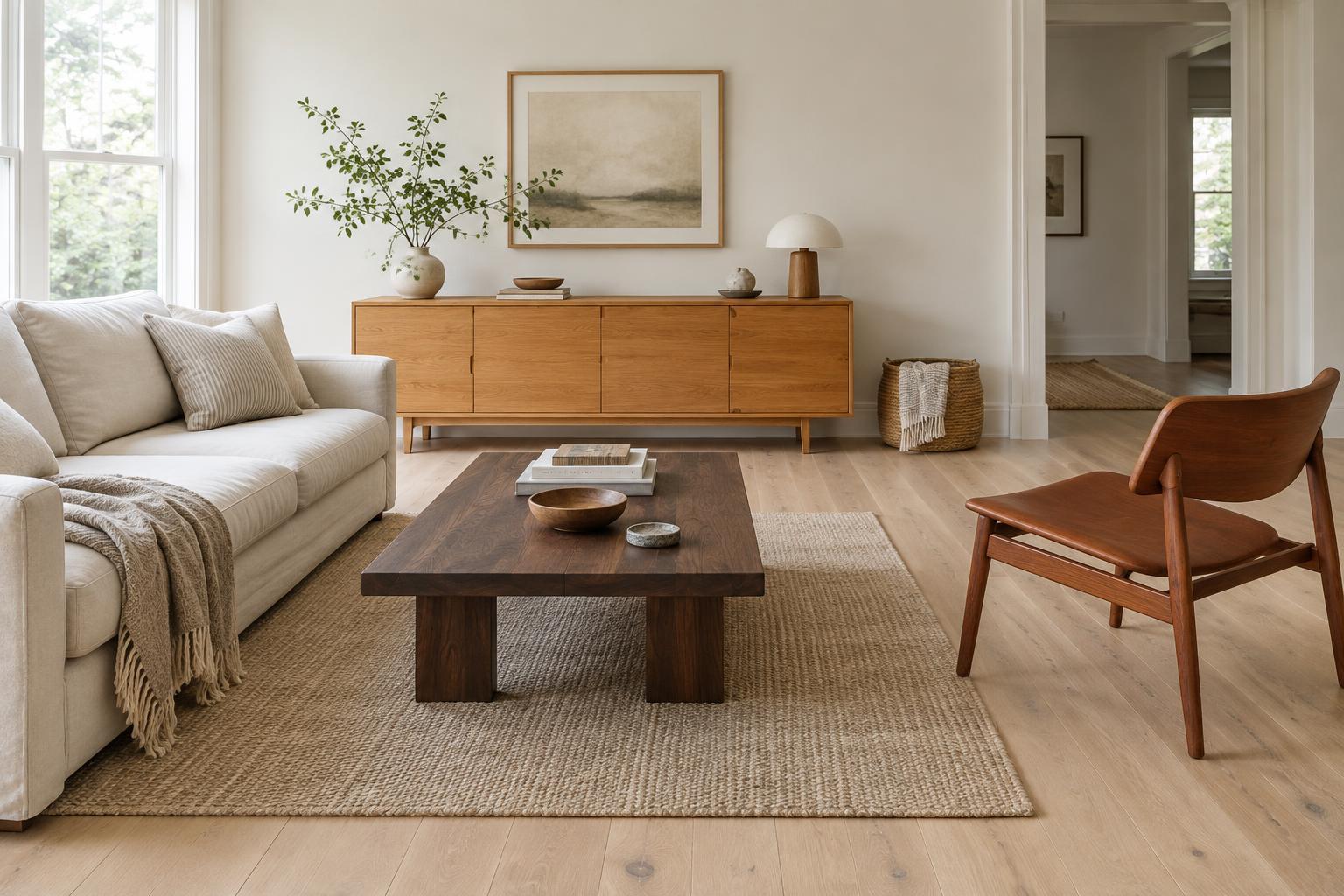
Start with what is already in the room
Mixing wood tones can feel intimidating when a floor, table and cabinet all seem to be different colors. The goal is not to make every surface match. It is to give those differences a sense of purpose. Begin by noticing the wood you cannot easily change: flooring, doors, built-in shelves or exposed beams. These surfaces form the backdrop against which movable pieces will be seen.
Choose one wood tone to lead the room. It might be the floor, but it could also be a large dining table or a run of cabinets. Let that tone occupy the most visual space, then treat other woods as supporting pieces. If your main surface is pale oak, for example, a darker chair or side table can provide definition without requiring you to replace everything else.
Look at undertones, not just light and dark
Woods vary in more than depth of color. Some read warm, with honey, amber or reddish notes; others look cooler or more muted, with gray or ashy notes. Two woods can be different shades yet sit comfortably together if their undertones feel related. Conversely, pieces that look similar in a shop may seem at odds once placed side by side at home.
You do not need to identify every species or finish to make a useful choice. Hold a sample or small object near the existing wood and ask whether one looks noticeably orange, pink or gray by comparison. Check it in daylight and under the lamps you normally use, since lighting can change your impression. If a pairing feels too close but not quite matched, try more contrast rather than searching for an almost-identical finish.
Make contrast feel intentional
A simple starting point is to use two clearly different tones, such as a light floor with a medium or dark table. The contrast helps each piece stand on its own. An in-between tone can work too, particularly in a larger room, but adding many subtly different finishes at once may make the space feel unsettled. There is no fixed limit: what matters is whether the eye can recognize a pattern rather than a collection of near matches.
Repeat an accent tone in a small way if it helps the room feel connected. A dark wood chair might relate to a picture frame or the legs of a bench across the room. Repetition does not have to be exact, and it should not turn into a shopping assignment. One or two existing objects may be enough to carry a color from one side of the room to the other.
Give each surface room to breathe
When several woods meet in one corner, their differences become more noticeable. A rug can separate a wooden table from a wooden floor, while upholstered seating, woven fabric or a painted wall can provide a quiet break between wood surfaces. These materials do not hide the mix; they give it space. A clear area around a piece can be as helpful as another decorative object.
Pay attention to grain and finish as well as color. A heavily grained cabinet beside a heavily grained table may feel busy even if the tones work together. Pairing a prominent grain with a calmer painted or upholstered surface can ease the effect. Likewise, a very glossy piece may stand out next to several matte finishes. That may be exactly what you want, but it is worth noticing before you add more pieces.
Test the room before changing it
If you are considering a new piece, bring home a finish sample when possible, or view the piece beside the furnishings you already own. A photograph can help you compare the overall balance, though it may not capture color accurately. For smaller changes, move a side table or chair into place for a few days. See how the room feels in the morning and evening and from the places where you actually sit.
Mixing wood tones is less about following a strict formula than making a useful room feel coherent. Keep the pieces that serve you well, let one tone lead, and use contrast and breathing space where they help. A comfortable mix can grow gradually; it does not need to be completed in a single purchase.


