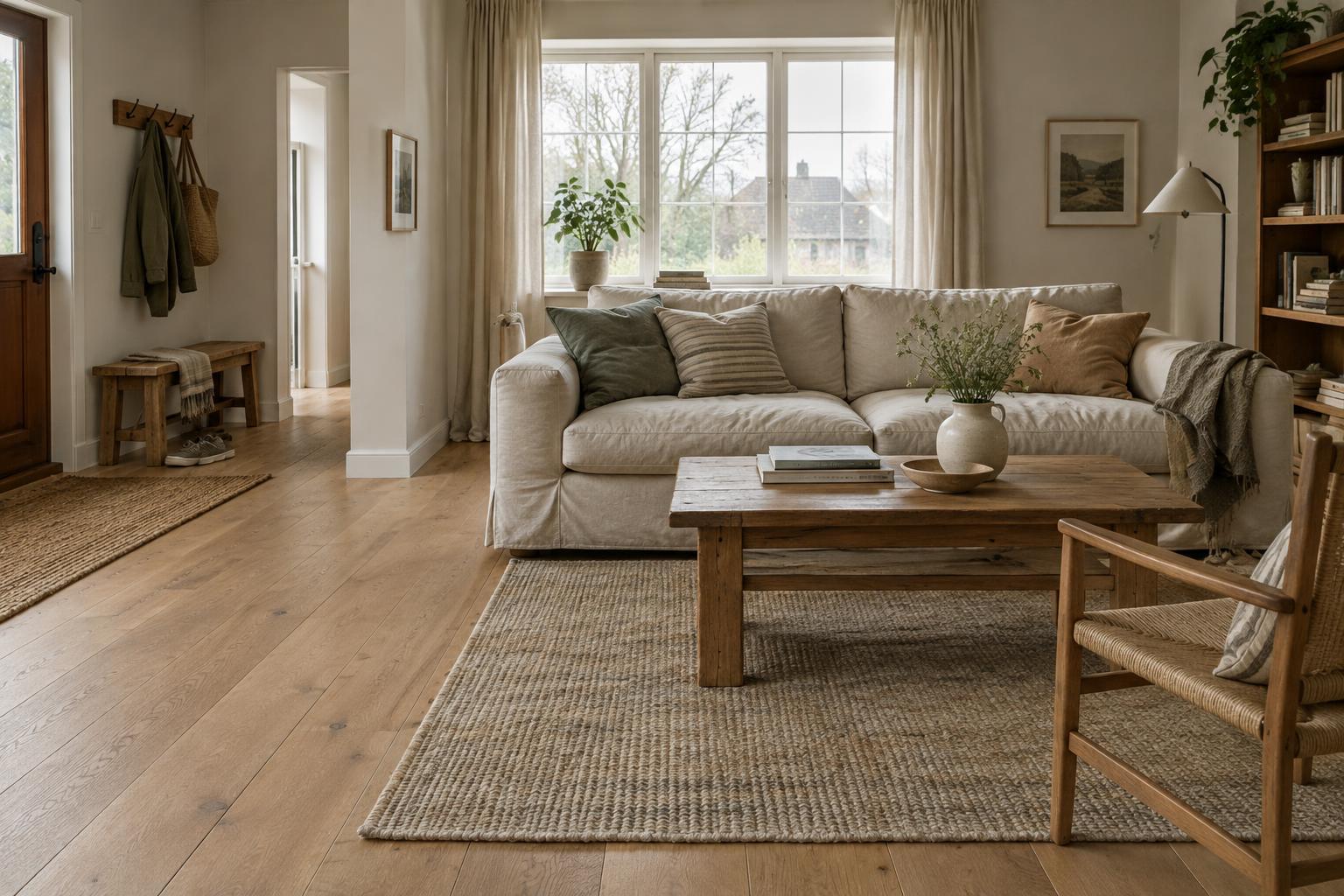
Start with the wear your room actually gets
A busy room does not need to feel hard or utilitarian. Before comparing materials, notice what happens there each day. An entryway may collect wet shoes and grit, while a living room may see chair legs moving across the floor and people sitting in the same spots. A family dining area has its own demands: spills, crumbs and frequent wiping. Naming the sources of wear helps you spend on durability where it matters instead of choosing the toughest-looking surface for everything.
Think about how the room feels underfoot and how much time you want to spend maintaining it. A smooth surface may be easy to wipe but slippery when wet. A heavily textured one may hide scuffs yet trap dirt. Bring samples into the room if possible, and look at them in daylight and evening light. An easygoing material should work with your habits, not require everyone to change theirs.
Choose flooring for cleaning and repair
For floors, consider moisture, abrasion and the possibility of repair separately. Tile can be useful near wet shoes or frequent spills, but grout needs cleaning, and some finishes feel cold or slick. Wood brings warmth to a living or dining area, though its finish will influence how visible scratches become and what upkeep it needs. Vinyl and laminate are worth comparing for their cleaning requirements and resistance to everyday marks; check each product’s guidance rather than assuming all versions perform alike.
A floor that can be refreshed or repaired in a small area may be easier to live with than one that has to look flawless indefinitely. Ask how a damaged plank or tile would be replaced and whether you can keep a few spare pieces. In an entryway, a washable mat can catch grit before it reaches the main floor. Felt pads under furniture and a habit of lifting, rather than dragging, heavy pieces help protect whichever surface you choose.
Look closely at upholstery and soft surfaces
Durable upholstery is about more than a fabric that feels thick. A tightly woven material may be less prone to snagging than a loose weave, especially around pets, bags or clothing with fasteners. Removable, washable covers can simplify life, but check the care instructions: not every cover belongs in a home washing machine. On a sofa used daily, inspect the seams, cushions and frame as well as the outer fabric. A replaceable cover is most helpful when the piece beneath it remains comfortable and sound.
Colour and texture affect how wear appears. Mid-tones and subtle patterns can make small marks less conspicuous than a very pale, uniform surface, without forcing a room to feel dark. Rugs add softness and can protect flooring, but they should be practical to clean and sized so furniture sits securely. Use an appropriate underlay where needed to reduce slipping, and make sure it suits the floor finish.
Pick finishes you can maintain without fuss
Walls, tabletops and cabinet fronts also take daily knocks. In narrow passages, a wall finish that tolerates gentle cleaning may be more useful than one chosen only for its appearance. Around tables and counters, consider whether a finish shows fingerprints, water rings or small scratches, and how you would clean it. Manufacturers’ care instructions are worth reading before purchase, particularly for sealed wood, stone and coated surfaces.
Not every visible mark is a failure. Materials that develop an even, acceptable patina can feel more forgiving than pristine finishes that highlight every scuff. Decide which signs of use you are comfortable seeing. If you prefer a crisp appearance, look for surfaces you can touch up or components you can replace, such as cabinet handles or chair covers. Durability includes the ability to keep a room looking cared for over time.
Make the final choice as a whole-room decision
Balance hard-wearing surfaces with comfort. A tiled entry may benefit from a place to sit while removing shoes; a washable sofa cover may pair well with a softer throw. You do not need every material to match. Repeating a few colours or natural-looking textures can make practical choices feel considered, while giving each part of the room a job it can handle.
Before committing, make a short list for each material: what will soil or damage it, how will you clean it, and what happens if one part needs repair? Check samples for feel, not just appearance, and confirm that their care requirements fit your routine. The best choice is rarely the material described as indestructible. It is the one that makes ordinary use, occasional mess and reasonable upkeep feel manageable.


