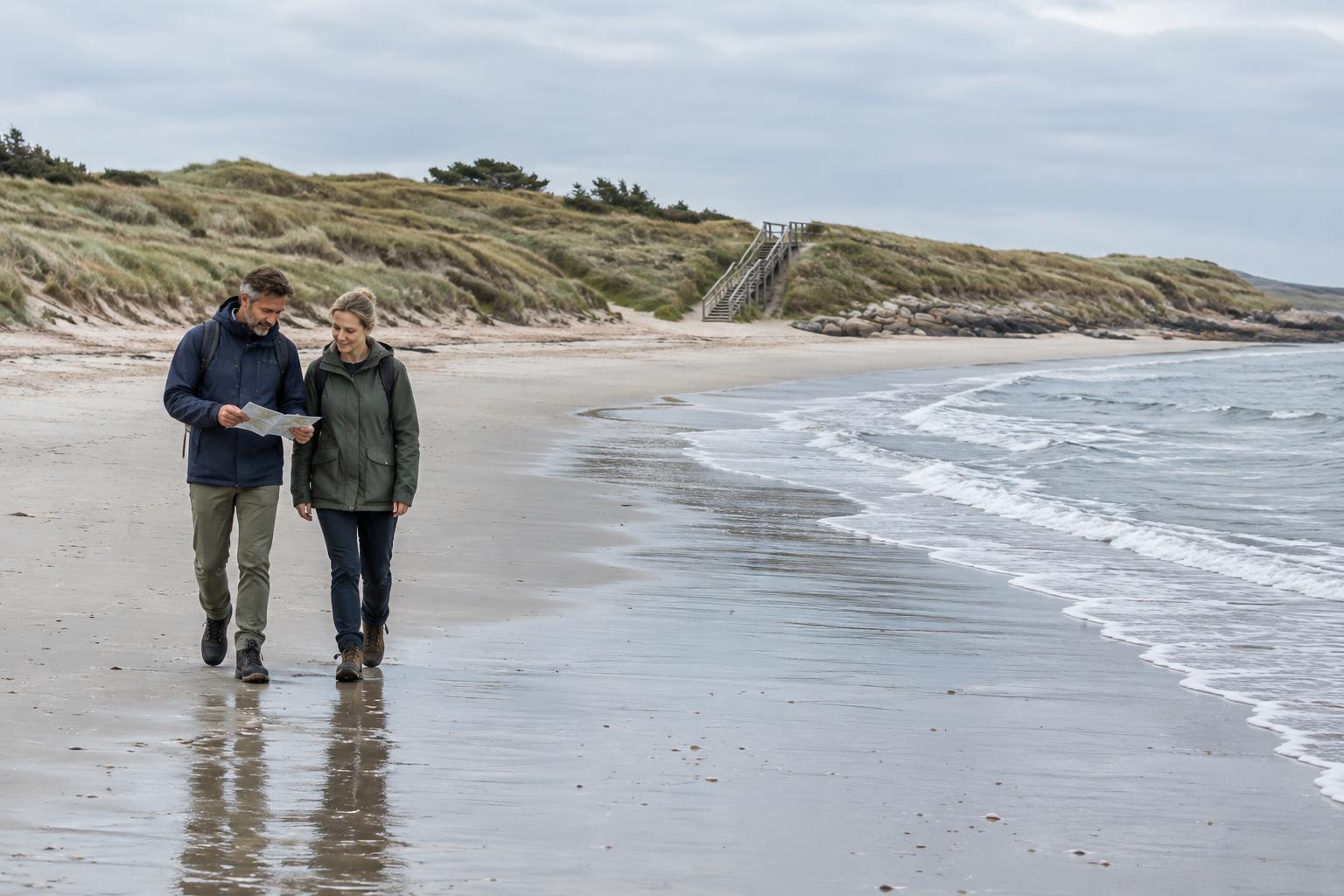
Start with a route, not just a destination
A beach can look like an open path, but the easiest stretch to walk is not always the easiest one to leave. Before setting out, choose a starting point, a likely turning point, and a way back. A short out-and-back walk is often simpler to plan than a one-way route, especially somewhere unfamiliar. Give yourself enough time to return at a comfortable pace rather than treating the farthest point you can reach as the goal.
Look at a map for the shape of the shore and the location of paths, roads, car parks, or public transport stops. Headlands, rocks, river mouths, and long sections below cliffs can interrupt a walk that appears continuous from a distance. If you hope to finish somewhere other than where you started, check how you will travel from the exit point before you begin.
Check what the tide will do during your walk
Find tide information for the stretch of coast you plan to visit, using a relevant local source. Check the times of high and low tide, then think about where those times fall within your entire outing, including the walk back. A low tide at the start does not mean the same route will remain available later. Tide times can vary along a coastline, and the amount of exposed beach can change considerably with the shape of the shore.
Tide tables are a planning aid, not a promise about the width or safety of the sand. Wind, waves, and local conditions may affect how much space feels usable. If part of your route depends on passing beneath cliffs or around a headland, look for local guidance and avoid relying on a narrow window to get through. When in doubt, choose a walk with clear exits and plenty of room above the waterline.
Find the entrances and exits before you need them
A marked beach access point is a useful place to begin because it gives you a known route between the shore and the land behind it. Notice what it looks like from the beach; steps, paths, and gaps between dunes can be harder to spot on the return. Where signs identify public routes, seasonal restrictions, or protected areas, follow them rather than assuming every visible track is available.
As you walk, keep track of your next practical exit. This matters most on beaches backed by cliffs, dense vegetation, or private property. Do not count on climbing a slope or scrambling over rocks as a backup plan. If you cannot identify a suitable way off the beach beyond your planned turning point, turn around while the route behind you is still straightforward.
Make the return route part of the outing
Before leaving your starting point, decide what will prompt you to turn back: a particular access path, a landmark, or a time on your watch. Build in extra time for pauses, slower sand, and the simple fact that a walk into the wind may feel different on the way home. If you are walking with others, set the pace around whoever needs the most time rather than letting the group stretch apart.
Keep a map or saved route available in case landmarks are less obvious on the return. Phone reception and battery life can vary, so a downloaded map or a clear mental picture of the access points is helpful. Tell someone your general plan if you are heading to a quiet or unfamiliar stretch. These small preparations let you enjoy the walk without repeatedly wondering how far you have left to go.
Leave space for changing conditions
Check the weather before you go and dress for the conditions you may meet on an exposed shore, not only those at the car park. Comfortable footwear matters: firm sand can make walking pleasant, while soft sand, pebbles, and wet rocks can slow you down. Bring water, and carry any layers or small essentials in a bag that leaves your hands free.
Once you arrive, compare your plan with what you can actually see. If waves are reaching the base of the cliffs, an access path is closed, or visibility is poor, pick a different stretch or shorten the walk. A satisfying beach outing does not need to cover much ground. Knowing your way in, your way out, and when to turn back makes it easier to pay attention to the light, air, and changing edge of the water.


