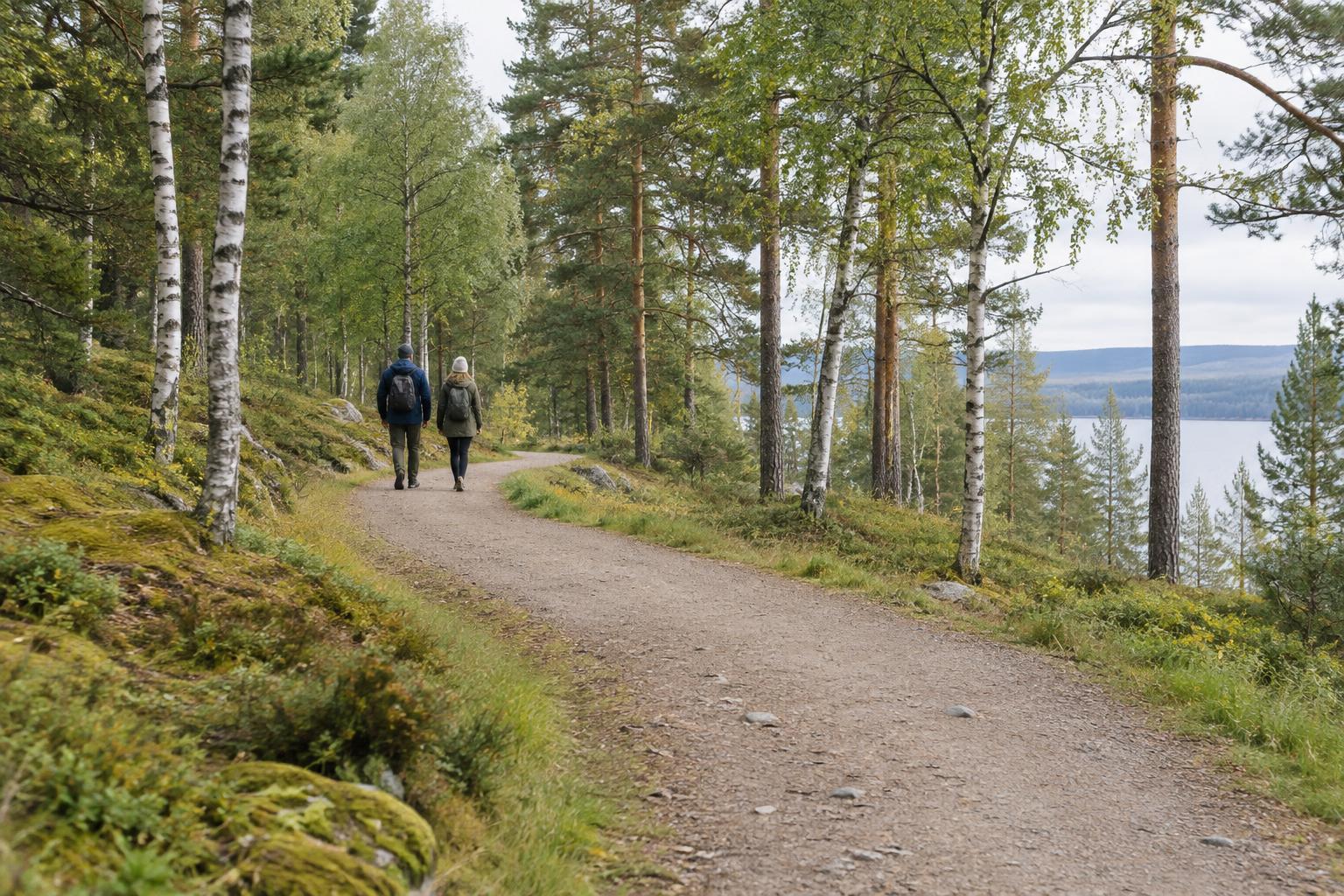
Start with the walk you want to have
A beginner-friendly trail is not simply the shortest one on a map. It is a route that feels manageable for the people walking it, with enough time and energy left to enjoy the surroundings. Before comparing trails, decide what you want from the outing: an unhurried stroll, a picnic stop, a chance to see the water or a first taste of walking on uneven ground. That goal helps you choose a route rather than treating distance as a challenge to complete.
Think about who is coming and what they may need. A child who wants to explore every interesting stone may cover ground differently from an adult walking alone. Someone using a stroller, mobility aid or walking poles may need firmer surfaces and fewer obstacles. If the group has different preferences, choose a route that accommodates the person who needs the easiest footing. You can always add another loop if everyone feels good.
Read distance in context
Trail listings may give the length of a loop, the one-way distance to a destination or the total distance there and back. Check which figure you are looking at before setting off. An out-and-back route can be particularly flexible for a first outing: you can turn around whenever you wish. A loop offers variety, but once you pass the halfway point, the remaining walk may be less easy to shorten.
Give yourself more time than the distance alone seems to require. Stops for photos, snacks, route checks and simply looking around are part of the pleasure. If you are unsure how much ground feels comfortable, start with a modest route close to home and notice how you feel afterward. That experience is more useful for planning your next walk than trying to match someone else’s pace. Where a trail has several access points, confirm that your chosen starting point matches the distance you have planned.
Look beyond the elevation number
Distance tells only part of the story. A short trail with a steep climb may feel more demanding than a longer, nearly level path. Trail descriptions sometimes list elevation gain, which is the amount of uphill walking accumulated along the route. If a description says “rolling,” expect repeated small rises and descents; “flat” may still include roots, curbs or brief slopes.
Consider the shape of the route as well as the total climb. A steady incline can be easier to anticipate than a sudden steep section, while a long descent may require careful footing. Maps and descriptions do not always show these details clearly, so look for words such as steps, switchbacks, boardwalks or rocky sections. If a route seems uncertain, choose an alternative with a straightforward path and save the more varied terrain for another day.
Match the surface to your comfort level
A wide, well-maintained path can make it easier to settle into a comfortable rhythm. Paved paths, compacted gravel and smooth dirt often provide more predictable footing than loose stones, deep sand or narrow tracks crossed by exposed roots. “Easy” on a trail listing may refer to the overall effort, not a consistently smooth surface, so read any available description of the path itself.
Conditions can change the feel of a familiar trail. Rain may leave mud or slippery boards; dry weather can make loose gravel harder to walk on. Shoreline paths may have exposed, windy stretches, while wooded routes may have damp patches long after other surfaces have dried. Choose shoes suited to the surface, and be willing to turn back if the footing is less comfortable than expected. There is no prize for finishing a route that no longer suits your day.
Make a simple plan, then leave room to wander
Before you go, check the trail’s posted route information, access points and any relevant notices. Note whether the path is clearly marked, where you can return to the start and whether there are facilities you may want. Bring water, a layer for changing conditions and a way to navigate that does not depend entirely on a signal. Let someone know your general plan if you are heading somewhere unfamiliar.
Once outside, give the walk a gentle rhythm. Begin at a pace that allows conversation, pause when something catches your eye and check in with the group before a junction or a steeper stretch. A good first trail should leave you feeling that you could return, perhaps in another season or with a longer route in mind. Starting small is not a compromise; it gives you the space to pay attention to the place you came to see.


