Start with what actually happens in your kitchen
A kitchen works best when the things you reach for are close to the place you use them. That sounds simple, but many kitchens are organized by object type instead: every mug in one cupboard, every utensil in one drawer, every dry ingredient in the pantry. Those groupings can be useful, yet they are not always convenient. If you make tea each morning, carrying a mug, tea, spoon, and kettle between four corners of the room adds unnecessary steps.
Before moving anything, notice your routine for a few days. Where do you prepare breakfast? Which stretch of counter becomes the landing place for groceries? What do you use for most evening meals, and what gets in the way when you clean up? You do not need a formal inventory. A short list of frequent tasks, occasional tasks, and frustrating moments is enough to guide a rearrangement.
Give frequent tasks a practical home
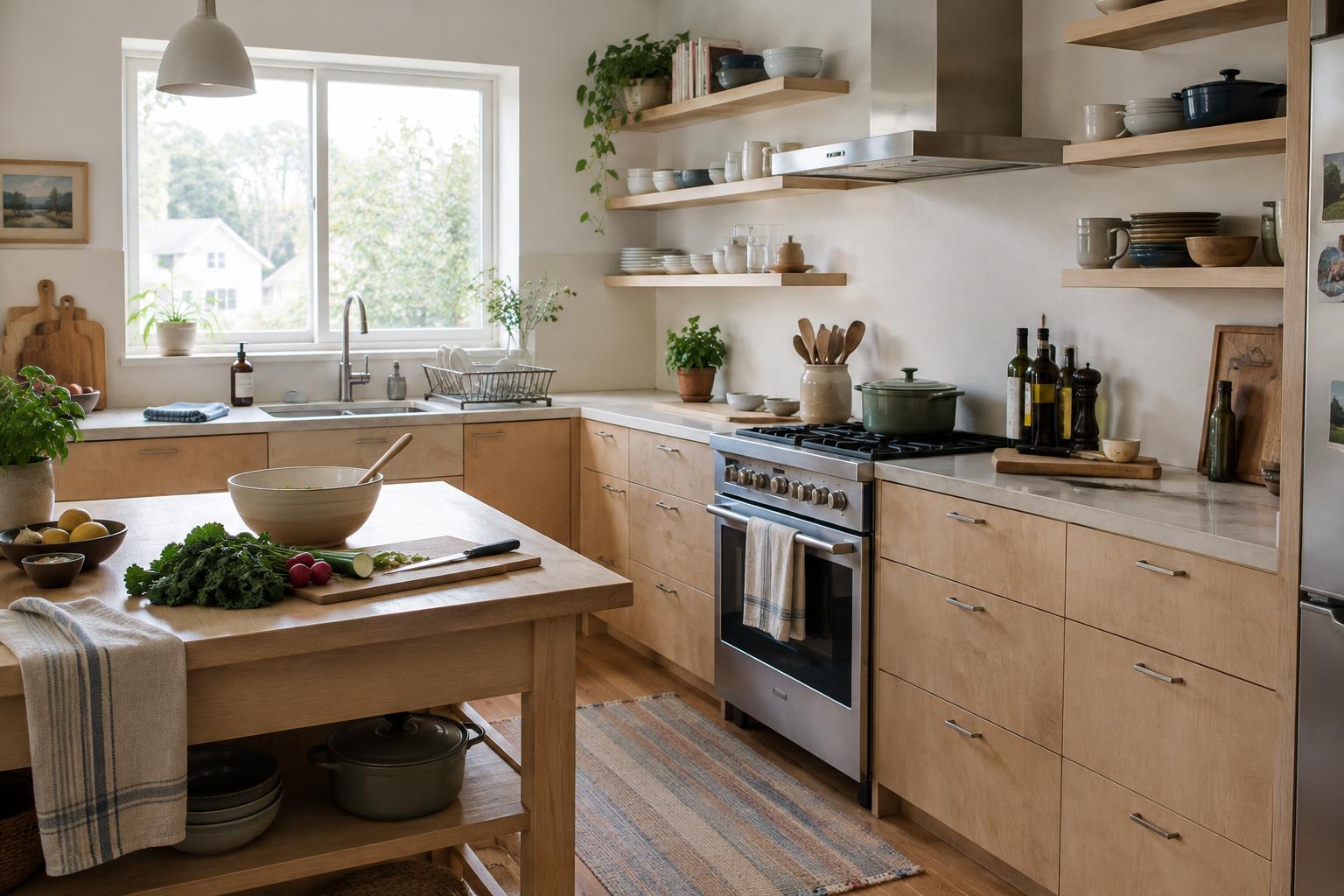
Choose a few task areas based on how you live. A breakfast area might hold cereal, bowls, mugs, and the appliances you use regularly. A cooking area might put pans, cooking utensils, oil, and commonly used seasonings within easy reach of the stove. A preparation area needs a clear work surface, with a cutting board, knives, and a waste or compost container nearby. These areas can overlap; they do not need separate counters or matching containers.
Keep the most-used items in the easiest-to-reach spots, and let occasional equipment take the high shelves or deeper cupboards. Store heavy objects where you can lift them comfortably without reaching overhead. Keep handles, cords, and frequently opened drawers out of the main walking path where possible. The goal is not to fit every item beside its task, but to make the routine movements shorter and less awkward.
If you share the kitchen, ask where other people naturally look for things. A system that only one person understands will require constant explaining. Clear, predictable locations are often more helpful than elaborate labels: glasses near the dishwasher, lunch containers near their lids, and everyday plates where everyone can reach them.
Protect space for preparation and cleanup
Storage is only part of an organized kitchen. Clear counter space is a working tool. Identify the surface you rely on most for chopping, mixing, or assembling meals, then avoid using it as permanent storage for appliances you seldom switch on. If counter space is limited, a small tray can hold the few items that genuinely belong there and make the surface easier to clear when you need it.
Think through cleanup as a task of its own. Put dish towels where you dry dishes, cleaning supplies where they can be stored safely, and food-storage containers near the place you pack leftovers. A bin close to preparation makes scraps easier to manage, while an accessible place for incoming dishes can keep them from spreading across the counter. Leave room around the sink and cooking area to work comfortably rather than filling every available inch.
Adapt the layout to the room you have
In a compact kitchen, one cupboard may serve several tasks. Instead of forcing strict zones, group smaller items inside a drawer divider, basket, or shallow bin so they can move together. A tray with tea supplies can create a morning station without claiming a whole counter. In a larger kitchen, avoid spreading related items so far apart that a simple meal becomes a walk across the room.
Let your habits guide what stays visible. If you cook daily, keeping a few utensils within reach may be worthwhile. If you mostly assemble quick meals, easy access to plates, containers, and a clear counter may matter more. A calm-looking space is pleasant, but usefulness comes first; there is no single arrangement that suits every household.
Make small changes, then test them
Reorganize one task at a time. Move what you need for that routine, use the kitchen normally, and notice what still feels inconvenient. If a new location makes a drawer harder to open or sends you across the room for one last item, adjust it. This approach is less disruptive than emptying every cupboard at once, and it helps you distinguish a real improvement from a tidy arrangement that only looks good on day one.
Revisit the layout when your routines change. Seasonal cooking, a new housemate, or a shift in how often you host can change which tools deserve prime space. A functional kitchen is not a finished display. It is a flexible room that makes everyday tasks a little easier.