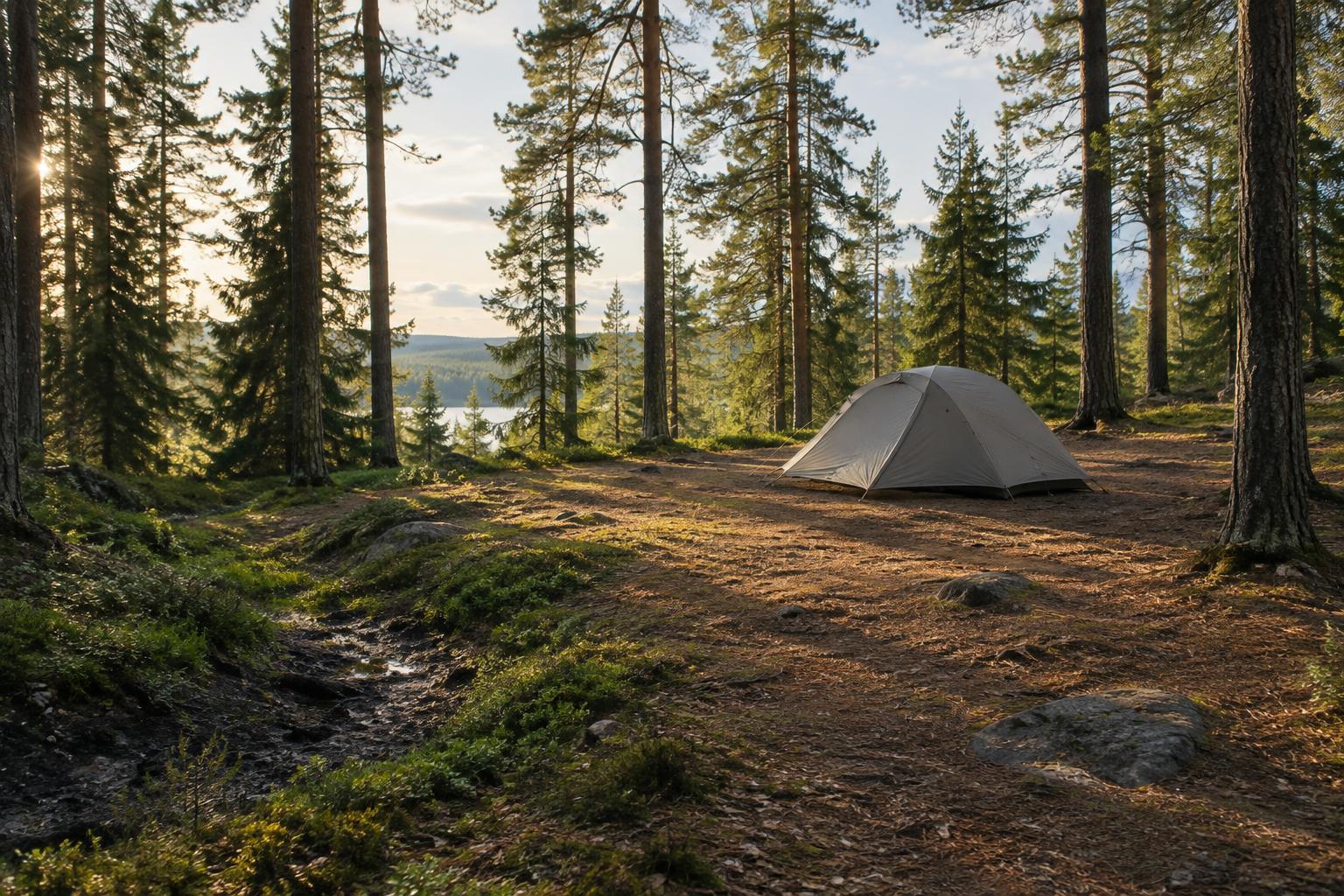
Start with the places you are allowed to camp
A good campsite begins with a simple constraint: use a designated pitch or an area where camping is permitted. If you are booking a campground, look at the site map before you arrive. It may show toilets, paths, parking, water access, and neighboring pitches. The map cannot tell you exactly how a site will feel, but it can help you narrow your choices.
Once there, pause before unloading everything. Walk around the available space and picture where your tent, cooking area, and seating would go. Look for firm ground with enough room to move without stepping into vegetation or blocking a path. A scenic corner is less useful if it forces your tent onto a slope or puts your doorway where people regularly pass.
Read the ground for drainage
Even a dry campsite can reveal where water is likely to collect. Avoid obvious hollows, the lowest part of a pitch, and ground marked by channels where runoff may travel. A broad, gently raised area is often more comfortable than a perfectly flat-looking depression. Check the ground around the proposed tent footprint as well as beneath it: water approaching from uphill matters as much as a puddle directly under the tent.
Look for damp soil, flattened grass, exposed roots, or deposits of leaves and grit that suggest water has moved through the area. These clues are not guarantees, so consider the weather you might encounter during your stay. Keep out of streambeds and other places that could carry water after rain. Do not dig trenches around a tent; choose a better position instead, and follow the site’s rules about protecting the ground.
Treat shade as something that moves
Shade can make an afternoon spent reading or preparing food much more pleasant, but the patch you see on arrival will not stay in one place. Notice where the sun is and what is casting the shade. If you expect to spend time at camp in the morning, think about where sunlight will reach your seating area then. If warm afternoons are the concern, look for a place where you can retreat from direct sun later in the day.
Trees can offer welcome cover, but inspect the area above your tent and chairs. Avoid setting up beneath dead or damaged branches, and give trees room rather than tying or leaning gear against them where that is not permitted. Shade also does not replace ventilation: a sheltered tent can still feel stuffy. If possible, choose a layout that lets you open the tent as intended while keeping its entrance practical in changing weather.
Listen before you commit
Quiet is partly a matter of distance and partly a matter of timing. A pitch beside a trail may seem peaceful when you arrive, then feel busy as other campers return for the evening. Listen for roads, generators, shared facilities, play areas, and water that may sound louder at night than expected. Consider how close neighboring tents are and whether people will need to walk past your sleeping area.
The farthest pitch is not automatically the best one. A remote corner may mean a long walk to facilities or greater exposure to wind. Decide which sounds you can comfortably live with, then place your tent so its sleeping end is away from the most active side of the site when space allows. Keeping your own conversations and lights considerate after dark helps make the setting more restful for everyone.
Make the final choice as a whole
Few campsites offer ideal drainage, shade, and quiet all at once. Give priority to the conditions that are hardest to work around: permitted ground, a safe tent position, and a surface unlikely to hold water. Shade can often be improved by choosing when and where to sit. Some noise can be softened by moving your sleeping space within a pitch, though not by blocking shared routes.
Before pitching, stand where the tent will go and check the slope, overhead space, likely runoff, and route to the entrance. Then take a few steps back and consider how you will use the site through the day. A thoughtful choice need not be the most secluded or picturesque one. It is the place that lets you settle in comfortably while leaving the ground and the experience of other visitors in good shape.


