Start with the job the piece needs to do
Before looking closely at a secondhand chair, table or cabinet, decide what you need from it. A desk may need room for a laptop and a comfortable working position; a hallway cabinet may need doors that open without blocking the path. A piece can be appealing without being useful in your home. Naming its purpose first makes it easier to walk away from a tempting find that does not solve the problem.
Measure the space where the furniture will go, including the clearance needed to pull out drawers, move chairs or open doors. Then check the route into your home: doorways, stair turns, lifts and narrow corridors can matter as much as the final footprint. Carry the measurements with you, along with a note of any height or depth limits. A simple, functional interior leaves enough room to move around and use what you own.
Inspect the structure before the surface
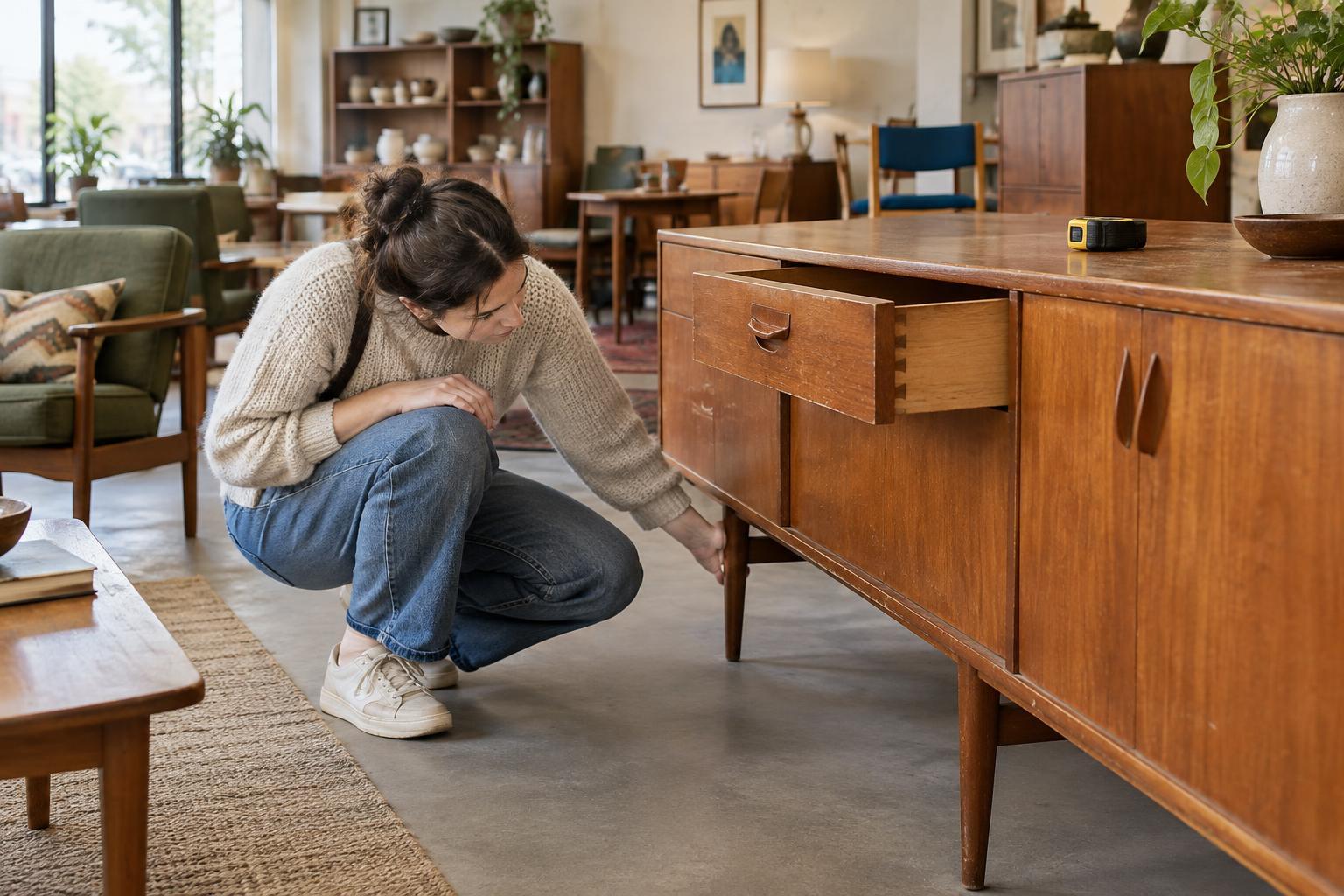
If you can examine the piece in person, place it on a level surface and give it a gentle test. Sit in a chair, open and close every drawer, and check whether a table rocks. Look underneath and behind it, not just at the parts shown in a listing photo. Joints that separate when the piece moves, bowed shelves, broken supports and doors that cannot be aligned may mean more work than a worn finish suggests.
Ask what the furniture is made of if it is not clear. Solid wood, veneer, metal and manufactured board can all be useful, but damage affects them differently. A loose handle is usually a smaller project than a swollen board or peeling veneer. For upholstered furniture, check that the frame feels steady and the cushions offer the support you want. If the seller cannot demonstrate a moving part or provide a view of a damaged area, leave room for uncertainty in your decision.
Look for signs of moisture, odours and pests
Inspect seams, crevices, drawer corners, the underside and the back of the piece. Look for staining, soft or swollen areas, crumbling material, unexplained debris and signs of insects. Notice any strong musty, smoky or perfumed smell. An odour that is obvious during a brief visit may be difficult to live with in a small room, even if the furniture looks clean.
It helps to distinguish ordinary wear from a condition you are not prepared to manage. Scratches and faded fabric may be acceptable if you like the piece as it is. Suspected pest activity or extensive moisture damage calls for more caution. If you cannot inspect a piece thoroughly, especially an upholstered one, consider whether the unknowns are worth the saving. Do not rely on a quick wipe-down to resolve a problem you have not identified.
Estimate the real effort and cost
A low price is only part of the decision. Think through what happens after purchase: collecting the piece, carrying it inside, cleaning it and making any repairs. Ask yourself whether you have the tools, time and suitable workspace for the work you are imagining. A coat of paint or new handles may sound simple, but preparation and fitting can take longer than expected.
Be specific about what you would change and what you would leave alone. If the piece only works for you after reupholstery, replacement parts or extensive refinishing, compare that effort with finding a piece that already meets your needs. With older furniture, treat unknown finishes cautiously rather than sanding or stripping them without understanding the material. A useful secondhand purchase should suit your available resources as well as your room.
Make a plan for the trip home
Before agreeing to buy, confirm the furniture’s dimensions, whether it comes apart and who will help move it. Check that detachable shelves, screws or other components are included. If a piece must be carried through a tight space, plan how to protect both the furniture and the surroundings. Arrange a vehicle that can accommodate it without forcing it into place.
Once home, give the piece a careful clean appropriate to its material and let it air out where practical before putting it into regular use. Tighten accessible fittings if needed, then check its stability again in its new position. Taking time for these final steps helps a secondhand find become dependable everyday furniture rather than another unfinished task.


