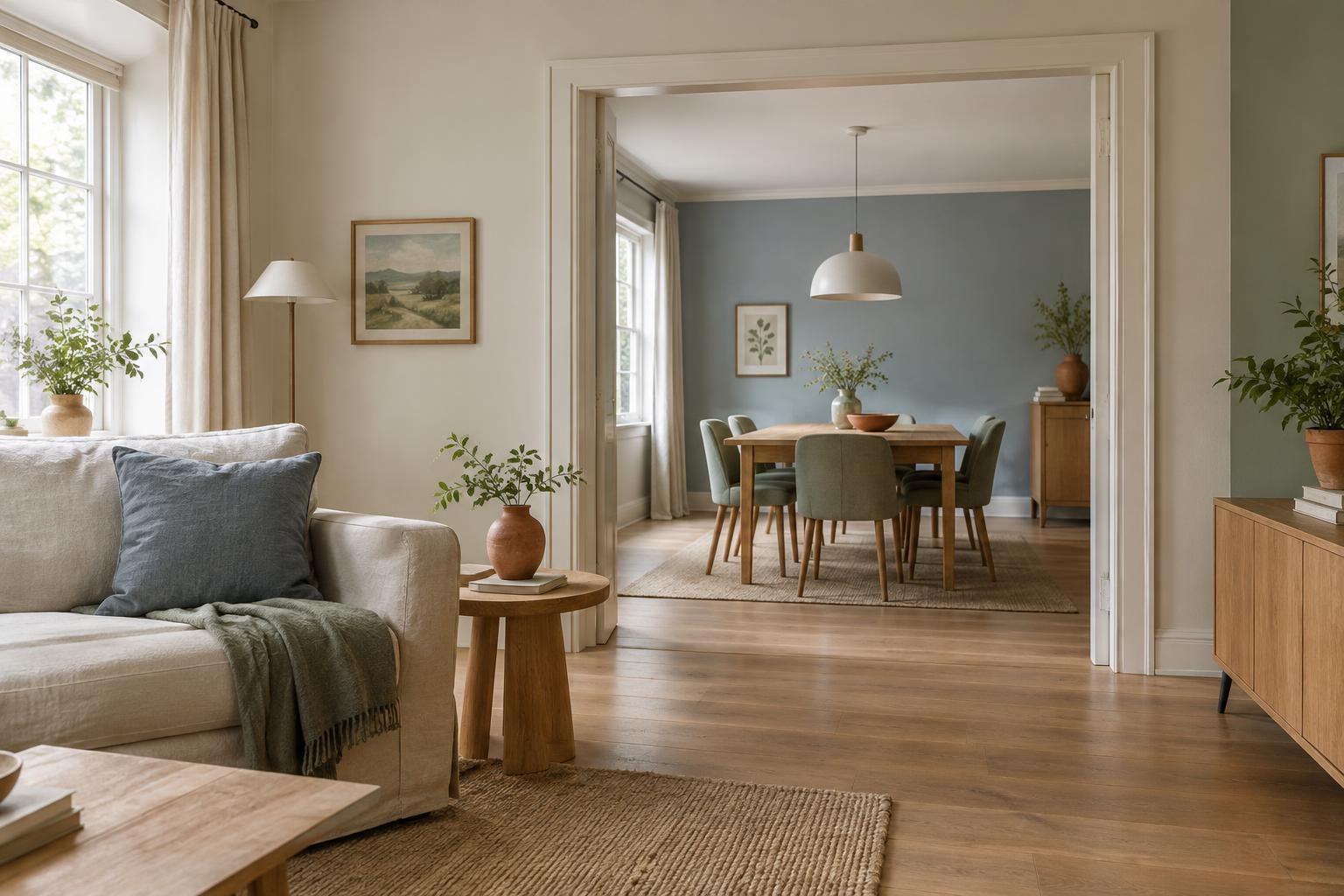
Start with the view between rooms
In an open-plan home or a series of rooms with wide doorways, you rarely see one space in isolation. Stand in the places you pass through most often: the entry, the kitchen sink or the end of a hallway. Notice which walls, large pieces of furniture and window coverings appear in the same view. Those visible areas have the greatest effect on whether the rooms feel connected.
Cohesion does not require painting everything one color. It helps, though, to decide what should remain steady as you move through the home. That might be a warm off-white on the main walls, a similar wood tone in each room or a recurring muted blue. Once you know what ties the spaces together, you can give individual rooms different moods without making each doorway feel like a sudden change.
Build a small palette with room to vary
Choose a base color, one or two supporting colors and an accent you enjoy living with. The base can cover larger areas such as walls, curtains or a rug. Supporting colors can appear in upholstery, painted furniture or textiles. Save the accent for smaller objects that are easy to move or replace. A palette is a guide rather than a rule: one room might emphasize the base, while another gives more space to a supporting color.
Pay attention to how colors feel together, not just to their names. Two shades sold as beige may look quite different side by side: one may lean pink and the other green. If a color seems out of place, compare it with the flooring, woodwork and furniture you intend to keep. You do not have to match every undertone exactly, but checking combinations in the room can prevent a new wall color from making familiar finishes look unexpectedly dull or harsh.
Repeat colors in different ways
Repetition gives the eye a path through connected spaces. A green kitchen chair might relate to artwork in the living area and a patterned runner in the hall. The items need not be identical shades or bought as a set. A recognizable color family is often enough, especially when the repeated touches are visible from one room to another.
Varying the scale of a repeated color keeps the scheme from feeling overly coordinated. If a living room has a large rust-colored rug, the neighboring dining area may need only rust in a cushion or ceramic bowl. Materials can carry color too: pale wood, dark metal and natural woven fibers each contribute to the palette. Repeating a finish or material alongside a color can make the connection feel settled rather than decorative.
Make transitions feel intentional
Where colors meet matters as much as which colors you choose. In rooms without a clear break in the wall, keeping one wall color throughout is often the simplest option. Let furniture, rugs and lighting define the different areas instead. Where there is a doorway, alcove or change in ceiling height, you have a natural place to shift color. A deeper shade in a smaller adjoining room can feel purposeful when something in the larger space quietly refers back to it.
Consider the surfaces that pass through every room. Consistent trim color can provide a visual thread even when wall colors change. Continuous flooring can do the same, while different floors may benefit from a shared rug color or repeated wood tone. Aim for a comfortable handoff rather than an exact match: the colors on either side of a doorway should make sense together when both are in view.
Test the palette in daily light
Light changes how a color appears, particularly when connected rooms face different directions or have different-sized windows. Before committing to paint, place samples where you plan to use them and look at them at several points in your usual day. Hold fabric, flooring or furniture samples nearby if you have them. A color that looks gentle in one room may feel cooler or stronger in the next.
If painting is not practical, try the same approach with movable pieces. Bring an existing cushion into the next room, lay a textile over a chair or position artwork where you can see it from the hallway. Live with a few small changes before buying more. A cohesive home is built through relationships between spaces, not through a perfect formula, and a little testing can help those relationships feel natural to you.


