Start with the route through the room
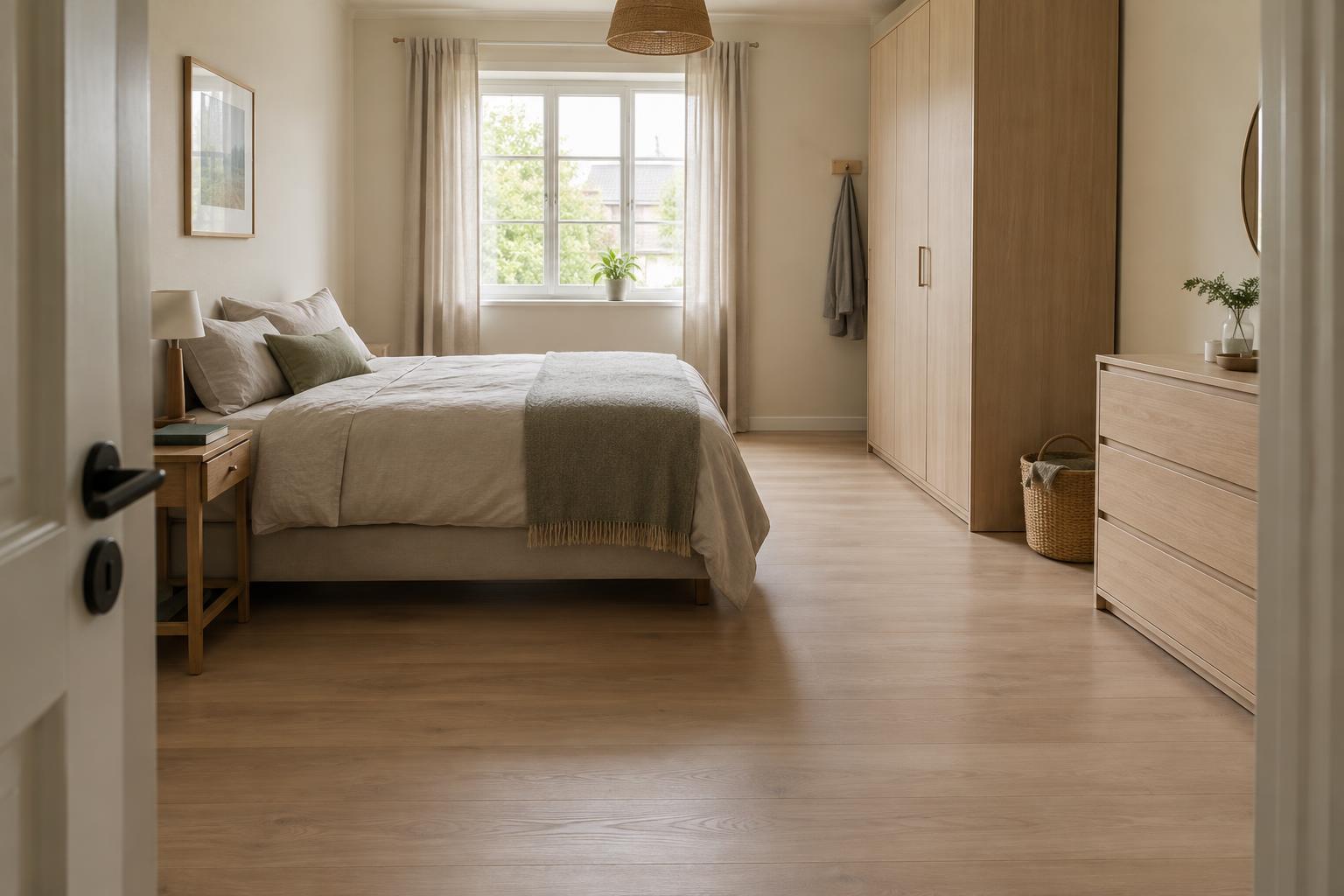
Before moving furniture, walk through the bedroom as you normally use it: enter the room, reach the bed, open the wardrobe, and get to a window or dresser. Notice where you turn sideways, step around objects, or have to move something to open a drawer. Those small interruptions are useful clues. The goal is not to create a perfectly empty room, but to make its most common routes feel straightforward.
Keep enough open floor for your own comfortable movement, including when cupboard doors and drawers are in use. A clearance that works for one person may not work for someone carrying laundry or using a mobility aid, so test the room in real life rather than relying on a fixed measurement. Keep frequently used paths free of baskets, trailing cords, and furniture with corners that are easy to bump in low light.
Give the bed a practical position
The bed usually determines the rest of the layout. Place it where you can get in and out without squeezing past another piece of furniture. If two people use the bed, consider whether both sides need access. In a narrow room, a bed against one wall may free more floor space, but it can also make changing sheets and reaching the far side less convenient. Choose the trade-off that suits how the room is used.
Look at what the bed blocks as well as what it opens up. Check whether its placement limits a wardrobe door, interrupts a natural route, or puts bedding close to a heater. If a large headboard or wide bedside tables make the room feel crowded, a simpler bed frame and smaller surfaces may help. You do not have to center every piece of furniture for the room to feel considered.
Put storage where the task happens
Clutter often gathers where an item has no easy place to go. Keep everyday clothing close to where you dress, and give worn-but-not-ready-to-wash pieces a specific hook or basket rather than a chair. If you store extra bedding under the bed, use containers you can pull out without moving other furniture. Storage is only helpful when you can reach it and put things away with little effort.
Before adding a cabinet or chest, check that existing storage is working well. Move rarely used items to higher or less convenient spots, and keep the things you reach for often at a comfortable height. Inside drawers, simple dividers or small boxes can stop categories from mixing. Leaving some space unfilled makes it easier to see what you own and to return clean laundry without rearranging everything.
Keep bedside essentials within easy reach
A bedside surface only needs to hold what you use before sleep or when you wake: perhaps a lamp, water, a book, and a place for glasses. If a conventional table crowds the walkway, consider a narrow shelf, a compact wall-mounted option, or a small stool. Check that whatever you choose is steady and that you can reach it without stretching awkwardly from the bed.
Think about lighting from the bed and from the doorway. A reachable bedside light can make it easier to move around at night without crossing a dark room. Keep its cord out of the walking route, and avoid letting chargers collect across the floor. If you share the room, separate reading lights can let each person use the space without making every evening routine the same.
Make the layout easy to maintain
The best arrangement is one you can live with on an ordinary busy day. Give laundry, shoes, and small personal items obvious destinations, then notice where they actually land over the next few days. If the same pile returns, its storage spot may be too far away, too full, or too awkward to use. Adjust the layout to match the habit rather than expecting a new habit to appear on its own.
Finish by checking the room from both the doorway and the bed. Can you move between the places you use most? Can you open storage fully? Is there a clear place to set down the things you carry in? A bedroom does not need to follow a particular style to feel restful. Clear routes, accessible belongings, and a little breathing room can make the space more comfortable on its own terms.