Start with the kind of ride you want
Before choosing a route, decide what would make the outing feel worthwhile. Perhaps you want fresh air after work, a quiet hour with a friend or a gentle way to explore a nearby green space. That intention is more useful than a distance target: it helps you choose a path and pace that suit the day rather than turning a casual ride into a task.
For an easy outing, pick a familiar route or one you can understand at a glance. A loop avoids the decision of when to turn back, while an out-and-back ride lets you shorten the trip whenever you like. Allow time for crossings, water breaks and stops that catch your interest. If you are riding with others, agree on a comfortable pace and a rough turnaround point before setting off.
Choose a path with fewer surprises
Look at the route in advance, paying attention to surfaces, hills, road crossings and places to rest. A path marked as suitable for cycling may still include gravel, narrow stretches or busy sections. If its conditions are unfamiliar, choose a shorter first ride or plan an alternative way home. Check any posted access rules when you arrive; not every walking path permits bikes.
Weather can change how a familiar route feels. Wind, rain and low light may make a short ride more tiring or less comfortable than expected. Give yourself a simple backup plan, such as turning around at a landmark or postponing the outing. A relaxed ride is easier to enjoy when there is no pressure to complete the whole route.
Get comfortable before you leave
A brief check at home can prevent avoidable interruptions. Make sure the tyres feel properly inflated, the brakes respond and the chain runs smoothly. Check that anything you carry is secure and cannot swing into a wheel. If something seems wrong with the bike, address it before riding rather than hoping it will improve on the path.
Wear clothes you can move in, and consider a light layer you can remove or add during a stop. Comfortable shoes matter more than a particular cycling look. A helmet, water and a small snack are sensible choices for many outings; lights are important if you might ride in dim conditions. Keep your load modest, but bring what you need to stay comfortable until you get home.
Share the space calmly
Local paths often serve walkers, runners, children, dogs and other cyclists. Ride at a speed that gives you time to react, especially around bends or wherever visibility is limited. Slow down before passing, leave generous space and use a friendly voice or bell early enough that others are not startled. Follow signs and local rules about which side to use or whether cycling is allowed.
If you are riding in a group, leave room for others to pass and avoid spreading across the full width of a busy path. Stop off to the side when checking directions or taking a break. These small habits help keep the ride pleasant for everyone, including people whose pace is much slower than yours.
Make room for the enjoyable parts
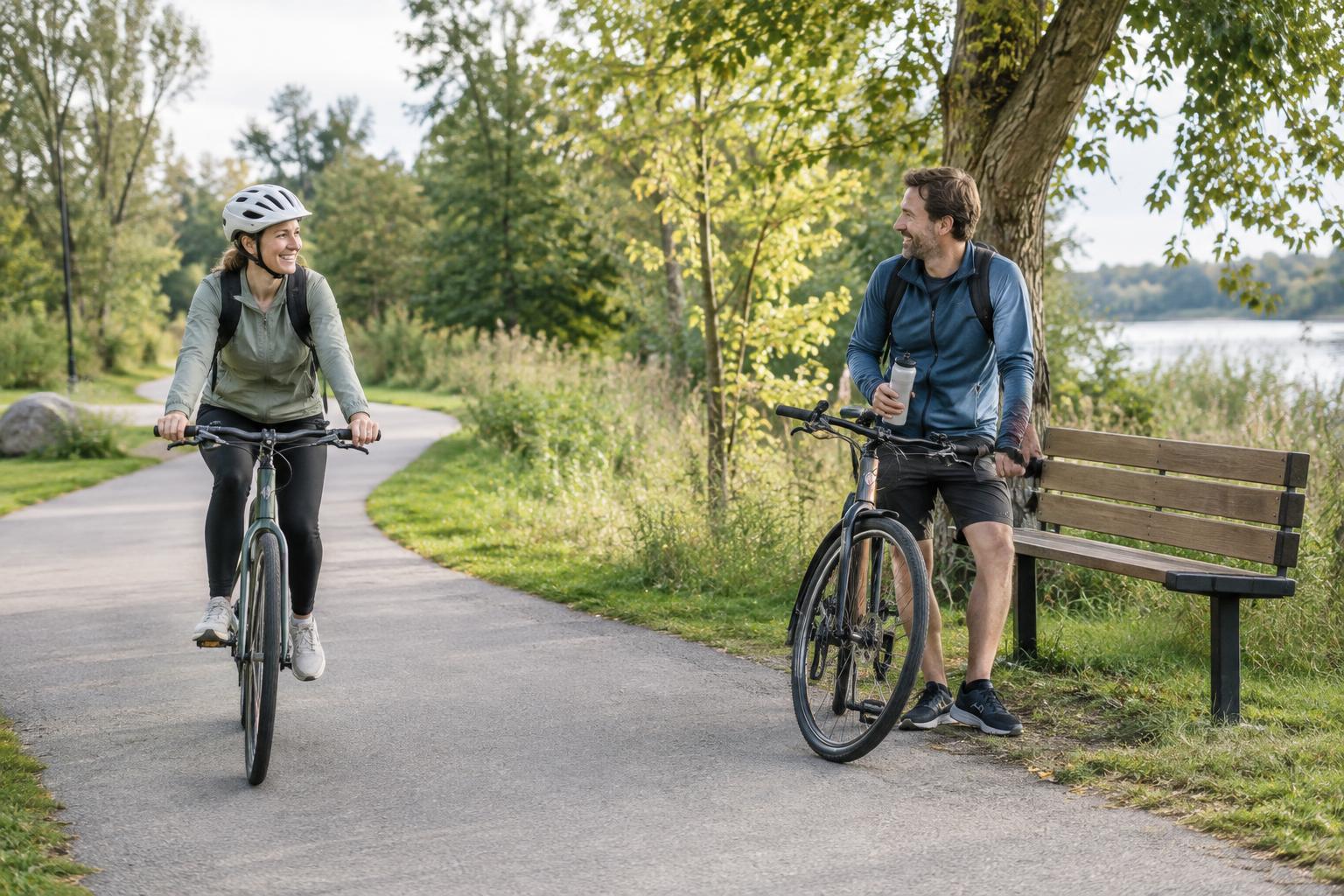
Choose one or two possible stopping places rather than filling the route with destinations. A bench, a view or a quiet spot for a drink can give the ride a natural rhythm. Notice which parts of the path feel especially comfortable: shade, smooth surfaces or a place where traffic noise falls away. Those details can help you plan another outing without needing to go farther.
When you get home, take a moment to note anything you would change next time. You might prefer an earlier start, a different layer or a route with fewer crossings. Keep the adjustment small. The pleasure of a local ride often comes from how easy it is to repeat, with enough flexibility to match the weather, your energy and the time you have.


