Start with the outing, not just the forecast
Rain changes different plans in different ways. A gentle shower may be a pleasant backdrop for a short neighborhood walk, yet make a long picnic awkward. Before deciding, name what matters most about the outing. Is the aim to get fresh air, spend time together, reach a particular destination or sit comfortably outdoors? If a shorter version would still meet that aim, you have more room to adapt.
Look beyond the chance of rain. Consider how hard it may fall, how long it may last, whether temperatures could make wet clothing uncomfortable, and whether wind will complicate the plan. Think about the ground as well as the sky: a paved path, a grassy field and a steep trail can feel very different after rain. Conditions may also vary along a route, so the easiest place to turn back is worth knowing in advance.
Go when the plan can comfortably absorb rain
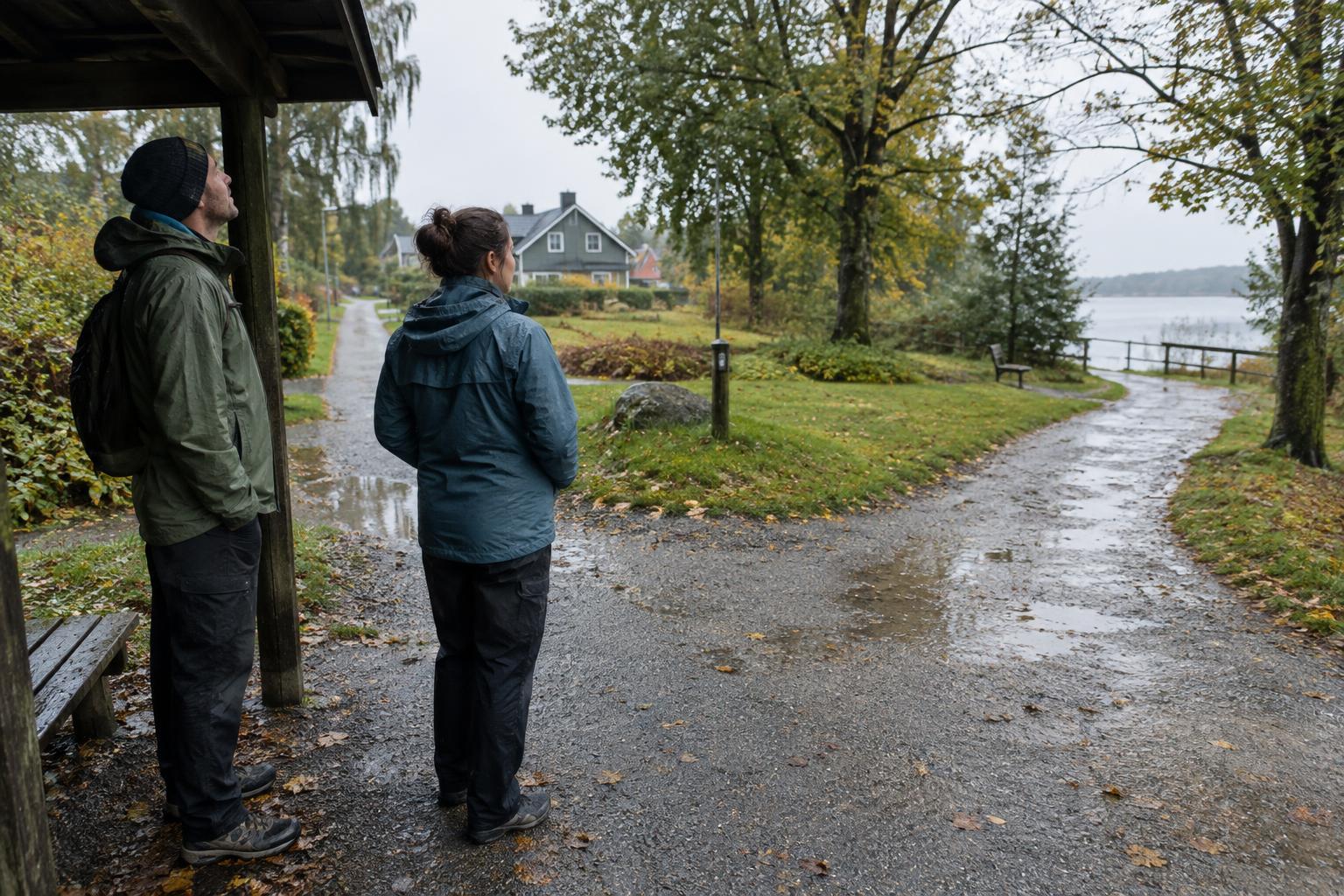
Keeping the plan often makes sense when rain is light, the route is familiar and everyone has suitable layers. Choose clothing that lets you move, footwear with dependable grip and a waterproof outer layer if you have one. A spare dry layer for the journey home can make a modest outing much more comfortable. For a group, check that everyone is willing to be outside in the expected conditions rather than assuming enthusiasm will appear once you arrive.
Make the day simple to manage. Pick a route with nearby shelter or an easy way home, keep essentials protected from water and agree on a turnaround point. Rain can bring a quieter mood to a familiar place, but it need not become a test of endurance. If the outing stops being enjoyable, changing course is a successful use of the plan, not a failure of it.
Shorten the trip when comfort has a clear limit
A shorter outing is useful when the weather is uncertain or the original plan leaves little margin for tiredness, cold or delays. Replace a long hike with a loop close to home, or turn an outdoor lunch into a brief walk followed by a meal indoors. You can also keep the destination and drop the extra stops. The goal is to preserve the best part of the day while reducing the time spent wet and exposed.
Set a limit before leaving: perhaps one loop, one viewpoint or a return by a chosen time. Tell companions what the revised plan involves, especially if they are bringing children or traveling to meet you. A clear, modest plan is easier to enjoy than an open-ended trip in which everyone waits for someone else to suggest heading back.
Reschedule when rain brings more than inconvenience
Some conditions call for a different day rather than better clothing. Thunderstorms, flooding or fast-moving water, strong winds, poor visibility and slippery or unstable terrain can make an outing unsafe. Do not enter floodwater or rely on a planned route remaining passable. If local alerts, park notices or conditions at the trailhead indicate a hazard, choose another activity. It is also reasonable to reschedule when a participant cannot stay warm and comfortable with the gear available.
Plans built around sitting still, delicate equipment or a hard-to-reach location may have little to gain from pushing through heavy rain. Decide what could be lost by postponing and what could be gained. If the main purpose is an unhurried conversation or a relaxed meal, moving it indoors or choosing a drier day may serve that purpose better.
Keep a small backup plan ready
Making the decision is easier when it is not a choice between the original outing and nothing. Keep two alternatives in mind: a short, rain-friendly option near home and an indoor option that suits the same group. A covered walk followed by warm drinks might replace a longer ramble; a meal at home might replace an exposed picnic. The alternatives do not have to imitate the original plan exactly.
Choose a check-in time before people leave, then share the decision plainly: what is changing, where to meet and when you will head home. That small courtesy avoids rushed packing and crossed expectations. Rainy-day planning is less about predicting the weather perfectly than about making a plan flexible enough to fit the day you actually get.