Start with the days you actually have
Trousers for a changing season need to do more than look right with a coat. They may have to feel comfortable on a cool morning walk, indoors at midday and on the journey home. Before choosing a pair, think about where you spend most of your day, how much you move and whether you can change clothes between activities.
A person who walks in light rain may value quick-drying fabric and a hem that stays clear of puddles. Someone who spends most of the day seated may care more about a comfortable waistband and fabric that does not feel restrictive at the knees. There is no single best seasonal trouser: the useful choice is the one that handles your most common conditions without making ordinary tasks awkward.
Match fabric to temperature and moisture
Fabric weight matters, but thickness alone does not tell you how trousers will feel. A densely woven fabric can block some breeze while remaining fairly light; a loose weave may let more air through. Cotton twill can be a comfortable everyday choice in mild, mostly dry weather, though it may feel heavy if it gets soaked. Linen often feels airy in warmth but may not provide enough protection on a windy day.
Wool blends can be useful when temperatures are cooler, depending on their weight and weave. Synthetic or blended fabrics may dry faster after a shower, but they vary widely in feel and breathability. If rain is a regular part of your day, check the garment’s description and care label rather than assuming that all outdoor-looking trousers resist water. Even trousers intended to shed light moisture may need time to dry after sustained rain.
When trying trousers on, notice whether the fabric feels comfortable against your skin. If you expect to wear them with leggings or tights on colder days, test that combination too. A fabric that works well on its own can bunch or cling when layered over something else.
Check fit while moving, not just standing
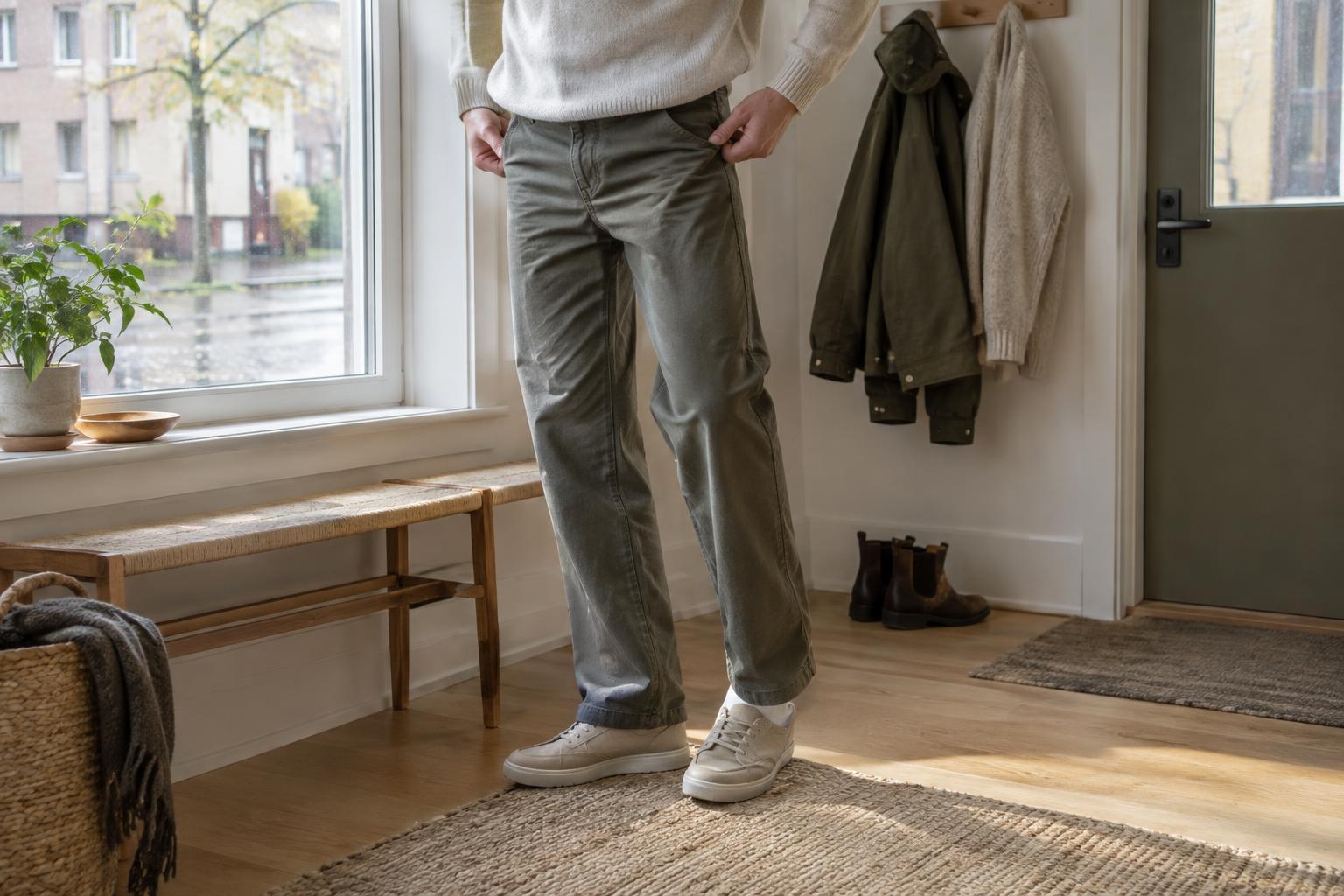
A comfortable fit leaves room to sit, bend and take a full stride without pulling at the waist or thighs. Try the trousers with the shoes you wear most often, then walk, sit down and bend your knees. If you cycle or climb stairs regularly, pay particular attention to how the knees and seat feel during those movements.
A straight or gently tapered leg can leave space for movement without adding much loose fabric around the ankles. A wider leg may feel airy in mild weather but can brush against wet ground or catch a breeze. Neither shape is inherently more practical; consider your route and footwear. Pockets also deserve a quick test: a pocket that looks useful may not hold your keys comfortably when you sit.
Waistbands can affect how often you reach for a pair. A little stretch or an adjustable detail may accommodate sitting and movement, while a firmer waistband may suit someone who prefers a more structured feel. Choose the fit you can wear for a whole day, rather than one that only feels right for a minute in front of a mirror.
Make hems and care part of the decision
Hem length has a noticeable effect in unsettled weather. Trousers that skim the ground can pick up moisture and dirt, especially with low shoes. A hem that clears the tops of your shoes is easier to keep dry, though you may prefer more coverage when it is cold. Try folding a hem temporarily to see whether a small adjustment would make a pair more versatile.
Check how the trousers need to be cleaned before you commit to them. If a pair requires more attention than you can realistically give it, it may spend most of the season unworn. Follow the care label for washing and drying, and allow damp trousers to dry fully before putting them away. For an everyday wardrobe, one or two pairs that fit your routine and are easy to care for may be more useful than several pairs chosen for a single type of weather.