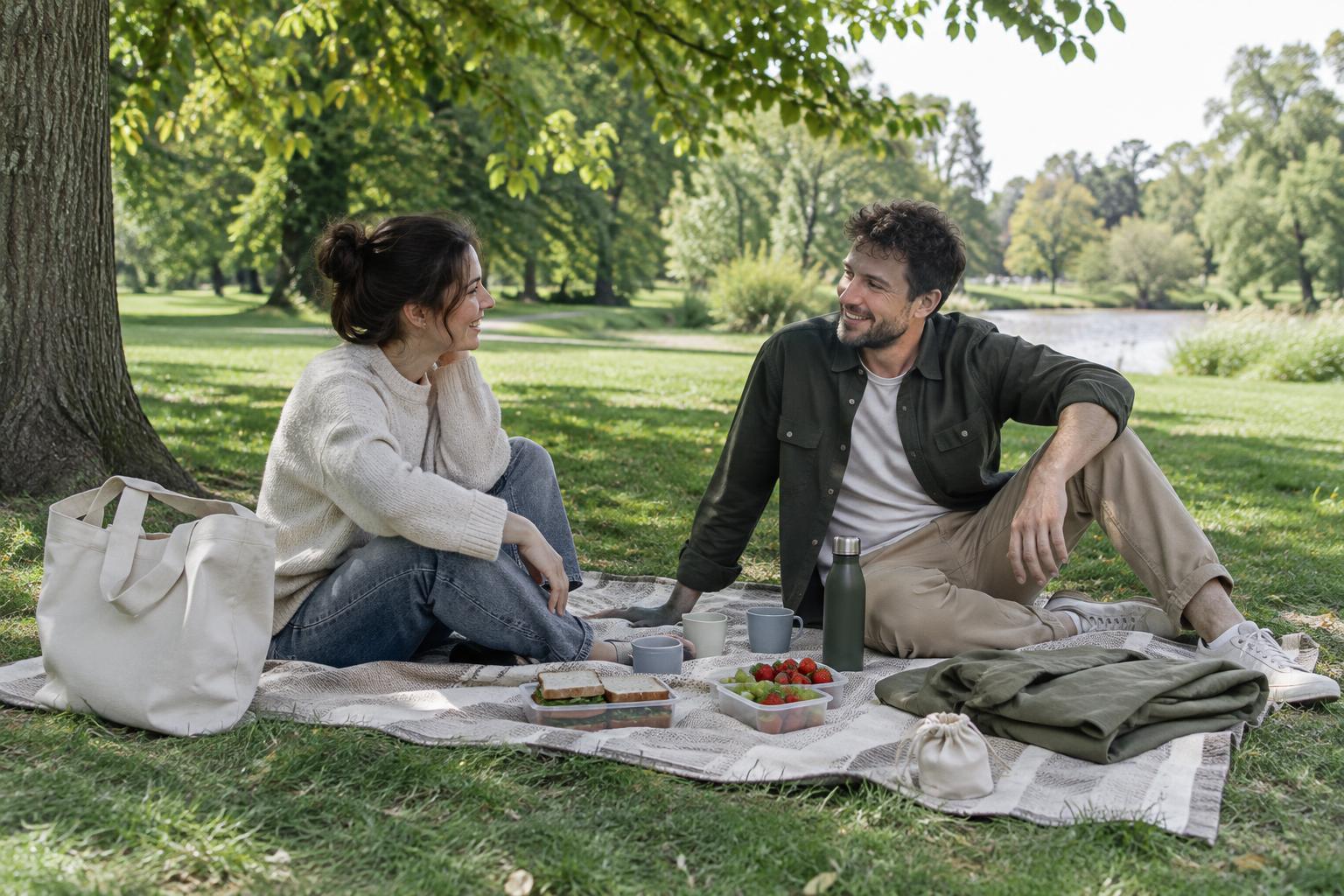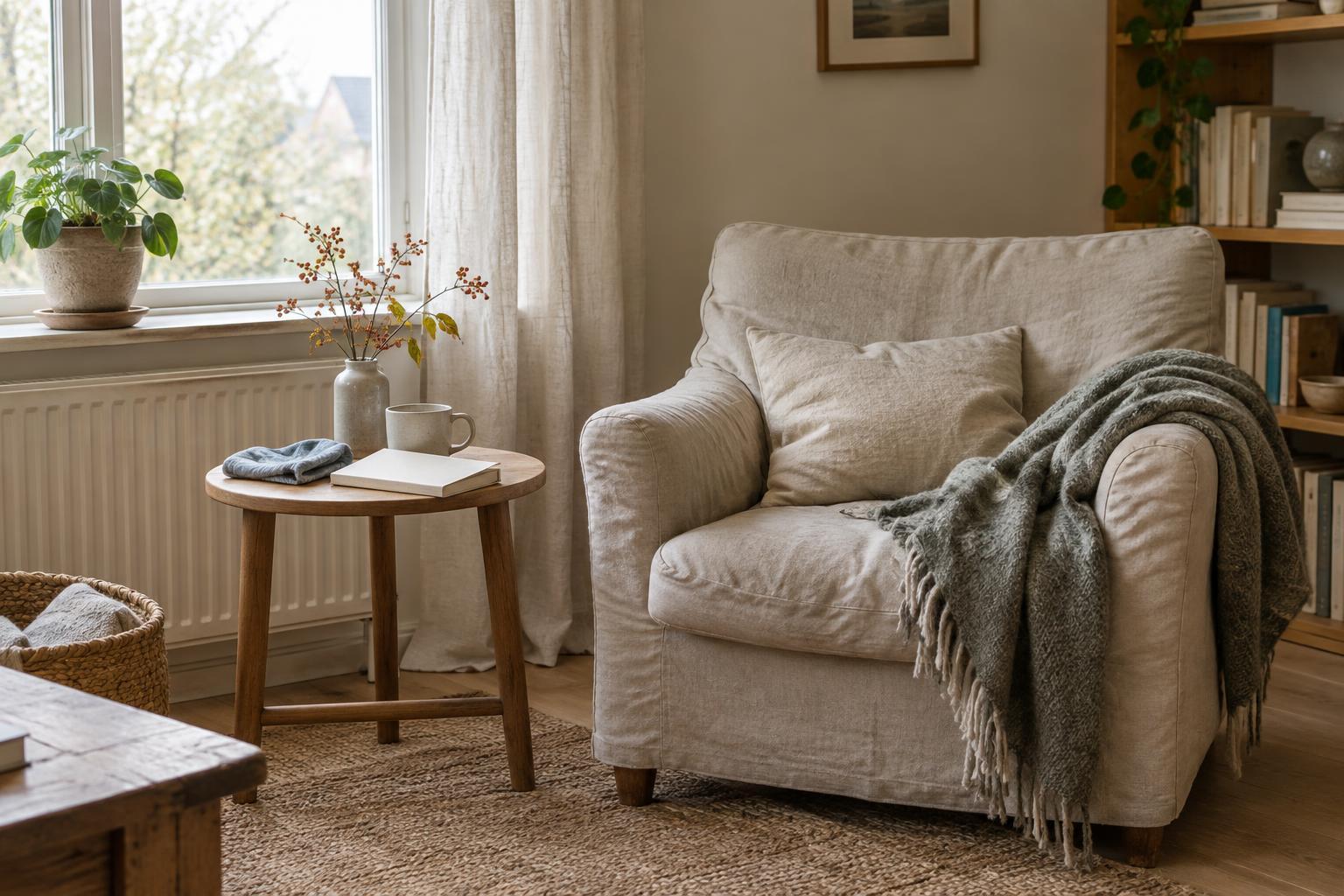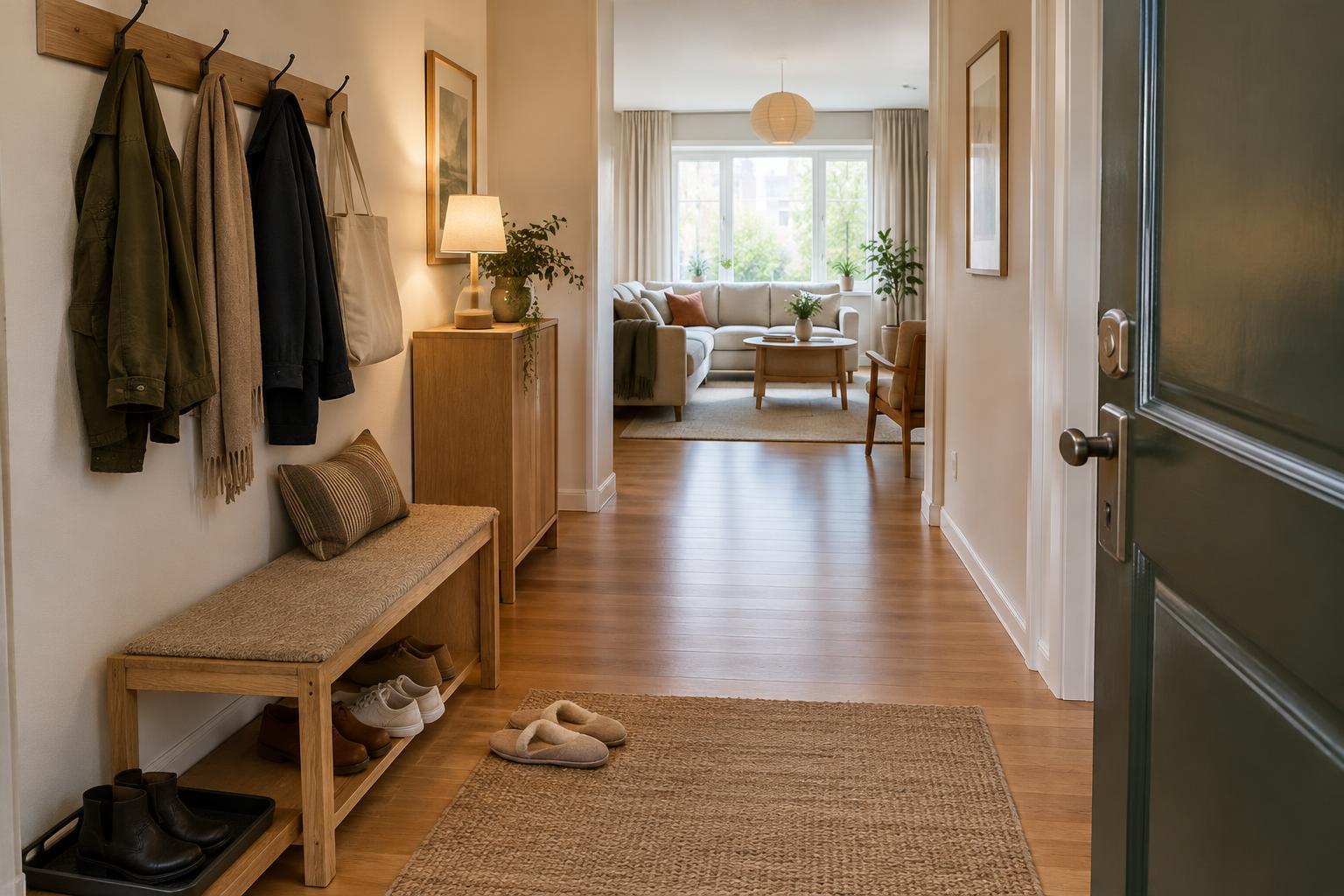
Start with the route guests will take
Before a gathering, walk from your front door to the room where guests will spend most of their time. Notice what might interrupt that short trip: a narrow turn, a pile of everyday shoes, a door that swings into the standing area, or a table that collects mail. Clear the route first. Guests should be able to step inside, close the door, and move onward without waiting for someone else to finish unpacking.
You do not need to redesign the space. Moving a basket or chair for the evening may be enough. If several people are likely to arrive together, leave room for one person to greet you while another passes through. Think of the entryway as a place to pause briefly, not a place where everyone must complete a long arrival routine.
Give coats and bags an obvious home
Decide where outdoor layers will go before the first guest arrives. A few sturdy hooks are useful if they can hold the expected load; otherwise, a cleared bed or chair in another room can work well. The important part is that you can point guests to one place without searching for space as they come in. Put your own coats elsewhere temporarily if that frees up the most convenient spots.
Bags need a little thought too. Guests may want to keep a small bag nearby, while a larger tote or backpack can go with the coats. Offer a choice rather than taking someone’s belongings without asking. If the storage spot is out of sight, describe it plainly: “You’re welcome to leave your coat in the spare room, or keep it with you.”
Make shoe preferences easy to navigate
Homes differ on whether shoes stay on indoors. Whatever your preference, make it clear in a friendly way instead of expecting guests to guess. If you would like shoes left at the door, provide a place to put them and enough space to take them off. A stable chair can help guests who find it awkward to stand on one foot.
Consider the floor beyond the entryway as well. If it is cool or slippery in socks, guests may be more comfortable keeping clean indoor shoes on or bringing their own slippers. If you are happy for people to keep their shoes on, a mat and a clear path are usually simpler than a complicated set of instructions. Comfort matters more than enforcing a particular look.
Use light and small cues to reduce questions
Check the entryway at the time of day your gathering will begin. A hall that feels bright in the afternoon may be hard to navigate later. Turn on a nearby lamp or overhead light so guests can see the floor, hooks, and any steps. If people will arrive after dark, make sure the approach to your door is reasonably visible too.
Keep directions brief. An empty hook, a cleared shelf, or a pair of shoes placed neatly to one side can show where things belong without a sign. If the bathroom or main gathering room is not obvious from the entrance, tell guests once as you welcome them. These small cues let people settle in while you continue greeting whoever arrives next.
Do a final arrival check
Shortly before guests are due, open the front door and look at the space as they will see it. Is there somewhere to stand while the door closes? Can someone reach the coat area without stepping over bags? Is the way into the gathering clear? This quick check is more useful than trying to make the entryway look untouched.
Once people arrive, the space will change. Shoes may spread out and coats may fill the hooks. If it starts to feel crowded, move items to the place you planned for overflow and keep the walking route clear. A practical entryway gives guests an easy beginning; it does not have to stay perfectly arranged all evening.